
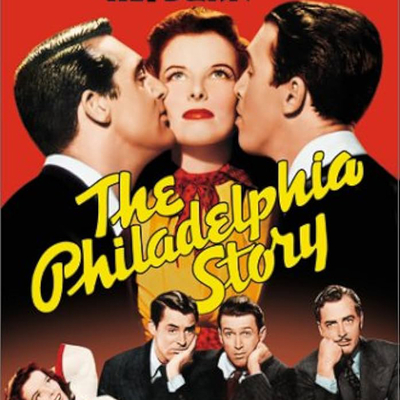
The 13th Academy Awards – the ones where The Philadelphia Story was nominated in six categories – were the first held with sealed envelopes to keep the winners secret. For the very first awards in 1929 at the Hollywood Roosevelt Hotel the winners had been announced three months in advance; there were only 270 people in attendance, the ceremony only lasted fifteen minutes and it wasn't broadcast.
For the next decade the Academy did its best to make the awards an event, but they announced the winners hours before the ceremony and in 1939 the L.A. Times published a leaked list of winner before the event had even started. This is when Price Waterhouse was brought in to count ballots and oversee the security around the sealed envelopes and, along with Bette Davis' move to make the presentations a public event and not a private banquet – the most consequential suggestion from her brief tenure as president of the Academy – it helped make the Oscars exciting for over six decades.
You have to wonder what it would take to bring that excitement back to the Academy Awards. Last year's ceremony had a viewership of just under 20 million, less than half of what it was getting at the start of the 2000s, much less than it got in 1998 – the year of peak viewership with 57.25 million viewers. The easy answer is that Hollywood should make movies people want to watch.
This years best picture nominees are the usual mix of films made to be nominated (Hamnet, One Battle After Another, Sinners), films the Academy chooses to flatter its creative pretensions (Bugonia, Frankenstein, Marty Supreme), films that make it feel like a citizen of the world (The Secret Agent, Sentimental Value) and the token picture audiences actually paid real money to see (F1). What you won't find is a clever romantic comedy with a script that sounds like it's drunk on the sound of its own voice. We haven't made a picture like that in ages.
The Philadelphia Story was Katharine Hepburn's comeback from her "box office poison" period. She left RKO and Hollywood for Broadway where she took a role in her friend Philip Barry's play about an heiress about to remarry after a failed first marriage; Barry – the author of the play that was the basis for the 1938 Hepburn and Cary Grant screwball Holiday – wrote the part with Hepburn in mind. The play was a major hit, playing on Broadway for over 400 performances, which guaranteed it would catch Hollywood's interest.
Warners wanted the play for Ann Sheridan to star, MGM for Joan Crawford and Fox for anyone they could get, but Hepburn convinced Howard Hughes to help her buy the rights and Hughes told MGM that he'd only make a deal if Hepburn starred. MGM sent Joseph Mankiewicz to New York to see the play and he wrote a treatment for a film that would provide Hepburn with the two male leads Hepburn insisted on having to add extra star power to her comeback.
Hughes approved his treatment and MGM made the deal. Hepburn wanted Clark Gable and Spencer Tracy for the film (she hadn't actually met Tracy yet) but she ended up with her old co-star Grant – with whom she at least had verifiable chemistry – and Jimmy Stewart. Donald Ogden Stewart adapted Barry's screen play when the playwright asked for too much money from Mankiewicz and George Cukor, fresh off the humiliation of being fired from Gone With the Wind, was assigned to direct.
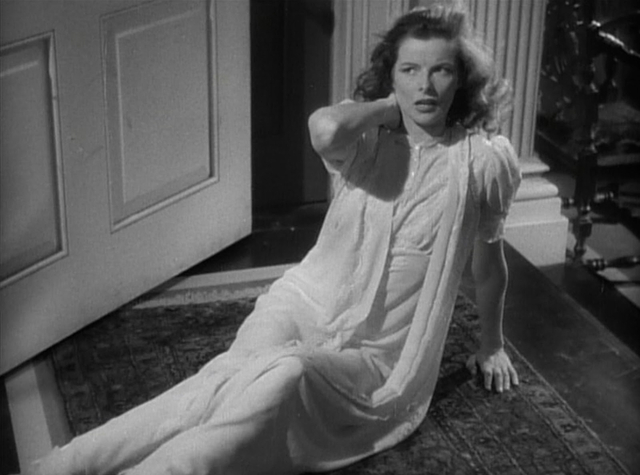
Mankiewicz was the creator of the film's famous opening scene, a wordless sequence where C. K. Dexter Haven (Grant) carries suitcases to his car and is met by Tracy Lord (Hepburn) in her nightgown, carrying his golf clubs and his pipes, still in their stand. She throws the pipes at his feet, followed by the golf clubs, but only after taking out an iron and snapping it over her thigh. He follows her back to the door and cocks his fist to hit her, then thinks better of it and pushes her to the ground – a bit of physical comedy where Hepburn falls backward like a felled tree.
This is the last scene of a brief but tempestuous marriage and the film cuts to two years later and Tracy planning her second wedding, to George Kittredge (John Howard), a self-made man in business with her father, who is himself estranged from Margaret (Mary Nash), Tracy's mother. The two women, along with Tracy's little sister Dinah (Virginia Weidler) live in a mansion on grounds so vast that they need to take a chauffeured car to their stables.
As implied by the title, the film is set in the physical and social setting of Philadelphia's Main Line – a series of affluent commuter suburbs stretching along the Pennsylvania Railroad Company's line from downtown Philadelphia west through Lancaster County to Columbia, on the banks of the Susquehanna River. The stops on the line – towns like Narberth, Ardmore and Bryn Mawr – were equivalent to wealthy enclaves around New York City like Scarsdale, Rye and Greenwich. They had their own social season and debutante balls and while that world is far less visible now, the houses remain along with a few of their families, either much diminished or discretely hiding in plain sight.
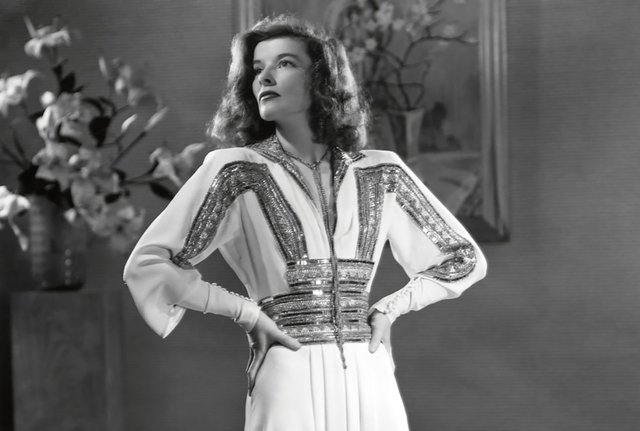
Tracy Lords was a character not a million miles from Hepburn's own public persona. The actress was born in the WASP enclave of Old Saybrook, Connecticut and educated at Bryn Mawr, the famous women's college on one of the Main Line's stops. Philip Barry wrote the character for Hepburn but based her on Hope Helen Montgomery Scott, a socialite who lived in Ardrossan, a 50-room mansion named after the Ayrshire town where her family came from.
Tracy is described by those who know her best – her family as well as Dexter – as "hard" and imperious, with standards so high that "other people can't live up to them". To her admirers she's described as a goddess or a queen, an object of worship and tribute, and Hepburn inhabits her effortlessly.
Her ex-husband says that living up to her high standards drove him to drink. Her father Seth (John Halliday) says that her coldness and haughty disdain for mere human failings deprived him of the warm regard he craved as a father and a man as he reached middle age and even led to the distraction and infidelity that ended his marriage. It's hard to say just how plausible these criticisms sounded to an audience in 1940, but they sound like excuses to modern ears – obvious copes that shift blame to Tracy's slim but sturdy shoulders. Perhaps modern audiences – or modern women in particular – are more sympathetic to a product of high caste feminism like Tracy or Hepburn. You wonder how a modern remake might portray Dexter, Seth and Tracy today.
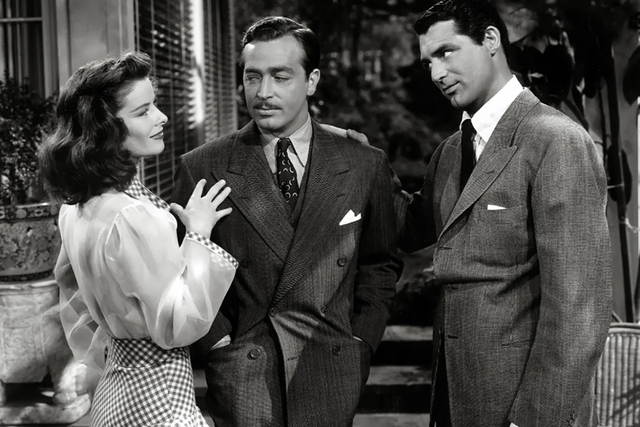
While Tracy plans her second wedding Dexter is aiming a missile at the ceremony in the shape of two journalists working for Spy, a gossip magazine run by the sinister Sidney Kidd (Henry Daniell). Mike (Stewart) and Liz (Ruth Hussey) are assigned to infiltrate and produce a scoop on the society wedding; their entrée into the event is engineered by Dexter using his friendship with Junius, Tracy's brother, who lives in Argentina and can't make it home for the wedding.
After the headline-making flame-out of his marriage Dexter apparently hit rock bottom, checked himself into rehab, and ended up in Buenos Aires like Tracy's brother, in the orbit or on the payroll of Kidd. The publisher has leveraged a salacious story about Seth Lord and his dancer girlfriend into getting Dexter to parachute Mike and Liz into the Lords' home under the cover of being friends of Junius. Dexter has his own motivations, which quickly become clear.
Mike is a struggling writer forced onto Kidd's payroll to pay the bills, a bolshie young man of humble origins named after Thomas Babington Macaulay, the Whig politician and writer, by his self-educated grandfather. He resents his reliance on Kidd and considers the assignment a punishment that sets him amidst a social class he makes a great show of despising. Liz is less conflicted about the assignment or the subject, shrugging that "I can't afford to hate anybody. I'm only a photographer."
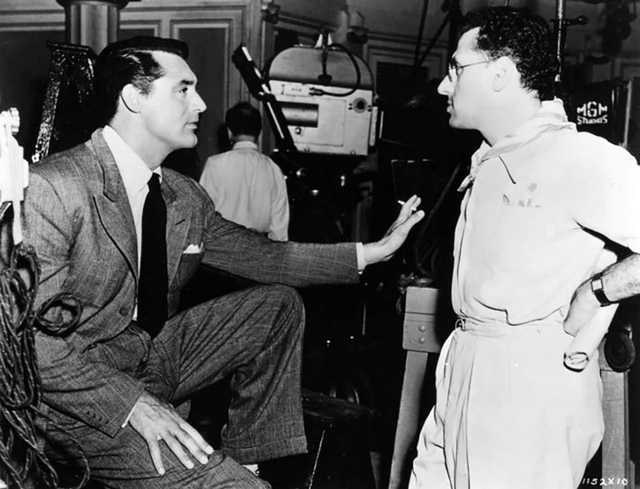
Cukor was the director most sympathetic to Katharine Hepburn as a person and a movie persona. He had directed her motion picture debut, Bill of Divorcement, in 1932 and would go on to work with her on Little Women, Sylvia Scarlett and Holiday in the '30s, Keeper of the Flame and Adam's Rib in the '40s, Pat and Mike in the '50s and Love Among the Ruins and The Corn is Green in the '70s. It's fair to say that Cukor more than anyone else helped create the idea of Katharine Hepburn and make that idea not just palatable but attractive to the movie public.
In George Cukor: A Public Life, his biography of the director, Patrick McGilligan writes that "Cukor realized that Hepburn's actress excesses were sometimes overbearing, but he liked that in a performer. He preferred the problem of toning down excesses to turning everything up a notch."
McGilligan quotes Mankiewicz saying that Hepburn "in her early years, was on the verge of being very mannered. Cukor wasn't going to call her on that – because those were his early years, too. I think he had as much to do with her being 'box-office poison' as she did. So when they came together on The Philadelphia Story, they were both older and wiser, and they worked together very well. George put her on her ease, and Kate needed to relax."
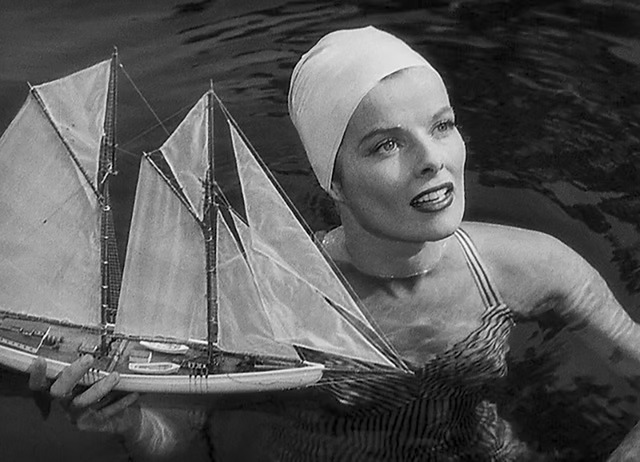
The best example of this is the first swimming pool scene in the movie, where Cukor films the slim, athletic Hepburn knifing into the water from a high diving board. Dexter has just been there, leaving a wedding present – a wooden boat model. Her fiancé asks what it is and Tracy explains that it's the True Love, a racing yacht that Dexter had designed and built, and which they sailed up and down the Maine coast on their honeymoon.
"My, she was yar," Tracy tells George in a voice almost a purr. It's a scene that usually finds a place in highlight reels of Hepburn's career; the actress delivers it with a conviction that comes from embodying the virtues and vices of a class that most Americans looked upon, like Mike, with suspicion and resentment. She means that the boat was well-built – responsive, quick and graceful, both a tribute to and a reflection of Tracy herself, at her best.
It would sound ridiculous coming from the mouth of any other actress, then or now. Nearly any born and bred member of the social class that used a word like yar would irritate almost any other American if they used that kind of maritime vocabulary in a setting where they weren't in the social majority – which is to say almost nowhere. But Hepburn's delivery is full of charm, coming as it does as a trigger for Tracy's first moment of real personal reflection in the picture.
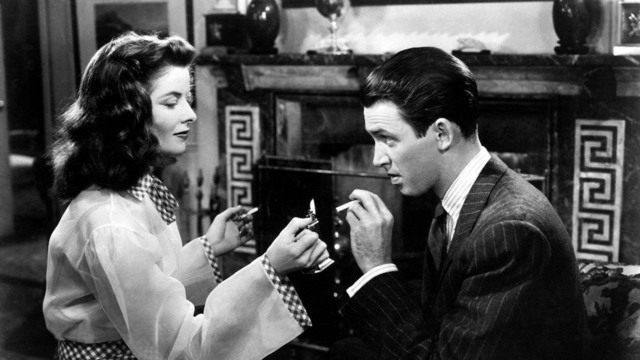
The ruse upon which the film's plot was supposed to hang falls apart early on when Tracy forces Dexter to admit to the real reason Mike and Liz are there, but for the purposes of the plot they remain as long as the family is in the grip of Kidd's blackmail plot. And the romantic triangle at the centre of it – Dexter, Tracy and George – grows a new point when Mike begins to fall for Tracy after she discovers a copy of his obscure short story collection in the local library.
The film was still an early role for Stewart – it was only four years since his unsteady feature debut in After the Thin Man, two years since You Can't Take It with You and just a year since Mr. Smith Goes to Washington. But thanks to some good parts – he'd make Destry Rides Again and The Shop Around the Corner around the same time – Stewart established his screen persona solidly enough that it would be waiting for him after he joined the air force after Pot of Gold and didn't return to Hollywood for another four years with It's a Wonderful Life.
Stewart makes it easy to believe that Mike is so easily flattered by Tracy's praise for his work that he discards the chip on his shoulder and begins to fall for her, plunging into complete infatuation when they get drunk at the pre-wedding party given by Tracy's lecherous Uncle Willy (Roland Young), who has set his sights on Liz.
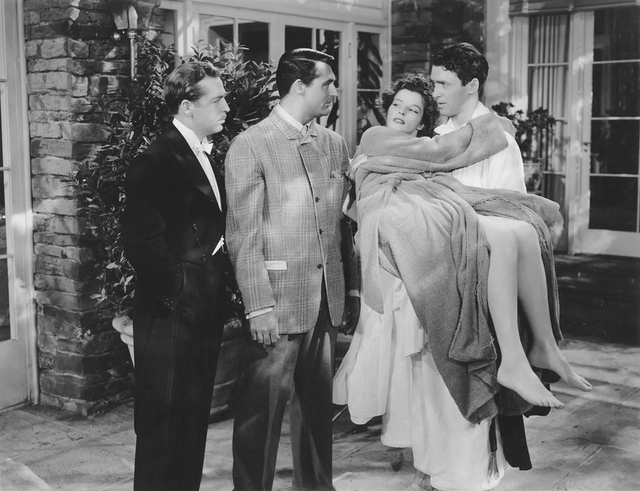
Stewart plays a good drunk – a man who imagines himself a whiskey drinker utterly overwhelmed by the pleasant but rapid effects of champagne. He and Tracy get caught up in each other's regard; Mike the self-defined underdog overcome by the attention of the most popular girl, Tracy by a connection she's made with someone both outside of and unimpressed by her social standing, and stung by the repeated accusation that she's too cold and hard to be a real woman, wife or daughter.
Tracy finds herself having to choose between two men of humble origins. George, the former miner who worked his way out of the pits and into head office, is a prig and fake populist with political ambitions who clearly regards Tracy as a prize he can win and a key to climb further up the social ladder. Mike is a more soulful representative of the aspirant working class – a poet happy with his social setting when he isn't seething with resentment at the existence of anything outside or above it.
They're both stereotypes, of course, as standard issue as the spoiled rich girl. And on the morning of her wedding Tracy rejects George when he presumes the worst about the drunken night with Mike she can't remember; apparently the only thing that bothers a woman like Tracy more than being called cold and hard is being judged by a social inferior. She ends up choosing Dexter after Mike makes the noble offer to marry her and save her reputation, but she can see that he'll be better off with Liz. (Though some of us might wonder if it's such a good deal for her.)
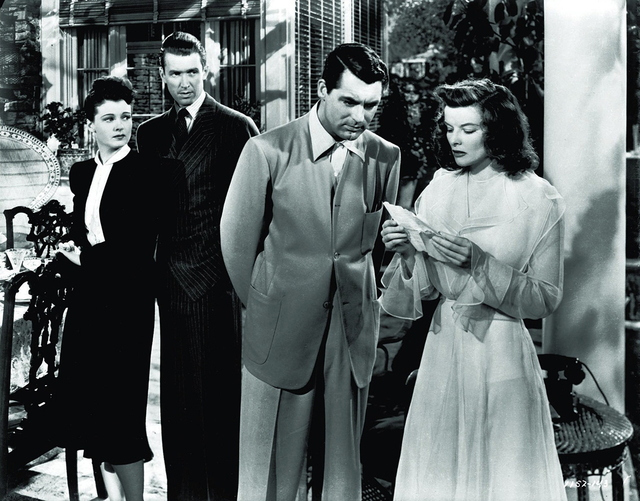
The Philadelphia Story was nominated for six Academy Awards including best picture, director, actress (Hepburn) and supporting actress (Hussey) and won for actor (Stewart) and Donald Ogden Stewart's screenplay. Alfred Hitchcock's Rebecca won best picture at that year's awards; Cukor lost to John Ford for The Grapes of Wrath, Hepburn to Ginger Rogers in Kitty Foyle, while the most Oscars ultimately went to Michael Powell's The Thief of Baghdad – for art direction, cinematography and special effects.
In Best Pick: A Journey Through Film History and the Academy Awards, co-author Jessica Regan chooses Cukor's picture over Hitchcock's, citing "the misogyny threaded through this entire enterprise."
"Far, far better is The Philadelphia Story," Regan writes. "Sexy charming, and irresistible, it is as bracing as the sez breeze so longed for by Katharine Hepburn's Tracy Lord. I adored my time spent in the company of these characters, and I cannot say that about the Academy's choice this year."

The film was popular enough to merit a musical remake sixteen years later with High Society, and there are many people who prefer this version, but it never seemed that Grace Kelly inhabited the role of Tracy Lord as seamlessly as Hepburn. Kelly was from Philadelphia and well-off enough, but as a Catholic her family would have been set firmly outside Main Line society, and the avidness of Kelly's performance is full of an outsider's keen attention to detail but little of Hepburn's playful ease. Kelly, of course, would shortly vault over those Main Line families with her marriage to Prince Rainier and into Monaco's royal family.
Club members can let Rick know what they think by logging in and sharing in the comments below, as access to the comments section is one of many benefits that comes along with membership in the Mark Steyn Club.