
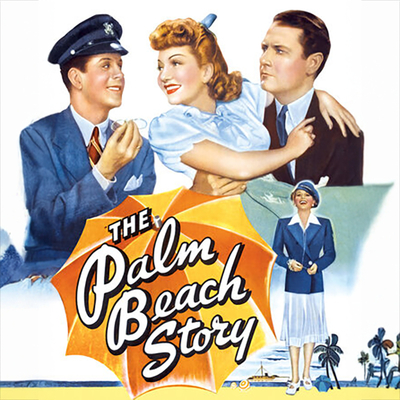
In Preston Sturges' posthumous memoir Sturges by Sturges, finished by his widow Sandy and published in 1990, the director recounts an outlandish story from his childhood that would end up inspiring one of the most chaotic sequences in his 1942 screwball masterpiece The Palm Beach Story.
His mother, a socially and culturally ambitious woman who was friends with dancer Isadora Duncan and had an affair with satanist Aleister Crowley, had brought him to Dresden while she worked on an operetta and the two of them (plus maid) were heading back to Paris in a train compartment stuffed with masses of baggage, caged birds and a couple of dogs. They went to the dining car, leaving all their money and tickets in the stateroom, and ignored the announcement that while the train was now heading for Berlin the rear carriages – including their compartment – were being shunted off to head for Paris.
Sturges' mother, oblivious to all the activity, actually asked the red-capped conductor in charge of the announcement if he could get them a second serving of kartoffeln. By the time they finished dinner they were on the nonstop express to Berlin while everything else – tickets, money, baggage, dogs and birds – was on the way to Paris but could be unloaded in Cologne.
Unable to get their tickets to Paris refunded or buy new ones to Cologne, Mary Sturges threatened the recalcitrant officials with a call to "my friend, the Ab-Princess of Meiningen," which at least allowed them to leave the station and spend a night in "the cheesiest and cheapest hotel in the neighbourhood".
Ticketless, she bluffed her way on to the morning's first train to Cologne and presumed upon the generosity of "an amiable American gentleman" to buy lunch for her, Preston and the maid. Once on the express to Cologne there was no question putting them off without a ticket and in any case "everything was straightened out when we pulled into Cologne, where a soldier with a bayonet was guarding our pile of stuff, with the parrot insulting him in French."
The credits roll at the start of The Palm Beach Story with what looks like a whole other screwball comedy, complete with Joel McCrea dressing in the back of a taxi for his wedding, the preacher waiting impatiently in front of the altar and Claudette Colbert tied up in her underwear in a closet, kicking her way through the door while a maid repeatedly faints in shock. Sturges doesn't bother explaining any of this until the end of the picture, and only barely then.
The story really begins five years later, when Tom (McCrea) and Gerry Jeffers' (Colbert) marriage is in trouble. They're behind on the rent on their two-storey Park Avenue apartment and the manager (Franklin Pangborn) is taking some prospective new tenants around to view the flat.
Gerry, still in her wrap, hides from the manager and the husband of the couple – an odd-looking old man in an oversized suit and hat who noses around the rooms, spritzing some of her perfume and tasting their toothpaste. She's hiding behind the shower curtain when the old man is about to turn on the water, forcing her to break cover and introduce herself.
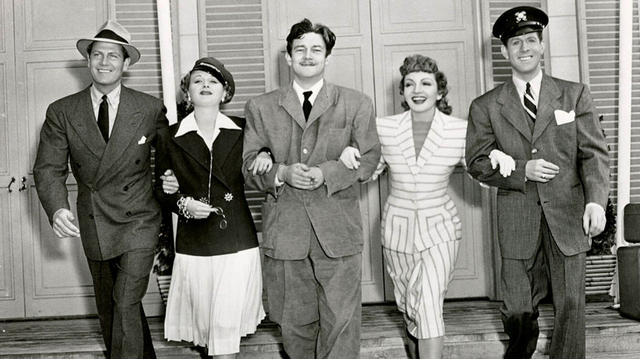
Preston Sturges made The Palm Beach Story in the middle of the extraordinary streak of films he directed in the first half of the '40s, which started with The Great McGinty (1940) and ended with the release of The Great Moment in 1944, the flop that ended his run of luck. He'd been trying to get promoted to the director's chair for years, while working on screenplays for pictures like Imitation of Life, Love Before Breakfast, Easy Living and Remember the Night.
The previous year – the one that would end with the Japanese attack on Pearl Harbor – saw the release of two other Sturges classics: The Lady Eve and Sullivan's Travels. After finishing The Palm Beach Story, Sturges would make The Great Moment – a peculiar biopic about William Thomas Green Morton, the inventor of anesthesia – but by then his relationship with Paramount Pictures was already in jeopardy after songwriter Buddy DeSylva took over as Executive Producer for the studio and was in a position to act on his dislike of the director.
He made two more Sturges classics – The Miracle of Morgan's Creek and Hail the Conquering Hero – until the conflict became so unbearable that he left the studio, who took the opportunity to finally release The Great Moment and effectively tank his career. He would fritter away his fortune running The Players, a supper club that lost money even when it was a Hollywood destination. A bad deal with Howard Hughes saw him make The Sin of Harold Diddlebock with Harold Lloyd and the black comedy Unfaithfully Yours but by then his great successes were well in the past.
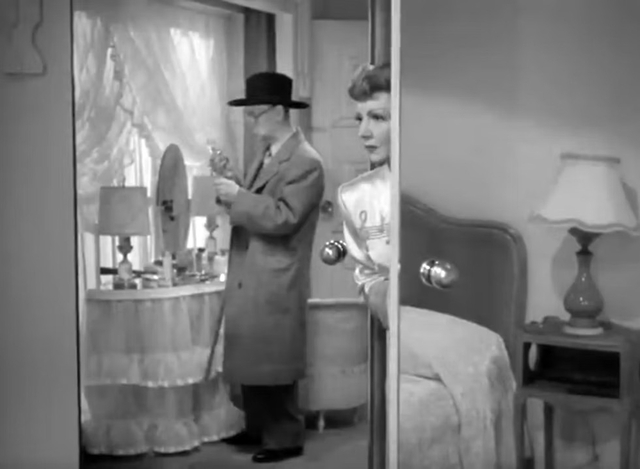
The old man in the big hat is exactly the sort of oddball Sturges loved to create for his stories. The Wienie King (Robert Dudley) is a variation on the rich Texan – the inventor of the Texas Wienie ("Lay off 'em. You'll live longer," he tells Gerry) and both too rich and too old to bother editing himself.
He's sympathetic when she tells him why they're being evicted but frank that her looks have a lot to do with his sympathy. ("I was broke too when I was about your age, but I didn't have a figure like you've got. I had to use my brains.") He pulls out a roll of bills bigger than his fist and starts peeling off hundreds, quickly overcoming her objections.
Tom isn't pleased when he comes home to find the rent and the bills paid, mostly because of how Gerry managed the reprieve. They go out for dinner and get loaded, which gets her to open up about splitting up; she thinks she's holding him back and that without her he could live more cheaply while trying to find backers for his inventions – like the inner city airport we watch him pitch to a rich retiree; a steel mesh stretched over a whole city block ("like a tennis racket") to create runways on the roofs of buildings.
It's a terrible idea, make no mistake about it, and it's classic Sturges that nobody can be bothered to say so at any point in the picture. But the screwball world is full of bad ideas, walking cartoons and obvious lunatics, albeit more starkly lit and easy to recognize than in our own, real one.
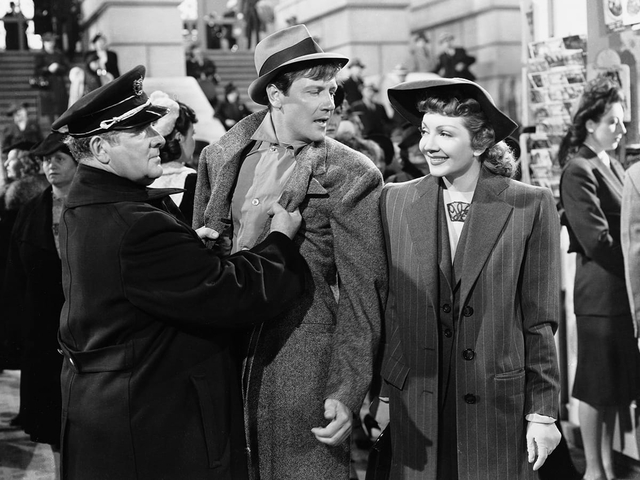
The next morning Gerry wakes up early and packs her bag, but when she tries to pin a note to the comforter covering the happily slumbering Tom she spears him awake and tries to flee for Palm Beach – on the advice of a cabby who she asks where the best place is to get divorced. She even gets him to spot her a free ride to Penn Station.
(As an aside, it's worth noting that Paramount had a standing set for Penn Station, and they weren't the only studio who did – MGM had one as well that they used in films like Vincente Minnelli's The Clock. It gives some idea of how iconic the once-grand train station was, and what a tragedy it was when it was demolished just twenty years later.)
"The Palm Beach Story, incidentally," Sturges said in his memoir, "was conceived as an illustration of my theory of the aristocracy of beauty, or, as Claudette Colbert expressed it to Joel McCrea, 'You have no idea what a long-legged gal can do without doing anything...' The setting was the Palm Beach I had known during the years when Paris Singer used to invite me to join him there. The few weeks I spent as Eleanor's house guest at Mar-a-Lago were not unuseful in the story either. Millionaires are funny."
(Paris Singer was the sewing machine heir and lover to Isadora Duncan. Eleanor was Eleanor Post Hutton, Sturges' second wife, heir to two fortunes and daughter of Marjorie Merriwether Post, who built the Palm Beach mansion currently owned by Donald Trump. If any director could claim intimate personal knowledge of the rich, it was Sturges.)
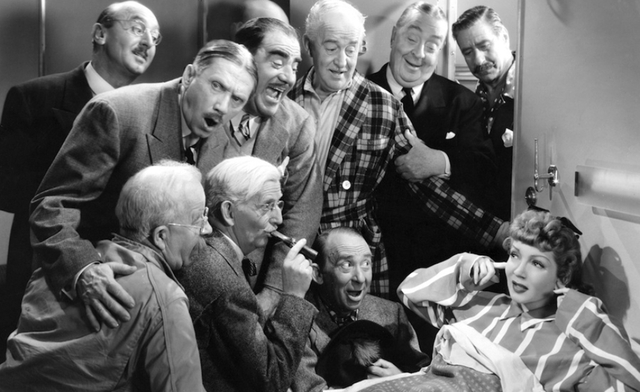
Gerry demonstrates the power of this aristocracy of beauty at the station when she stands by the platform entrance pretending to wait for a train ticket to Florida that hasn't arrived. She catches the attention of the members of the Ale & Quail Club – aging millionaires who have rented a private club car for a hunting expedition to Georgia, complete with a pack of hounds.
This section of the film – inspired by the director's childhood trip from Dresden to Paris with his mother – is the screwball highlight of his picture. The club members – played by a stellar collection of character actors like William Demarest, Jack Norton, Roscoe Ates and Chester Conklin – adopt Gerry as their mascot for the trip, and she pays for her ticket by being passed around as a dancing partner in the saloon of their club car.
They're dangerous maniacs, a gang of overgrown boys set loose by their money, but Sturges has an open fondness for these incorrigible louts that goes back to Solomon Sturges, his beloved stepfather, a Chicago stockbroker who gave the director his surname. While most of the club crowd into Gerry's room to serenade her, two members (Demarest and Norton) challenge each other to a skeet shooting match with crackers tossed through the air by their bartender (Fred "Snowflake" Toones). After Norton starts loading his shotgun with real ammunition, the two of them begin shooting up the carriage, and when Gerry flees her room for a sleeper berth the club organizes a posse, complete with hounds, and rampage through the train.
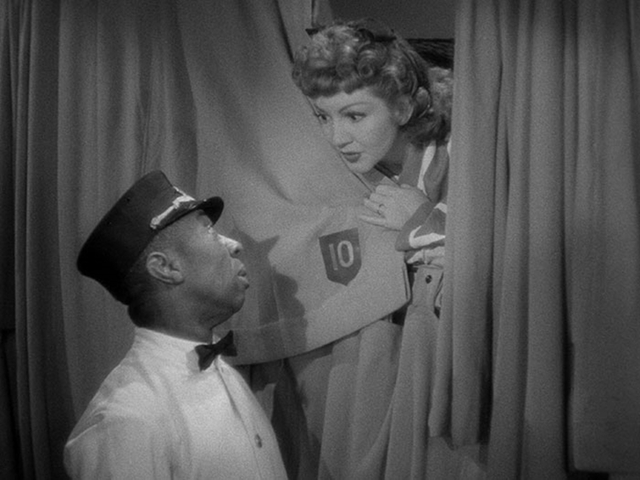
Climbing into her berth, Gerry wakes up the occupant of the lower berth, played by crooner Rudy Vallee, stepping on his face and breaking his pince-nez not once but twice. When she wakes up the next morning she discovers that the enraged conductor left the Ale & Quail Club's carriages on a siding that night, and with them her clothes, shoes and purse. Her affable neighbour from the sleeper car organizes donations from female passengers and offers to pay for her breakfast, and after that a ride from Jacksonville to Palm Beach on his boat.
He turns out to be John D. Hackensacker III, the richest man in America and clearly modeled on the then-current heir to the Standard Oil fortune. Vallee plays him as a mild-mannered penny-pincher (he calls tipping and staterooms "Un-American") with a moralistic but romantic streak. He takes her shopping for a whole new wardrobe before they sail down the coast to stay at the mansion owned by his much-married sister Maud, the Princess Centimillia (Mary Astor).
When Sturges was still working on the screenplay titled "Is Marriage Necessary?" (a title that did not escape the scrutiny of the Production Code) he went to a Ronald Colman movie with his old friend and lawyer Charles Abramson. Second on the bill was Time Out for Rhythm, starring Ann Miller, the Three Stooges and Rudy Vallee, who made the audience roar with laughter with every line he uttered in what was supposed to be a straight part.
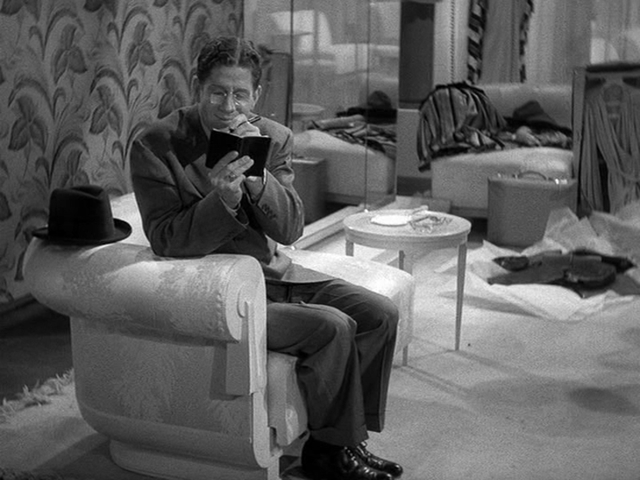
Vallee's once enormous stardom had never really faded but he was not considered much of an actor. In his biography of Sturges, Between Flops, James Curtis recounts how the director sat lost in his thoughts through the Colman picture and upon returning home immediately called for his secretary to dictate what would turn out to be a whole new character for the picture. Now he had to get Vallee for the part.
For his part, Vallee was enthusiastic and wrote a letter to Sturges telling him how much he liked The Lady Eve. The director invited Vallee to lunch at the Paramount commissary and when Buddy DeSylva walked by the table Sturges got up to introduce him to Valle, adding that "he's going to be in my next picture." DeSylva immediately went to Abramson and implored him to "get your friend off this Rudy Vallee kick."
Abramson told DeSylva to leave his friend alone and went a step further by making a bet with DeSylva that "Once this picture's released, you're going to sign Rudy Vallee."
"Now cut the kidding," DeSylva responded. "This is serious business." But when the picture opened over a year later to great reviews for Vallee, Paramount put the crooner under contract at $2500 a week.
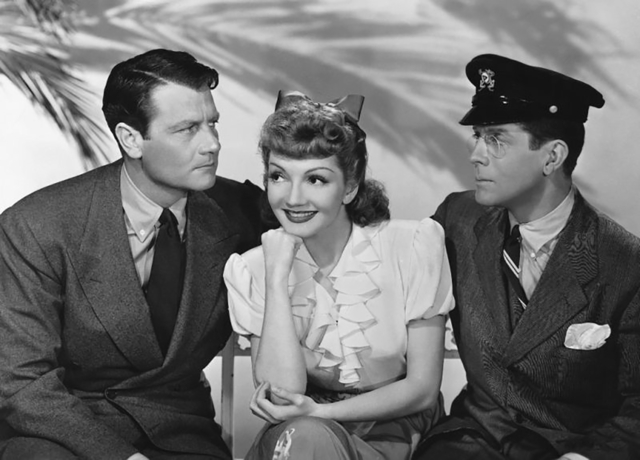
Gerry frankly tells Hackensacker that she's in Palm Beach for a divorce, paints her soon-to-be-ex-husband as a casually abusive brute, and admits that after that her goal is a rich husband, though no one as ostentatiously rich as himself. By now it's obvious that Hackensacker is set on taking that role, and Gerry seems ready to let him do just that until his yacht drops anchor and she sees Tom waiting for her on the dock.
Moping back in New York after failing to stop Gerry from getting on the train, Tom meets the Wienie King, who has taken the apartment next door and hoped to run into Gerry again. He's appalled that Tom has let himself get beaten so easily and that his wife was making money the excuse. (Talking about his own success, the Wienie King tells Tom that "It's a good business if you know where to get the meat cheap. That's my secret and I ain't telling no one.") He tells Tom that he can beat the train to Palm Beach if he takes an "aer-e-oplane" and peels bills off his roll to get Tom on his way.
Gerry rushes to meet him on the dock and by the time Hackensacker catches up she introduces him to the millionaire, his sister and Toto (Sig Arno), the comically dapper, gibberish-spouting gigolo who has attached himself to Maud, as her brother, Captain McGlue. Maud takes an immediate shine to Tom and invites him to stay at her mansion.
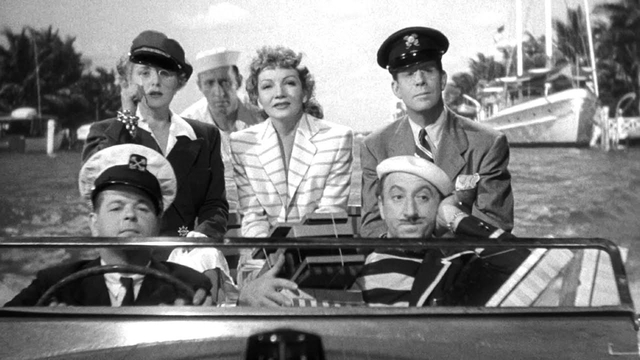
Sturges ended up going over schedule on shooting, partially because he enjoyed directing films so much and was relaxing into the process, but also because Mary Astor had such a hard time with her character and the torrent of flighty, nearly stream of conscious dialogue she had to deliver. "It was not my thing," she wrote later. "I couldn't talk in a high, fluty voice and run my words together as he thought high-society women did, or at least mad high society women who've had six husbands and six million dollars."
Vallee and Demarest had nothing but praise for Sturges as a director, and McCrea – it was the second of three films they'd make together – enjoyed working for Sturges more than any other director. Still, Tom isn't merely stolidly masculine but rather stiff-necked, and viewers might find themselves encouraging Gerry to stick it out in Palm Springs for the three months necessary for a decree.
Writing about the film in The Runaway Bride: Hollywood Romantic Comedy of the 1930s, Elizabeth Kendall calls McCrea's Tom "monotonously grumpy in most of his scenes. This wasn't McCrea's fault; it was Sturges's. It's as if Sturges, who had turned rich young men inside out with consummate satire, had reserved no insight for the ordinary, middle-class hero who was just as much a stand-in for him as they were. In the end, Tom Jeffers recalls the pre-Sturges romantic-comedy hero, the character who could get away with not apologizing for ill temper and not even communicating in a good temper.
"The audience at the time probably wasn't meant to notice that Tom Jeffers wasn't much fun to be around – that was just how American husbands were. But today we are stuck by Jeffers's emotional blindness. He can't see that his own grumpiness caused his wife to leave him in the first place. Nor by the end has he earned anything about himself."
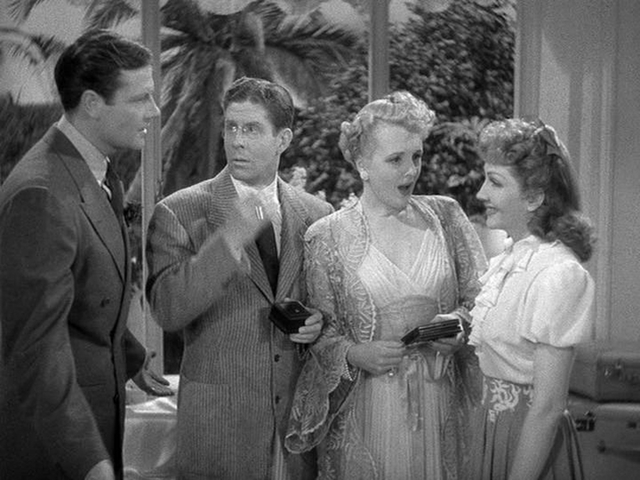
Viewers will certainly be more charmed by Vallee's Hackensacker, who reluctantly accepts that the price he has to pay for Gerry is her idea that $99,000 should go to her brute ex-husband to pay for a prototype of his tennis racket urban aerodrome. When Hackensacker, inspired by Gerry's surprise at his singing voice ("Why thank you. I used to sing in college.") hires an orchestra to accompany him in serenading Gerry from the courtyard beneath her window with "Goodnight Sweetheart", he ends up providing the soundtrack for the couple's reconciliation.
It's hard to watch without feeling that it's a raw deal for the earnestly romantic Hackensacker despite his millions, and that the consolation prize he and Maud get at the end of the picture – the identical twins of Tom and Gerry, glimpsed during the opening credits of the picture and apparently baffled to find themselves at the altar – might be a typically madcap Sturges device but hardly satisfying.
Ultimately you're supposed to enjoy the speed and comic riches Sturges provides over a brisk 90 minutes and shrug off the abrupt ending. There's the Wienie King and the Ale & Quail Club after all – and Arno's Toto, who pulls off a brilliant bit of slapstick when he exits the back of a car, pivoting stiffly at his waist and smacking his face, upside down, on the side of the door. Sturges, who adored slapstick more than clever repartee, must have been giddy when he captured it on film.
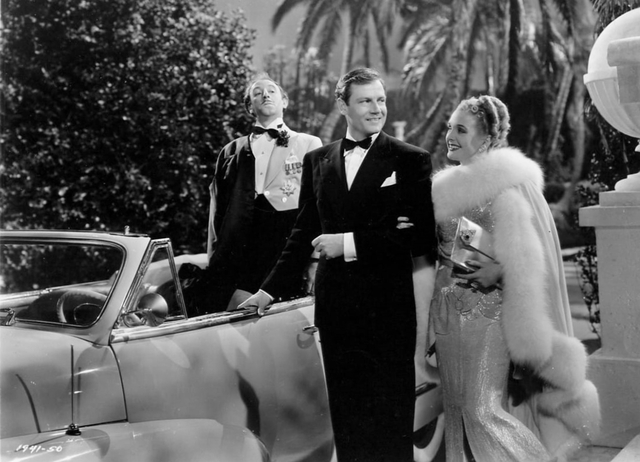
You can make a strong case that Sturges was the natural conclusion to the movie screwball comedy. He took on the part almost deliberately with a film like The Palm Beach Story, which plays like a bookend to the first great film of the genre: Frank Capra's It Happened One Night.
Sturges considered himself, as Andre Bazin later described him, a kind of "anti-Capra", and he'd spend most of Sullivan's Travels satirizing that kind of message-heavy filmmaking. He'd even take Colbert, Capra's heroine from It Happened One Night, set her running with a variation on the runaway bride story, and even had her retrace the same journey along the eastern seaboard, but backwards.
Sometime between when Sturges finished The Palm Beach Story and the film's premiere, the director came up with a list of his eleven rules for box office success. It begins with "A pretty girl is better than an ugly one" and continues with "3. A bedroom is better than a living room" and "5. A birth is better than a death." The list ends with this logical progression:
7. A dog is better than a landscape.
8. A kitten is better than a dog.
9. A baby is better than a kitten.
10. A kiss is better than a baby.
11. A pratfall is better than anything.
Club members can let Rick know what they think by logging in and sharing in the comments below, as access to the comments section is one of many benefits that comes along with membership in the Mark Steyn Club.