
Greetings from beautiful Odesa, where the Russian droning continues, albeit less spectacularly than last week. Aside from Kyiv, which is full of Brit, Yank and Euro chancers, this is Ukraine's most "multicultural" city: no Somalis or Sudanese, but I shared a round or two the other night with an engaging Bulgar couple. Despite such diversity, there seem to be fewer English-speakers, so I have had to make an effort to upgrade my highly primitive Ukrainian. Lovely city. When the drones are falling, I have to fight the strange urge that I would quite enjoy dying here.
I am here for personal reasons, and I appreciate that the social-media "influencers" lost all interest in Ukraine a long time ago. But "wars the world has lost interest in" is paradoxically a subject of great interest to me. A middle-aged couple a few blocks from me got droned the other night. Just the luck of the draw. Because, as the cliché has it, wars are easier to start than stop.
Fortunately, that doesn't apply to the latest war. In order to sidestep the looming sixty-day deadline for Congressional approval, as we noted on Sunday, President Trump has declared the Iran war "terminated". As you know, since the beginning I have regarded the conflict as a catastrophe. However, because others feel differently, we have had a policy of linking each day to a piece of pro-war commentary - which, to be honest, are becoming a little harder to find, so I am grateful for your suggestions. Scot, a First Week Founding Member of The Mark Steyn Club, writes:
My recommendation if you want to hear a positive take on the Iran war you can always read Powerline. They are as pro war as you can get.
They have great reporting on the Minnesota fraud. It's just too bad the Uniparty will never do anything to prosecute and stop the fraud.
Really wish we could focus on America first.
Good luck with that. Once presidents get a taste for bestriding the world like a colossus it's hard to get them to turn back to anything as footling as purple mountain majesties and fruited plains.
As to Powerline, I have been reading them for a quarter-century, in part because I regard John Hinderaker as the soul of moderation, and I am ever mindful of when too yawning a chasm opens up between him and my own frothing derangements. In late '22, I breakfasted with John at the Carlton Club in London, at a time when Powerline was expressing the wish that Trump would just get the hell outta the way and clear the field for Ron DeSantis, Nikki Haley, Mike Pence or whoever was the designated loser that season.
I demurred, saying that all Trump needed was a good second act. Well, he found one, in that his opponents couldn't leave well enough alone and kept suing and shooting him. So he fought a brilliant and heroic campaign - as John and his colleagues came to see, to the point where they've been Trumpier than thou on occasion. One such being February 28th:
There are not words violent enough to express my disdain for the liberals (and handful of purported conservatives) who care nothing for the security of the United States, let alone the future of the Iranian people or the prospect of peace in the Middle East.
Well, yeah, sure... But I also care about America launching wars it has no capacity to win. So Scot above is certainly correct that as February turned to March the Powerline lads were "as pro war as you can get". Then I noticed, as with other "pro-war" websites, that they wrote about the war rather less, and that increasingly discretion seemed the better part of columnar valour. Last week, Mr Hinderaker re-posted this note on the midterms:
Six months ago prediction markets gave Democrats a 58% chance of capturing the House and 27% chance of winning the Senate. Today the quoted odds are 86% (House) & 50% (Senate).
To which John added:
Why has the GOP's position eroded? Because of the war in Iran. Not because voters are unhappy with crushing the mullahcracy, but because the price of gasoline has risen.
I'm not sure that's correct. Americans were opposed to this war before the price of gasoline started to rise. It took three-and-a-half years for the Iraq war to get as unpopular as the Iran war has been from Day One. In any truly self-governing society, that should be concerning. You go to war with the army you have, as Rummy liked to say. You also go to war with the citizenry you have, and, if they don't want to go, it's as well to ponder why that might be. Twenty years ago, President Bush - in a conversation about falling support for the Iraq War - said to me offhandedly that twenty-five per cent of people won't support any war — or at least, presumably, any war short of the Princess Patricia's Canadian Light Infantry crossing the Montana border or the Royal Bahamas Defence Force shelling Miami. But, for any of the likelier American wars, that twenty-five per cent has grown to thirty, forty, fifty-five per cent straight out of the gate. What is it the majority of their fellow Americans intuit about Washington's way of war that Mark Levin and Lindsey Graham do not?
Over the weekend, Powerline linked to a piece by a former editor of mine:
Our friend Roger Kimball, an optimist, describes the Last Days of the Iranian Regime.
John writes that Roger is "an optimist" in a way that suggests he himself is no longer quite one such:
I think President Trump erred in trying to find Iranian leaders with whom to negotiate. By doing so, he has handed power over to the regime. All its nameless representatives need to do is say No, and they appear to be in control.
That's true. One notes also that, after saying on the first day that "all I want is freedom for the people", the President, in insisting that regime-change has already occurred, is entrenching Iran's rulers and ensuring the regime's survival. As John adds:
From their perspective, they don't have to win, they just need to survive.
Which, for an optimist or semi-optimist, sounds awfully like a niche Canadian on the fifth day of the war:
In order to win, all the Islamic Republic has to do is survive.
But they have more than survived. As Lindsey Graham promised on the first day:
The biggest change in the Middle East in a thousand years is upon us.
Which is true if you mean they now control twenty per cent of the world's energy. As listeners to our Hundred Years Ago Show will know, the men who led Greece into its disastrous war with Turkey were eventually tried and executed. Alas, in America there is no price to be paid, and Lindsey Graham will still be assured of four nights a week on Hannity.
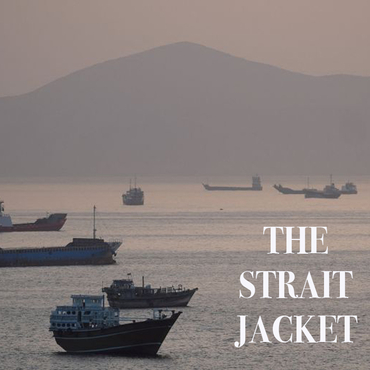
President Trump has now declared that the US will "escort" ships through the Strait of Hormuz - which, just as a reminder, is part of Iran's territorial waters. Up to February 27th, an average of 138 ships passed through the Strait each day. In the last week it's been 1-18-5-2-0-0-0 - or three per day. Can the US escort 138 ships daily?
Far from the explosions and late-night tweets, the world turns. If American leaders have to engage in colossus-like bestriding, I wish they would at least prioritise. Fifteen years ago, I wrote a book called After America because I was perturbed by the breeziness with which foreigners were beginning to talk of "the post-American world" and I wished to arrest its advance. Here, by way of a data point plucked more or less at random, are the current ten biggest banks on the planet:
1 Industrial and Commercial Bank of China
2 Agricultural Bank of China
3 China Construction Bank
4 Bank of China
5 JPMorgan Chase (USA)
6 Bank of America
7 HSBC (UK)
8 BNP Paribas (France)
9 Crédit Agricole (France)
10 Mitsubishi UFJ Financial Group (Japan)
So the top four banks are Chinese state banks, followed by a couple of Yanks, with a bit of Anglo-Franco-Japonaiserie bringing up the rear. Half-a-century back, the Top Ten was seven US, two UK, plus a token Italian. That's such a lost world that the Top Twenty even had two Canadian banks.
That's the result of America's Chamber of Commerce "right" deciding to give the global economy to the Chinese politburo. If you've just spent the intervening half-century banking at the First National Bank of Dead Moose Junction, like your grampa did, you may be wondering what that's got to do with you. Well, if you recall Joe Biden's promise to bring Russia to its knees, part of the reason that failed is because of the Chinese dominance of global banking. The west transfers money hither and yon through the Brussels-based Swift system, which went along with the sanctions on Russia. But, as part of its financial architecture for the post-American world, Peking set up something called CIPS - the Crossborder Interbank Payment System. Since the start of the Ukraine war, the value of its annual transactions has doubled.
In 2022, China kinda sorta pretended to string along with Euro-American sanctions against Russia. Four years on, vis à vis Iran, they see no such need to:
Beijing Tells China Firms to Ignore US Sanctions on Refiners
As I wrote on the first day of the new war:
The weapons of war are different today. China has taken control of much of the world without firing a shot. Islam has annexed western Europe without firing much more than the occasional macheté or Christmas-market rental-car. Somalia has conquered Minnesota without firing off anything other than federal grant applications.
As Scot recommends above, get back to the home front.
~We had a very busy weekend at SteynOnline, beginning with Mark's column from Odesa. Saturday's edition of his weekend music show found him spinning a range of artistes from kd lang to Al Jolson (on the same song), while Rick McGinnis's movie date plumped for Clint Eastwood in Dirty Harry. On Sunday's Song of the Week Mark went full gigolo, and our marquee presentation was the latest installment of his highly prescient demographic bestseller, America Alone.
If you were too busy this weekend blockading the blockade of the blockade of the Strait of Hormuz, we hope you'll want to check out one or three of the foregoing as a new week begins.