
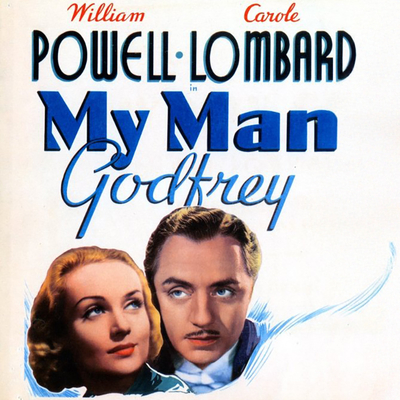
Nineteen-thirty-six seemed like a turning point in America after seven years of the Great Depression. The stock market recovered to its 1929 levels, for which voters rewarded Franklin Delano Roosevelt with a second term, which unfortunately began with the country slipping back into recession in the spring of 1937. With that kind of good news you can forgive Hollywood for imagining, if only tentatively, that America had turned a corner.
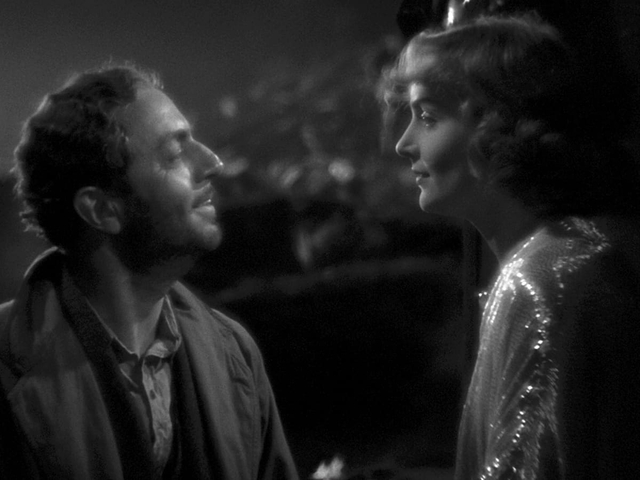
In the first scene of the 1936 screwball classic My Man Godfrey, we find William Powell's Godfrey in shabby surroundings, living in a shack in a garbage dump on the edge of Manhattan, where he jokes with Mike (Pat Flaherty), another tenant in this shantytown (once called Hoovervilles when everyone knew who to blame for the country's dismal state), that "prosperity is just around the corner."
"Yeah, it's been there a long time," Mike replies. "I wish I knew which corner."
It hardly looks like a promising setup for any kind of comedy, but it's likely audiences who had lived through six desperate years got their sense of humour worn to a rough edge. But it doesn't matter because comic relief is on its way.
Two fancy cars pull up above the dump and issue forth a trio in fancy dress: haughty Cornelia Bullock (Gail Patrick), a brunette dressed in shiny black, who is trailed by her tuxedoed swain as she marches with purpose through the trash to Godfrey. They're followed in turn by Angelica's sister Irene (Carole Lombard), a blonde in contrasting silver.
Cornelia tells Godfrey that she's on a scavenger hunt and needs to find a "Forgotten Man", and that if he comes with her to the Waldorf-Ritz she'll give him five dollars. Godfrey takes exception to both her quest and her tone and backs her into a pile of ashes. She makes a hasty exit, taking her swain with her, but leaves behind Irene, who tells Godfrey that she's suddenly decided that "I've decided I'm not going to play any more games with human beings as objects."
"It's kind of sordid when you think of it," she goes on, fascinated by her own fresh train of thought. "I mean, when you think it over."
Godfrey is charmed by this naif and impulsively agrees to be her Forgotten Man, if only to help her beat her older sister for, apparently, the first time in her life.
My Man Godfrey began as a novel, 1101 Park Avenue, written by Eric S. Hatch, a New Yorker writer who would later work on the screenplay for Topper. It was one of the first films made by a reorganized Universal Studios and Charles Rogers, its new head of production. Without many stars under contract except for Boris Karloff and Edward Everett Horton, Rogers had to borrow his marquee cast and got Powell from MGM. Constance Bennett and Miriam Hopkins were originally considered to play Irene, but both Powell and director Gregory La Cava insisted on using Powell's ex-wife Carole Lombard, who was loaned out from Paramount.
While casting a divorced couple together onscreen might sound risky, Powell and Lombard had parted on amiable terms and remained the best of friends. In her book The Runaway Bride: Hollywood Romantic Comedy of the 1930s, Elizabeth Kendall writes that "One wonders how much Powell had taught, or tried to teach, Lombard, during their year of marriage, about his own subtly uninhibited mode of screen acting. When she reunited with Powell for My Man Godfrey, his lessons, or his example, finally 'took' in her persona."
1936 is a watershed year in Lombard's career: she had by this point survived a series of obscure (and largely lost) pictures in the silent era and a mixed bag of roles as a starlet with potential as a comedienne under contract to Paramount. She'd made We're Not Dressing and Twentieth Century in 1934 and Hands Across the Table and Love Before Breakfast before being loaned to Universal for La Cava's picture.
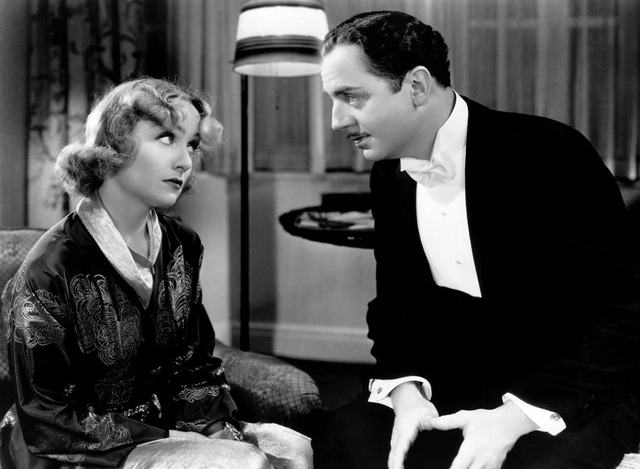
But Kendall is right that the role of Irene Bullock snapped her persona into focus – or rather helped weaponize her anarchic comic energy – and what followed were pictures like Nothing Sacred, True Confession, Made for Each Other, Mr. & Mrs. Smith and To Be or Not to Be. What might have come next will be forever unknown thanks to the tragic plane crash that ended her life in 1942.
The scene at the Waldorf-Ritz is pure anarchy, a crowd in evening dress filling the lobby with a thundering din while carrying everything from monkeys to spinning wheels in from their scavenger hunts. We meet Irene's mother Angelica (Alice Brady) as she pushes through the crowd squealing "I have a goat! I have a goat!" Her father Alexander (Eugene Pallette) is fortifying himself at the bar, emotionally sagging under the weight of his family burden.
Irene enters with Godfrey and presents him to the scavenger hunt judge (Franklin Pangborne), who awards her with bonus points and the winning trophy before Godfrey, asked to address the crowd, calls them all "empty-headed nitwits." Emboldened by her victory over Cornelia, Irene impulsively offers Godfrey a job as the family's new butler.
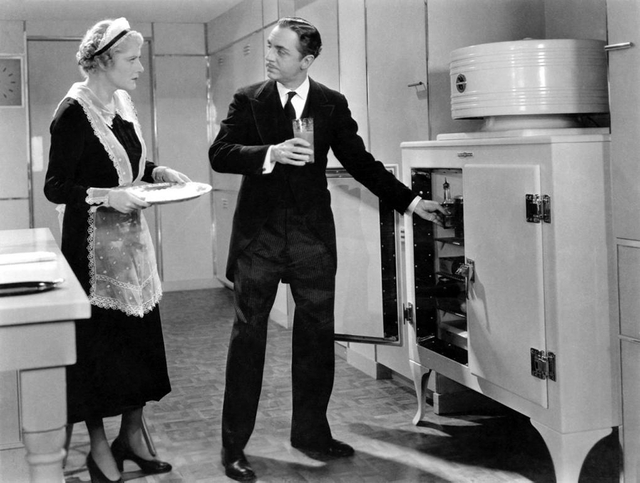
Godfrey arrives the next morning in a rented suit and meets Molly (Jean Dixon), the family maid and the sole long-term member of the Bullocks' household staff. She warns him that nothing would prepare him for life in their service and sends him up with a glass of tomato juice for the hungover Mrs. Bullock, which he fortifies with several generous dashes of Worcestershire sauce.
Dixon was more of a Broadway actress known for roles in George S. Kaufman and Moss Hart comedies. Her career in Hollywood was sporadic and included small parts in films like James Whale's thriller The Kiss Before the Mirror, the Joan Crawford vehicle Sadie McKee and alongside Lombard and Fred McMurray in Swing High, Swing Low before she left on a high note in George Cukor's screwball classic Holiday. She's great as Molly the maid – wise-cracking and all-knowing, and the only sane presence in the Bullocks' vast suite at 1101 Park Avenue (a non-existent address in the middle of blocks of doorman buildings on the Upper East Side).
Irene has no recollection of hiring Godfrey at first – the highlight of her night had apparently come later, when she borrowed the horse from a hansom cab driver and stabled it in their library. But she revives when she sees him shaved and suspiciously well-suited to his morning coat and waistcoat and decides to make him her "protégé" – a mission she takes on with zeal when she sees how much his presence annoys her sister Cornelia.
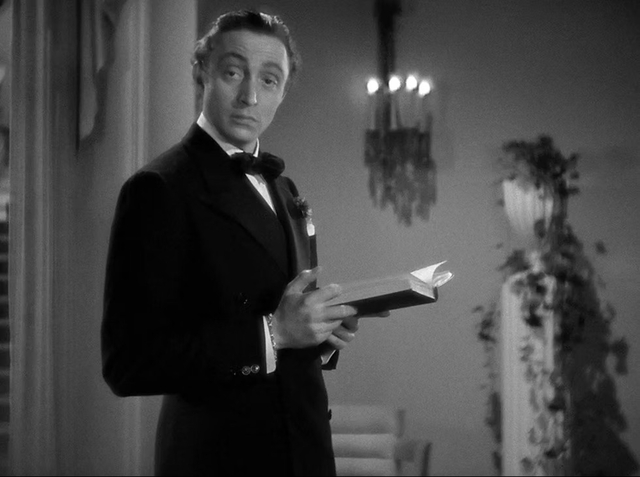
He joins another protégé in the Bullock household – Carlo (Mischa Auer), her mother's pet concert pianist, forever playing the mournful Russian ballad "Ochi chernye" (also known as "Dark Eyes") while scarfing down food from the Bullock's kitchen. Auer is another standout in a loaded supporting cast, especially when Mrs. Bullock implores him to "do the gorilla for Irene" when she's having a tantrum and he climbs the set with his arms swinging, picking nits from the scalp of Mrs. Bullock's Pekinese.
La Cava, who had been a reporter in Rochester and worked as an animator for William Randolph Hearst after running the publishing magnate's comic strip service, started his directing career making two-reel comedies for Richard Dix and W.C. Fields before getting his break directing features when sound took over the movies. His talent for comedy was overlooked until It Happened One Night kickstarted a rage for comedies and he found his way to his preferred genre.
La Cava's sets were described as anarchic, much like those of Leo McCarey, his peer as a screwball director, complete with on-set pianos. "People on a McCarey film or a La Cava film had fun –" wrote James Harvey in Romantic Comedies in Hollywood from Lubitsch to Sturges, "if they weren't having a breakdown. And actors in general adored them. Joel McCrea said in 1978 that La Cava 'talking about a character' was 'a magic thing' ('he would take you aside and talk very quietly') ...La Cava beginning a film, he said, 'never had but half a script, and then he just read it to us.' He would often, said (Katharine) Hepburn, 'let the scene sort of shape itself,' rehearsing and rewriting on the set."
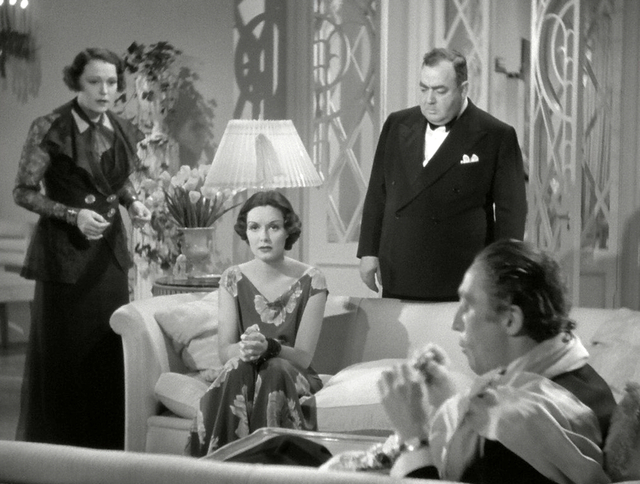
La Cava, Elizabeth Kendall writes in Runaway Bride, "needed more raucous and uninhibited characters who could go berserk on the screen like the W.C. Fields of the silent years or the Lee Tracy of The Half-Naked Truth. In short, he needed cronies." He found them with screenwriter Morrie Ryskind (The Cocoanuts, Animal Crackers, A Night at the Opera, Stage Door, Penny Serenade) and Powell, who brought Lombard along and effected a signal change in his movies.
"After a string of well-made movies without any special distinction or personal flavor," Kendall writes, "suddenly he made this one, a raucous tale with the mood of a communal prank." She judges that Ryskind and La Cava improved on the original book's portrayal of the Bullock family and the character of Irene in particular.
"With her wide eyes, her breathless tempo extended into anxious trail-offs, Lombard evokes not just a spoiled debutante but the whole barbaric-wealthy universe that has spoiled her. She can't concentrate very long on anything and she's never encountered the enormous fact of the Depression."
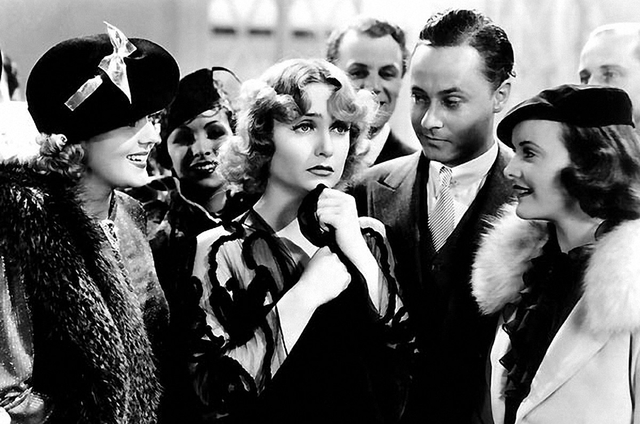
Irene is lovelorn in the presence of Godfrey, fixated on the tiniest scrap of approval or acknowledgement. He rebuffs her firmly but politely when she tries to force herself on him in his room, and spirals into a comically bleak depression when he maintains a proper distance from her while at work.
She throws a raucous tea party while wandering around in black mourning weeds declaiming that "life is but an empty bubble." Unfortunately for Godfrey one of the guests is rakish man-about-town Tommy Gray (Alan Mowbray), an old friend who knows that, far from being a simple Forgotten Man, the Bullocks' new butler is one of the Parkes, an old Boston Mayflower family of considerable wealth and reputation, from which Godfrey is in self-imposed exile after a love affair ended badly.
He convinces Tommy to keep his secret and make up a story about Godfrey being his valet at Harvard but meets him for drinks on his day off where they're spotted by Cornelia, who suspects a subterfuge at play and confronts him with an implied threat. Realizing what he's got himself into with the Bullocks, Godfrey decides to tie one on and returns to work comically tight.
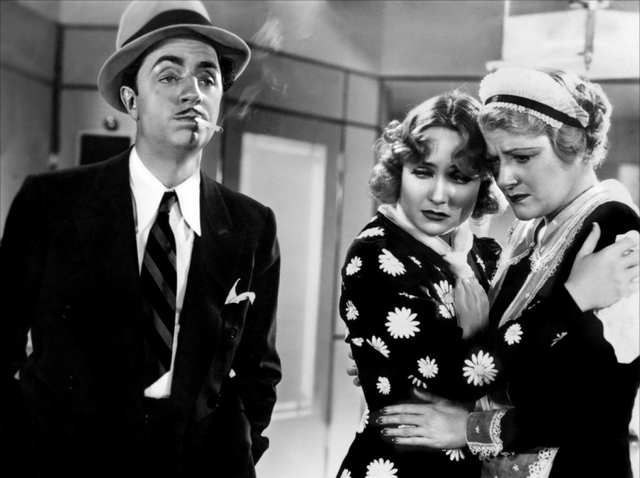
While he stumbles about his duties, Irene is reduced to a sobbing mess by his (now very wobbly) indifference and commiserates with Molly, who she realizes has also fallen in love with Godfrey. In the meantime, Cornelia takes the opportunity to set Godfrey up as a thief, hiding a string of her pearls under his bed, but when the cops are called and Godfrey is roused from his drunken slumber, they don't find anything, and Mr. Bullock smooths it over by promising to make a sizable donation to the police pension fund.
James Harvey writes that the character of Irene shouldn't work, at least on paper. "The heroine of My Man Godfrey really reverses the joke that lies at the center of most screwball comedies: the woman is smarter, stronger, and finally more independent than the hero. Irene, however, is dumber than everyone, except possibly her mother, who is a shriller variant of the same comic routine... Most damaging of all, perhaps, the character simply isn't very funny. Her inconsequence is too predictable and mechanical – too dumb, in fact. As when Irene tells Godfrey that he is different from her late, lamented Pomeranian: the Pomeranian had fleas, she explains, and didn't use big words. The nonsense is reflexive and tired, in just this style, throughout."
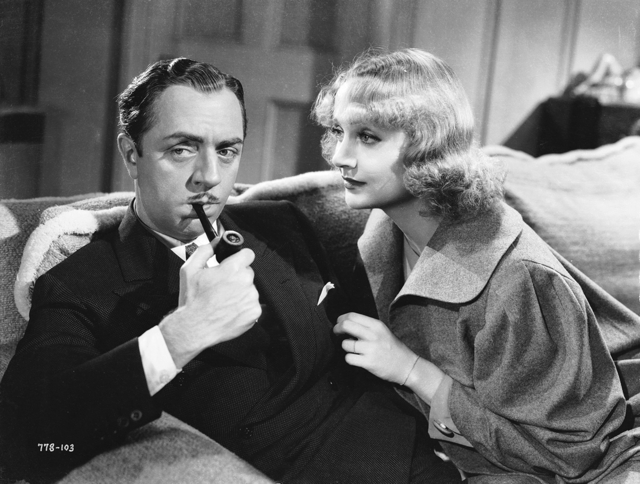
But he admits that not only does Lombard rescue this role, "she makes it into a triumph." Here's his description of their first scene together the morning after she hires him:
"See you in church," she says to Godfrey, her butler and "protégé", as he leaves her room after unsuccessfully trying to serve her breakfast. It's the same line she throws at Gable in No Man of Her Own after he kisses her in the library stacks; but there it is comically tormented, a cry of distraction. Here it is serene – Irene is leaning forward on the edge of her bed, wreathed by the collar of her feathered negligee, her fierce broad brow covered with blond curls, her face ravishingly lit from above – a vision, in short, of movie-star glamour. And at the center of it all, firmly in place, is a grin of derangement.
In Runaway Bride, Kendall describes another scene that typifies Lombard's daffy energy; after Godfrey announces that he's leaving the Bullocks' service, Irene has a fainting fit but when he spies her in a mirror looking up, he carries her into the shower and turns on the cold water. She erupts out of the stall, her gown soaked as she jumps up and down on the bed shouting to her mother that "Godfrey loves me! He put me in the shower!"
"Lombard," she writes, "was the most exhilaratingly anarchic child-woman in all of romantic comedy: this scene says it all. Its humor works not because Lombard has become a child but because she plays brilliantly with a child's timing. She's jaunty. She skips back and forth between the shower and the doorway. Just before she gets to her mother, she careens to a stop and lowers her voice as if conveying secret information. It's like a moment out of the innocent-nasty years of slapstick Sennett comedies, when Fatty Arbuckle and Mabel Normand skipped all over the landscape."
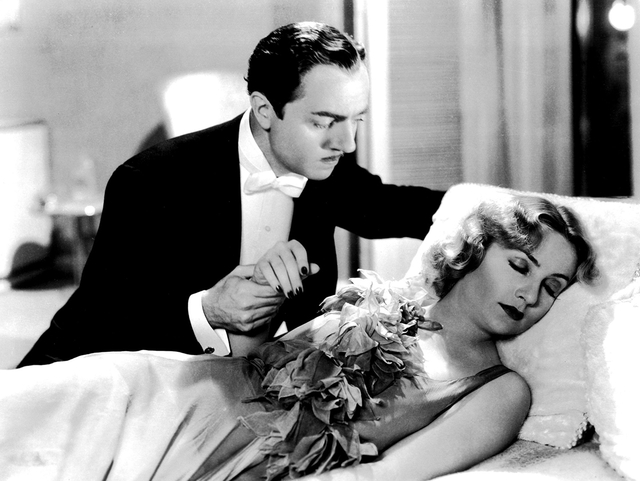
Before Godfrey leaves the Bullocks he makes a confession: he found the pearls Cornelia hid in his room and pawned them for some capital that he used (no doubt in that recovering stock market) to short sell and buy back shares in Bullock's company, restoring them to him after a financial disaster that would have pauperized his family. Even Cornelia is chastised into a (suspiciously sudden) change of heart.
He even made a bit of a profit for a personal project of his own – a glitzy nightclub called "The Dump" built on the shantytown where he once lived, now the hottest spot in town, employing Forgotten Men like Mike, now his front of house manager. He had Tommy's help and the mayor's backing and has even built what we'd call subsidized housing for men who couldn't work. Since 1936 was supposed to be a year of recovery, the film imagines a solution for the Depression.
Kendall compares My Man Godfrey to Frank Capra and, particularly, Mr. Deeds Goes to Town, which was released the same year and also imagined a solution to the Great Depression by having its hero give away farms. La Cava's film, she writes, "locates Capra's idea of pre-Depression corruption not in a class of jaded politicians and literati but in an anarchic family. Then it administers the coup de grace to the mock-pious hero, by trapping him in that family through his marriage to Irene."
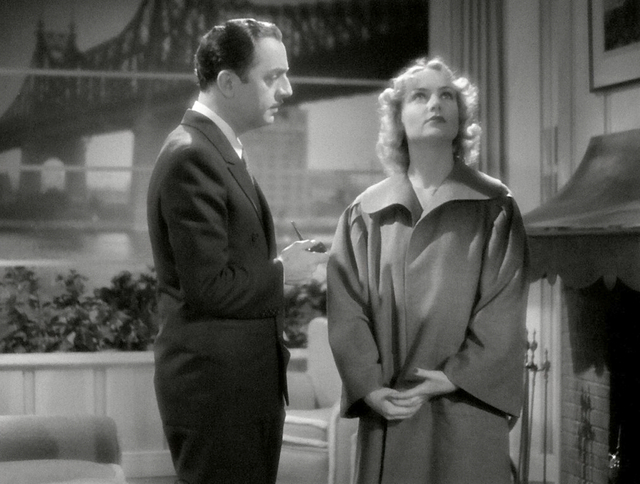
At the end of the film Irene arrives at The Dump and blithely wanders past the customers at their tables, greets the mayor and marches straight into Godfrey's apartment with its river view. ("Oh, it's a lovely view, the bridge and everything," Irene asks. "Is it always there?") While Godfrey stands, speechless, she asks the mayor if he can marry them without a license, enlists Mike as a witness and tells her new husband that "It'll all be over in a minute."
It's a cute ending but part of me has always wondered if Godfrey might have been happier with Molly, ultimately. My Man Godfrey wasn't a massive hit, but it got six Oscar nominations to Mr. Deeds' five, though Frank Capra did win for best director. It was remade by Henry Koster twenty years later with David Niven as Godfrey and June Allyson as Irene, with a cast that included Eva Gabor, Martha Hyer and Jeff Donnell as Molly, but it's hard to imagine the story being any more relevant after it was transplanted from the Great Depression to right in the middle of the postwar economic miracle.
Club members can let Rick know what they think by logging in and sharing in the comments below, as access to the comments section is one of many benefits that comes along with membership in the Mark Steyn Club.