After surveying the online debates, I think people are missing the most important thing about all this.
It's not, as some say, that demography is always irrelevant to a story or character. But it's also not that because The Odyssey is a story about Greeks, written down by a Greek author, taking place in Greek-speaking areas, Nolan's version — or any other version — must only feature Greeks. Or even some Greeks.
After all, many movies, TV series, and novels have either re-told The Odyssey, or drawn inspiration from it. Just a few movies off the top of my head: Cold Mountain, The Return, Apocalypse Now, O Brother Where Are Thou, and The SpongeBob Square Pants Movie. But no one complained about those, even where they re-situated the story and featured no Greek actors.
So why has only Nolan's version generated controversy?
The leftist answer is: conservatives hate black people, and Nolan cast Lupita Nyong'o. The conservative answer is: the casting choices reflect a grating Hollywood habit of trying to browbeat everyone out of a racism they don't even feel, by shoehorning DEI hires into every position possible; the story is never just the story for Hollywood anymore; it's only ever another opportunity to shove an unneeded (and therefore resented) message down everyone's throat. Or maybe the motive's even worse: these people change and ruin things just because they can; just because it makes them feel more powerful, like Heath Ledger's Joker setting fires just to watch the world burn.
But I think there's more to the controversy than that. A thought-experiment will help clarify.
Imagine that, instead of this particular movie, Nolan had written and directed a movie called, Big John. Here's the synopsis:
When civil war erupts in early 1861, a nineteen-year-old plantation owner's son joins the Confederate army. The young man's father sends along his trusted slave, Big John, to act as his son's personal valet.
But Big John doesn't want to go. He's fallen in love with a young slave woman named Mary, who's just given birth to their son. He wants to stay home with his new family.
Alas, circumstances being what they are, Big John has to leave with his master's son. He expects to be home in a few months, but the war drags on for years. Big John can't return home. He can't even communicate with Mary. Finally, after his charge dies in a skirmish and the war ends, Big John is free to return. The problem is, he's now many hundreds of miles away from home; has no money; has no maps or compass; can't read; and doesn't even know if Mary and their young son are still back at the plantation. He's not even exactly sure where the plantation was.
Nevertheless, Big John does everything he can to return to his family, even though this proves far more difficult than he ever imagined. He manages to overcome obstacle after obstacle, and finally makes it back to the plantation. There he finds his faithful wife enduring constant harassment from other men. He also reunites with his son, now a young man. Together, Big John and his son exact revenge on those who harassed Mary, they reunite as a family, and they all live happily ever after.
Now, in all seriousness, is there one single person in America — or anywhere on the planet, for that matter — who would object to Big John (obviously a retelling of The Odyssey) only because the main characters were black? Would anyone complain that it didn't star Greeks?
No. There isn't one single person who'd object. Find the most toothless, moonshine-swilling, beer-bellied, rebel-flag-waving redneck out there — not even he would object. Everyone would say, "that's one helluva movie".
So, the problem with Nolan's movie isn't that Lupita Nyong'o is black. The problem is what screenwriters call the storyworld. Stories have their own internal logic, ethos, setting, rules, culture, inhabitants, constraints. In any story, certain things are possible, certain things aren't. In fact, without constraints on what can happen, you can't have any story at all: if anything can occur at any moment to anyone for any reason, then no character ever faces any challenge, danger, or potential loss. Stakes can't exist. This is true even of stories involving magic and the supernatural; they all have, because they must have, an internal structure of possibilities and impossibilities.
Whether they fully realize this or not, what critics are objecting to in Nolan's Odyssey isn't that it presents a black Helen. It's that it presents a black Helen, a sickly transgender Achilles, cartoonish armor alongside authentic-looking armor (albeit from a later period of Greek history), and a dozen other features, in violation of the Homeric storyworld Nolan himself is conveying. What storyworld rupture means is, the story cannot be believed in. And if it cannot be believed in, then there can be no emotional or psychic resonance with the audience — and that means, the movie or novel or whatever it is, is pointless.
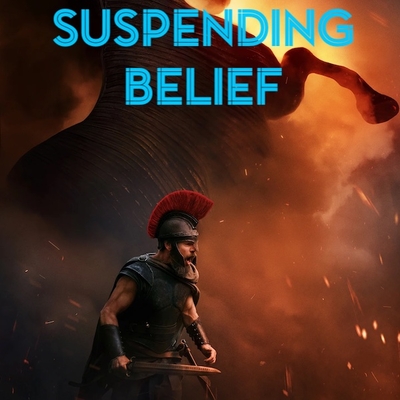
The need to maintain the storyworld isn't a new insight. All great narrative productions do that; that's a big part of why they're great. Samuel Taylor Coleridge amongst many others commented on this over two centuries ago, noting that every great story must induce — must deserve — a "willing suspension of disbelief" from the audience. That willing suspension can only happen when the storyworld remains consistent.
One funny illustration of storyworld rupture comes from an early scene in the 1968 Peter Sellers comedy, The Party. Sellers plays Hrundi V. Bakshi, a well-meaning, but bumbling and dull-witted Indian actor trying to make it big in Hollywood. Bakshi's thrilled when he wins a role in a period piece called Son of Gunga Din, set in 1878 India. But during shooting, a Baskhi oversight ruins a scene, and would have ruined the entire movie if the increasingly exasperated director hadn't caught it. You can watch the scene here.
In other words, there's nothing wrong per se with any particular casting choice, just as there's nothing wrong per se with a movie character wearing an underwater watch. But there's always something wrong with any choice which ruptures the storyworld. From what I can see, that's the problem with Christopher Nolan's forthcoming movie. If you're going to produce an authentic re-creation of Homer's great epic, following the text itself, you have to go all the way. Certainly that's true artistically. The big question for Universal Pictures is whether that's also true commercially, at least in this case.
I guess we'll find out next month.
Club members can let Tal know what they think by logging in and sharing in the comments below. Access to the comments section is one of many benefits that comes along with membership in the Mark Steyn Club. Join today!