When Abraham Lincoln delivered his second inaugural address on March 4, 1865 the Civil War was nearly over. After recalling the circumstances of his first inaugural address, given precisely four years earlier and just before the nation fell into civil war, he told the crowd with characteristic understatement that "the progress of our arms...is as well known to the public as to myself; and it is, I trust, reasonably satisfactory and encouraging to all."
After the issuing of the Emancipation Proclamation two years previous and the passing of the Thirteenth Amendment outlawing slavery by the House of Representatives just two months earlier, he observed to the crowd outside the East Portico of the Capitol Building that neither side fighting the war "anticipated that the cause of the conflict might cease with, or even before, the conflict itself should cease."
Lincoln, as religious as any man at the time though unsubscribed to any particular religion, wondered that while both sides "read the same Bible, and pray to the same God; and each invokes His aid against the other...the prayers of both could not be answered; that of neither has been answered fully."
It was an admission that while the nightmare of the Civil War was nearly over, the business of his second administration would be the more difficult one of restoring unity to the country and rebuilding the devastated South while navigating everyone into a future without slavery – a future that many of them, whether Confederate or abolitionist, doubted they would see in their lifetimes.
As for Abraham Lincoln, his lifetime would end just over a month from that day in March.
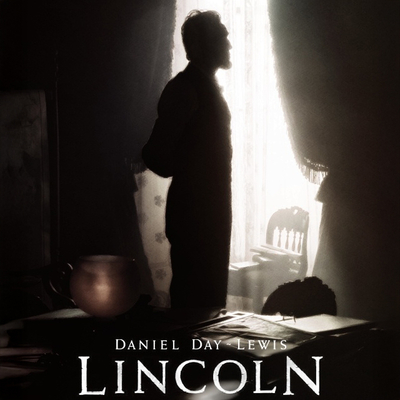
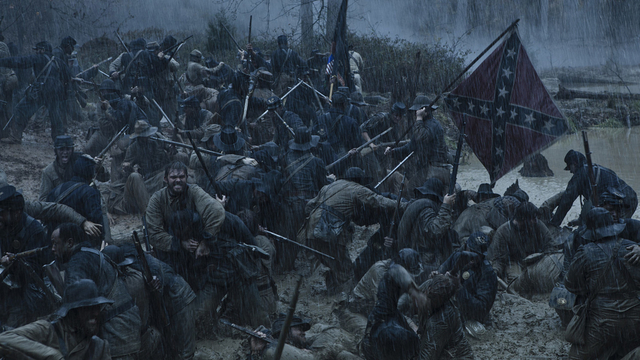
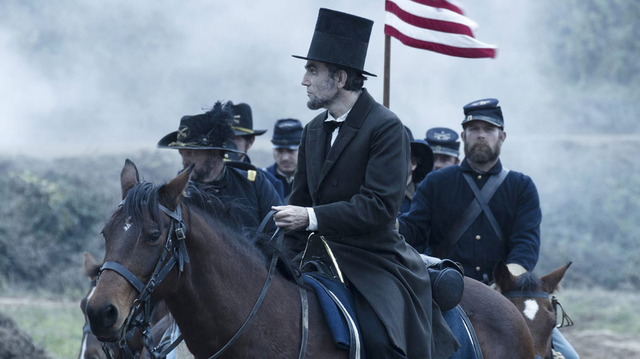
Stephen Spielberg's 2012 biopic Lincoln is set during the last four months of Lincoln's life, just after he was returned to office in the 1864 federal election and up till his assassination by John Wilkes Booth just days after the Confederate surrender. But it begins a year before that with the Battle of Jenkins' Ferry – shown as an awful melee in rain and mud with Union soldiers from the 2nd Kansas Colored regiment in hand-to-hand combat with Confederate troops.
This cuts to the following year, with one of those veterans of the 2nd Kansas Colored, a corporal named Green (Colman Domingo) talking to Lincoln (Daniel Day-Lewis) as he visits Union troops preparing for the Battle of Wilmington, one of the last decisive battles of the war. He's joined by a black corporal from a Massachusetts regiment (David Oyelowo) who takes the opportunity to let Lincoln know that those colored soldiers were paid three dollars less a month than white soldiers, with another three dollars taken from their pay for uniforms, while there are no commissioned black officers to command them.
The corporal wonders if, now that white citizen have grown accustomed to black men in uniform carrying guns and fighting on their behalf, if they might one day "abide the idea of negro lieutenants and captains. In fifty years maybe a negro colonel. In a hundred years, the vote." It's a conspicuous and pointed scene, front-loaded into the film by Spielberg and screenwriter Tony Kushner. The private from Kansas looks embarrassed by the audacity of the corporal from Massachusetts, who's asked by Lincoln what he intends to do after the war.
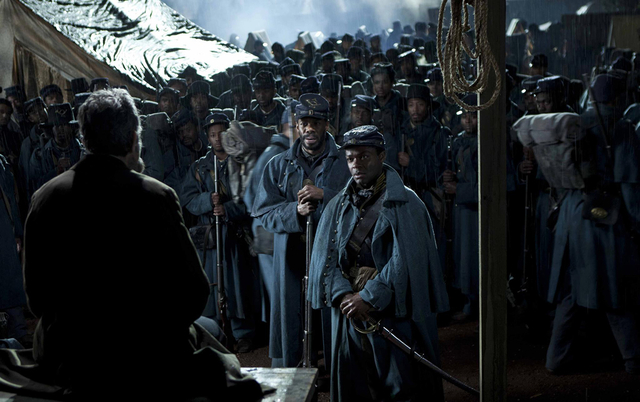
Perhaps he might work for him, the corporal replies, "but you should know sir that I get sick at the smell of bootblack and I cannot cut hair." I can't speak for the likelihood of such an encounter actually happening in the winter of 1865, and I can't recall anything like it in any other film about Lincoln I've ever seen, but I'm sure it's meant to confront Day-Lewis' proxy Lincoln with the weight of unfulfilled expectations as they would transpire in his absence, delivered by a character that plays like a time traveler from the present, sent to arouse the conscience of the president who is still regarded as the most consequential to ever hold office.
Two more time travelers present themselves to Lincoln – a pair of awestruck white soldiers (Lukas Haas and Dane DeHaan) with the demeanor of mallrat stoners who say they heard Lincoln speak at Gettysburg and proceed to recite his famous speech back to him, haltingly. The men are called off to muster but the corporal from Massachusetts lingers behind to finish where the two young white recruits had left off:
"That we here highly resolve that these dead shall not have died in vain. That this nation under God shall have a new birth of freedom, and that government of the people, by the people and for the people, shall not perish from the earth..."
Lincoln is loosely based on Doris Kearns Goodwin's Team of Rivals: The Political Genius of Abraham Lincoln – a book Goodwin was still writing when she met Spielberg while working as a consultant on the capitol millennium celebration Spielberg was producing. He asked her if he could buy the option on the still-unfinished book, which he obtained in 2001.
A first version was about Lincoln's friendship with Frederick Douglass and a second draft apparently told the whole story of Lincoln's presidential tenure. Tony Kushner was hired to write a new version and delivered a 500-page draft that was cut down to focus on Lincoln's struggle to pass the Thirteenth Amendment before the South was defeated.
The director was forced to propose a low budget for the film ($50 million – low for a Spielberg picture) to calm Paramount after the failure of Amistad (1997), another period picture considered similar in subject to Lincoln. Paramount still dropped the project, and he made a new distribution deal with Disney and a production partnership with 20th Century Fox so that Spielberg's studio, Dreamworks, wouldn't have to cover the whole filming cost.
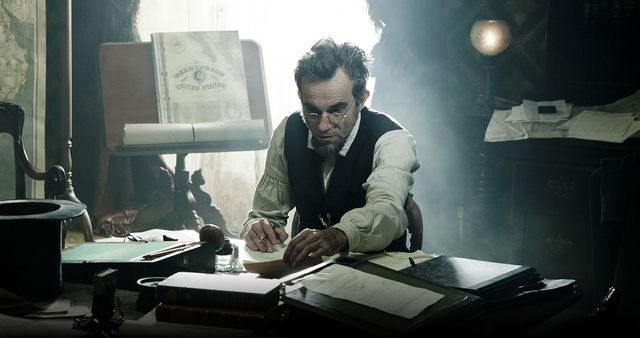
Goodwin's book was about how Lincoln enlisted three of the men he had run against for the Republican nomination in 1860 – William H. Seward, Edward Bates and Salmon P. Chase – for major roles in his cabinet, along with Edwin M. Stanton, an ally of Chase. For the purposes of Spielberg's film only two of them were relevant to the story of the passage of the Thirteenth Amendment near the end of the war: Stanton (Bruce McGill), who was Secretary of War, and Seward (David Strathairn), Lincoln's Secretary of State and major adviser.
Lincoln, who had promised in his first inaugural address not to change the status quo of slavery in states where it was law, had changed his position publicly to reflect more closely his private beliefs about slavery. The Emancipation Proclamation – as explained in Lincoln – was a calculated blow at the Confederacy's economy at a time when victory didn't look certain.
The Thirteenth Amendment would close the door on slavery legally and forever, but its opponents argued that it made it possible to argue that blacks were not just equal in the eyes of the law but morally and socially, and made it inevitable that they would be able to demand the right to vote, which was not universal in every state and wouldn't be for decades to come.
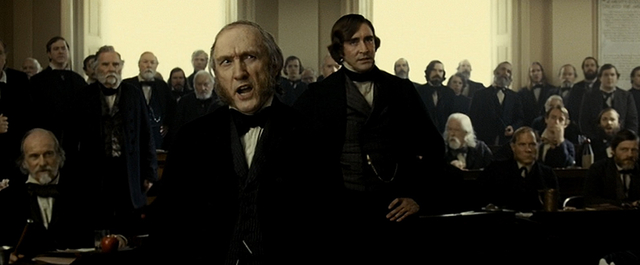
Lincoln's main opponents to passing the Thirteenth Amendment in the House are the Democrats, led by Ohio's George H. Pendleton (Peter McRobbie) and New York's Fernando Wood (Lee Pace). Though the film shows how divided the Republicans were at the time, it doesn't bother explaining that the Democrats were also divided into war and peace factions, with the latter prominently featuring Wood.
Goodwin doesn't do much to describe the characters of Pendleton or Wood, but the film paints them as stark political villains, with Pendleton glaring furiously as the party whip and Wood acting as his rhetorical blade, dominating debates with his rhetorical skill in one of the places Lincoln isn't allowed to make arguments in person.
Since the recent elections had decimated the Democrats, the House is full of lame duck candidates waiting to be replaced, and it's these men who Lincoln needs to either abstain or switch sides and vote for the amendment to give it the two-thirds majority it needs to pass. To that end he relies on Seward to practice the dark arts of politics.
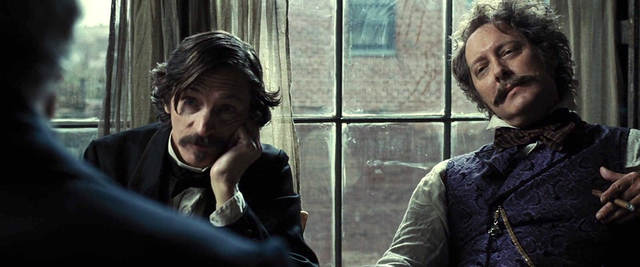
Seward hires three operatives to go about identifying and persuading any wavering congressmen: Richard Schell (Tim Blake-Nelson), Robert Latham (John Hawkins) and William Bilbo (James Spader). We'd call them lobbyists today, and they provide comic relief during the main drama of Lincoln, with Spader's Bilbo in particular embodying the roguish but bottomless cynicism essential to his job.
Forbidden to offer outright bribes, Seward has the seedy trio seek out wavering congressmen and offer them patronage appointments to make a living after they lose their seats. The film makes up fake congressmen like Rep. Clay Hawkins of Ohio (Walton Goggins) to paint a picture of weak men who've failed upward into the fringes of power and are trying to cash in before they're returned to obscurity; low-hanging fruit for the practiced lobbyist.
Modern viewers with reasonably dismal opinions about politics and politicians will find it funny and believable, but it's almost entirely a fabrication. It's not that politics in the mid-19th century wasn't rife with corruption, graft and ambitious weaklings, but that, as a post on a blog published by Dickinson College on the "House Divided Era of 1840-1860" explains, historians have no clear idea how precisely the trio known as the "Seward lobby" operated or what effect they had on the passage of the Thirteenth Amendment. None of them are mentioned in Goodwin's book.
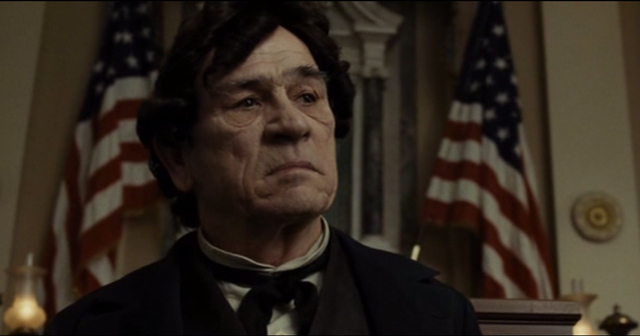
Even more crucial to the passage of the Thirteenth Amendment in Spielberg's film is devout abolitionist Thaddeus Stevens, one of the leaders of the "Radical Republican" faction of Lincoln's party. While the conservative wing of the party led by Ohio's James Mitchell Ashley (David Costabile) favours a measured implementation of slavery's end, Stevens and his radicals (as expressed in the film) want punishment for Confederate leaders, a Treaty of Versailles-like confiscation of Southern wealth to aid newly freed blacks, and their immediate enfranchisement.
Stevens is only mentioned four times in Goodwin's book but as played by Tommy Lee Jones in the film he's the bad cop to Lincoln's good cop, a cantankerous and terrifying figure in the House, animated by the dark spirit of John Brown. He's a fundamentalist on abolition but, just as the vote is pending and a unified front is required, Jones' Stevens is forced to stand on the floor of the House and, directly questioned by Wood, state that he only believes in equality before the law, implying that blacks aren't equal morally, intellectually or spiritually, as Wood's Democrats insist.
The scene shows the old lion cornered by a necessary compromise while jackals like Wood and Pendleton snap at him. Jones' Stevens looks both beaten and ashamed until he turns and admits that even obviously inferior men like Pendleton – a "moral carcass"; "more reptile than man"; worthless and unworthy; "who should have been gibbetted for treason long before today" – "ought to be treated equally before the law."
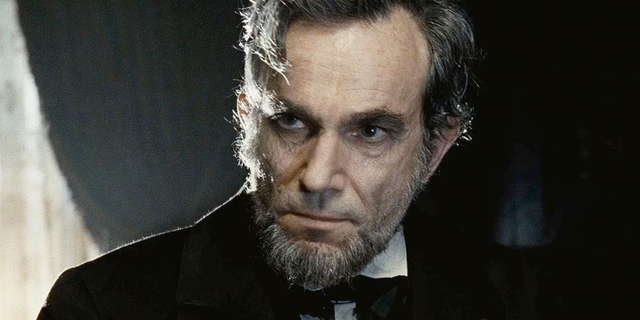
It's a great scene, with all credit due to Kushner, Spielberg and Jones, who went to great lengths to paint Stevens nearly as heroically as the film's titular main character. Day-Lewis was Spielberg's first choice to play Lincoln, but he considered the idea "preposterous" and turned it down, and the director turned to his Schindler's List star, Liam Neeson.
Neeson told GQ that he realized he was wrong for the part after a table read and also said later that he was too old at 58 for the role (Lincoln was 56 when he died), while co-star Sally Field, who played Mary Todd Lincoln, claimed that the sudden, tragic death of Neeson's wife Natasha Richardson was another reason. Neeson told Spielberg to try asking Day-Lewis again and even joined forces with Leonardo DiCaprio to convince the actor to reconsider.
It's been decades since playing Lincoln, on TV or in the movies, amounted to much more than an impersonation – a sentence to be served beneath the stovepipe hat, trying to stretch yourself out to look like the rail-splitter-turned-lawyer, to summon the resources to convey moral gravitas broad enough to carry a country and integrity wholly unbecoming a politician.
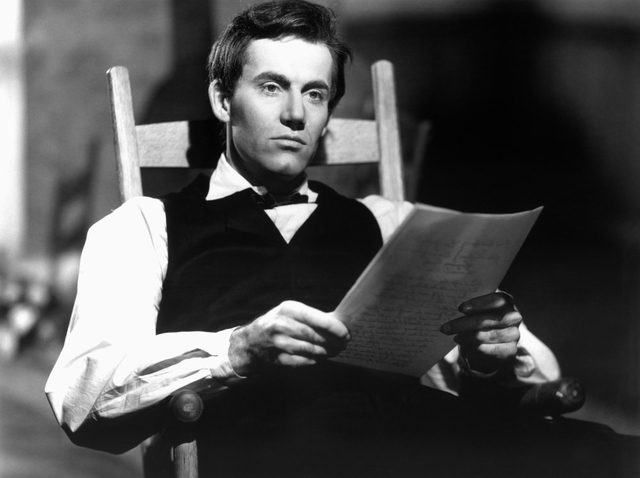
Onscreen, Lincoln was set forever by Henry Fonda in John Ford's Young Mr. Lincoln (1939), playing the young man of humble origins rising to prominence on the frontier and against the odds – with the aid of a prosthetic nose. Ford's film paints the full picture of the legal, political and social origin of Lincoln; in an essay that came with the Criterion reissue of the film, Geoffrey O'Brien wrote how "the chaos of the courtroom provides a vision, at once comic and horrific, of an unidealized democracy" while Fonda's Lincoln sits "in the full splendor of his solitude, brooding and wrathful as he contemplates the injustice that is about to triumph."
Ford's skill and reputation ensured that this vision of Lincoln would abide. (Three years later in Tennessee Johnson Van Heflin would play his successor as president, Andrew Johnson, with Lionel Barrymore as a villainous Thaddeus Stevens.) Raymond Massey would put the finishing touches on Lincoln in Abe Lincoln in Illinois (1940) and How the West Was Won (1962), but it was Disney's animatronic Lincoln, created for the 1964 World's Fair before taking up permanent residence at their theme parks, that embodied his final form for posterity.
Daniel Day-Lewis has the rare gift as a movie actor to arrive at his roles without the burden of an onscreen persona he has to service. It's how he has been able to inhabit characters like Christy Brown, Hawkeye, Gerry Conlon, Bill the Butcher, Daniel Plainview and Reynolds Woodcock by disappearing without a trace into the part; there's almost no public perception of Day-Lewis the man, so he can release a film, vanish into private life or his latest retirement and then re-emerge after a suitable interval behind the fully-realized facade of another character.
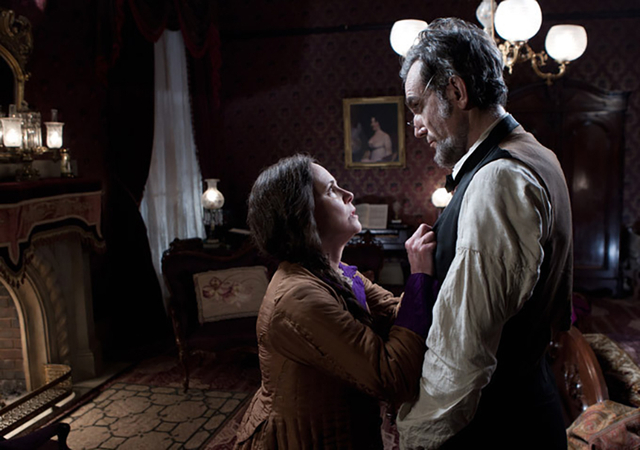
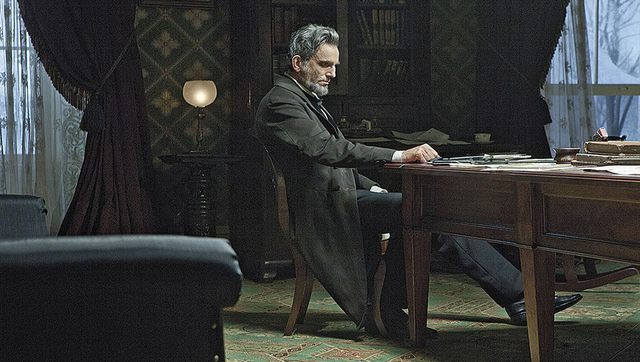
For the first time in a long time it was possible in Lincoln to imagine – if only for fleeting moments – the man beneath the stovepipe hat. Day-Lewis respects all the venerable Lincoln tropes – the folksy anecdotes told with full command of his audience, the underlying melancholy; Lincoln as functioning depressive – but still builds out a few new facets of the man.
There are the scenes with his wife; Mary Todd Lincoln would have been a trial for a man devoting his full resources to her, never mind a man distracted by the matter of a country torn apart by civil war. Sally Field even manages to make her sympathetic – it must have felt like punishment to be a formidable woman married to a formidable man – and the scenes where they argue about the enlistment of Robert (Joseph Gordon-Levitt), their oldest son while still grief-stricken by the recent death of their youngest demonstrate the vulnerable, even inadequate side of the hero.
And there's the scene where Lincoln confronts Seward, Ashley and Republican Party founder Francis Preston Blair (Hal Holbrook) about the holdout votes needed to secure the passage of the Thirteenth Amendment. He's faced with a room of politicians trapped in the frame of their abundant self-interest and is aroused to fury: "I am the President of the Unites State of America, clothed in immense power. You will procure me these votes." It's a frightening spectacle of how little separates fierce will devoted to a cause, no matter how just, from the fringe of tyranny.
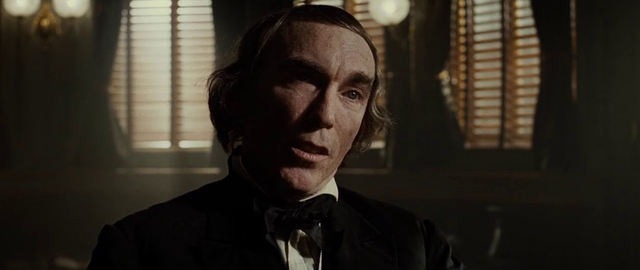
It's no spoiler to reveal that the Thirteenth Amendment passed. (Can there be any spoilers in a film like Lincoln?) But the film's real climax is when Lincoln travels to meet with a delegation from Jefferson Davis' cabinet, led by Confederate vice-president Alexander Stephens (Jackie Earle Haley), sent to propose peace terms in secret.
The Confederate delegation insists on discussing any future agreement as if it's between two nations; Lincoln is firm that it is one country discussing a return to its former disposition. Stephens wonders how quickly the Southern states might return to governing themselves so as to be able to block ratification of the Thirteenth Amendment. Lincoln replies that he has already seen to Tennessee and Louisiana and possibly Arkansas voting for ratification, which gives him the majority he needs.
"Slavery sir, it's done."
Stephens is scornful of Lincoln's insistence that any of the previous four years' bloodshed was in the service of democracy, but Lincoln replies that "we've shown that a people can endure awful sacrifice and yet cohere. Mightn't that save at least the idea of democracy, to aspire to? Eventually to become worthy of?"
Perhaps it was his "low" budget, or taste acquired with age, but Spielberg revisits iconic moments from Lincoln's presidency with restraint. He journeys to the front to meet with General Grant (Jared Harris) in anticipation of the Confederate surrender and the general remarks that he seems to have aged a decade in the past year. "Some weariness has bit at my bones," he agrees.
"We've made it possible for one another to do terrible things," he says to Grant, by way of a farewell.
General Lee's surrender at Appomattox is a wordless scene, and the assassination of Lincoln at Ford's Theatre happens offscreen. The final scene is the second inaugural address, the one where Lincoln asked:
"If we shall suppose that American Slavery is one of those offences which, in the providence of God, must needs come, but which, having continued through His appointed time, He now wills to remove, and that He gives to both North and South, this terrible war, as the woe due to those by whom the offence came, shall we discern therein any departure from those divine attributes which the believers in a Living God always ascribe to Him?"
It's a provocative statement and a difficult question to answer, and you can't help but wonder if there's any politician anywhere today capable of this kind of language, or able to imagine any audience of voters receptive to it and not just platitudes or constantly elicited fear? The Pendletons and the Woods have made the Lincolns impossible, and maybe that's the lost cause we should be mourning.
Club members can let Rick know what they think by logging in and sharing in the comments below, as access to the comments section is one of many benefits that comes along with membership in the Mark Steyn Club.