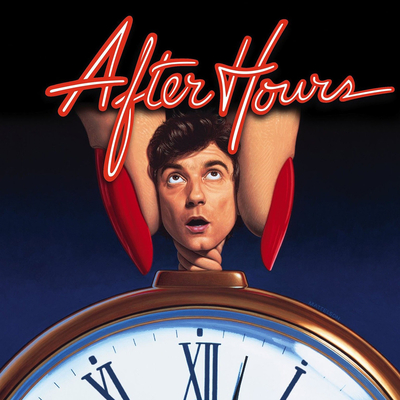
There's a fascinating anecdote in an oral history of Martin Scorsese's 1985 dark comedy After Hours. Griffin Dunne, who played the film's protagonist Paul Hackett, recalls the director's apartment in New York's Tribeca neighbourhood, where Scorsese "had devoted a room in his loft to maybe 15 VCRs that ran 24 hours a day. He would go through the TV Guide and circle the movies that an assistant had to record from television. Quite often he would hand me a VHS tape and go, 'Griffin, this is a noir movie that reminds me of the kind of tone I like for After Hours.'"
Many people who watch After Hours today marvel at the time capsule it presents of mid-80s New York in general and the SoHo area in particular. The city has been changed utterly, with SoHo far in the rear-view mirror of massive gentrification, which has since consumed the East Village, Alphabet City, the Lower East Side, Chelsea, Chinatown, Hell's Kitchen and much of Brooklyn, spreading north to Harlem and establishing beachheads in Queens and the Bronx. (Staten Island remains, apparently, stubbornly resistant.)
But this anecdote brings those of us old enough to remember back to a time before TCM, Tubi, Mubi, Plex and the Criterion Closet, to when Scorsese – a movie-mad cineaste long before he was a director – could go pro with what so many film nuts had been doing for just a few years: scanning the TV listings and painstakingly setting their VCRs to harvest whatever obscure films the networks' local affiliates and independent channels had used to plug holes in late night or weekend programming, an era when film scholarship was a cottage industry.
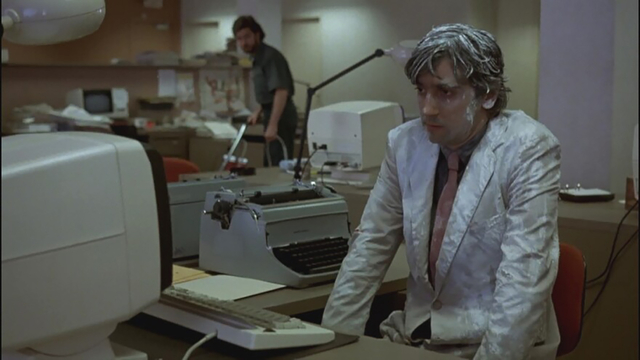
The film begins with Mozart's Symphony in D Major playing over the titles, the sort of post-baroque, pre-romantic classical music that's movie shorthand for order and civilization, and when it's done we begin in an office where Paul is teaching Lloyd (Bronson Pinchot), a new employee, how to use a word processing program on a computer terminal, green type blinking on a black screen.
This will also bring viewers back to a time when offices below the executive level were filling up with expensive but very basic desktop computers running proprietary software on local networks. Millions of man hours were spent training on programs that would be discarded in just a few years, on machines that cost millions and were destined for landfill. It felt both futuristic and pointless.
Lloyd can barely keep up but confides to Paul that he considers the job "temporary." He wants to "get into publishing" and create his own magazine "which would be a forum for writers and intellectuals who can't get into print anywhere else" but he doesn't really want to do the editing or worry about reaching "a particular audience." It's a ridiculous idea but hundreds of little magazines and journals went in and out of print back then with premises as flimsy as Lloyd's.
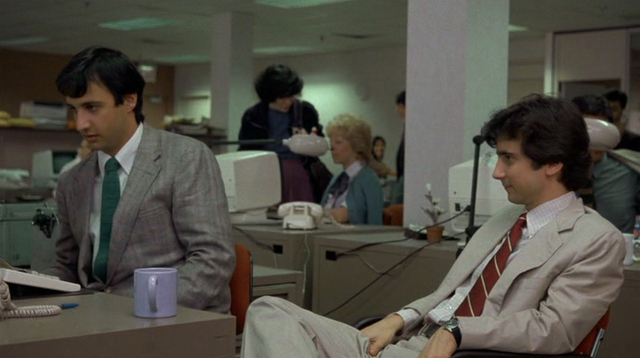
What's important is that Lloyd is in precisely the city where this idea could become reality, and his ambition clearly unsettles Paul, who is less than keen on the suggestion that he'll be "stuck doing this for the rest of my life." He retreats from Lloyd and out of the gilded gates of his office (the Metropolitan Life Tower by Madison Square).
He heads home to his apartment, a bland box with beige furniture and David Hockney posters on the wall, as impersonal as a hotel room. We're meant to understand Paul as one of those transitory New Yorkers, born and raised elsewhere and only barely living in the city. He seems like the kind of person with enough self knowledge to understand this and search, if only furtively, for the key that will open the city up to him.
That key arrives in the form of Marcy (Rosanna Arquette), a young woman in a diner who compliments him on the book he's reading: Henry Miller's Tropic of Cancer. Perhaps Paul's using Miller as mental slumming; a vicarious glimpse at the bohemian life he might have imagined living in college, before he moved to New York to process words. In any case it provides a connection with Marcy and the potential for sex and adventure clearly absent from Paul's life.
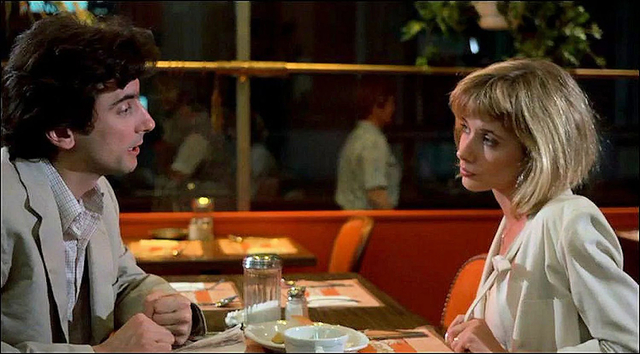
His response when she tells him that she's staying with a friend in her loft in SoHo – "Oh, nice" – is how a lot of people who read the Village Voice or bought a Talking Heads album would react to the neighbourhood, a once-decaying district full of empty warehouses and sweatshops colonized by artists fifteen or twenty years earlier. In any case he gets her phone number and calls later that night, eliciting an invitation. It's 11:32 p.m. and he says he'll be there after midnight.
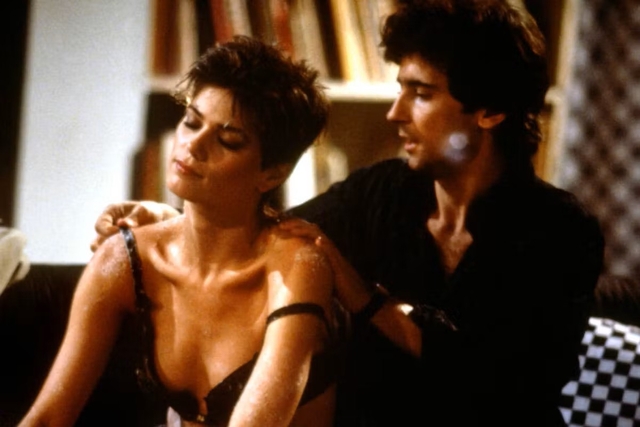
Paul's heads downtown in a Checker Cab that careens through traffic, throwing him around the back and blowing his only cash – a $20 bill – out of the window. The cab abandons him at the corner of Crosby and Howard, where Paul meets Marcy's roommate Kiki (Linda Fiorentino), an artist who works on her papier mache sculpture of a man writhing in terror while wearing just a bra and miniskirt.
Marcy is out and Paul tries to flirt with the glacially sullen Kiki, starting with a leering compliment that gets an unexpected and ominous response:
"You have a great body.
"Yes. Not a lot of scars."
She gratefully accepts his offer of a massage that only sends her into a deep slumber, just in time for Marcy to arrive back at the loft and begin what has to be one of the most disquieting first dates in movie history.
Martin Scorsese made After Hours after the first major crisis of his career. He had arrived definitively as a director with films like Mean Streets, Taxi Driver and Raging Bull, but two major flops – New York, New York and The King of Comedy – had tarnished his reputation with the studios. He had been trying to make a film version of Nikos Kazantzakis' The Last Temptation of Christ but had funding pulled by Barry Diller at Paramount at the last minute, a humiliation that left him feeling like his career might be effectively over.
"I started reading scripts," he recalled for Jake Malooley's oral history of After Hours. "One after another. In most cases, I couldn't understand why they'd been submitted to me in the first place. Some of the offers that came with them would have been lucrative, but they were packages in which there really wasn't any place for me. It would've been a matter of just showing up and putting my name on something that meant nothing to me."
He was given a script by his lawyer that had been developed by two actors that had become producers with Chilly Scenes of Winter and Baby, It's You. Lisa Robinson had been in Mean Streets and Griffin Dunne was the son of journalist Dominick Dunne who had a breakout role in 1981 in John Landis' hit horror comedy An American Werewolf in London. Robinson had discovered a screenplay that Joseph Minion had written as his school thesis project and they were developing it as an ultra low budget project for a young director who had been working as an animator at Disney – Tim Burton – when Scorsese took an interest.
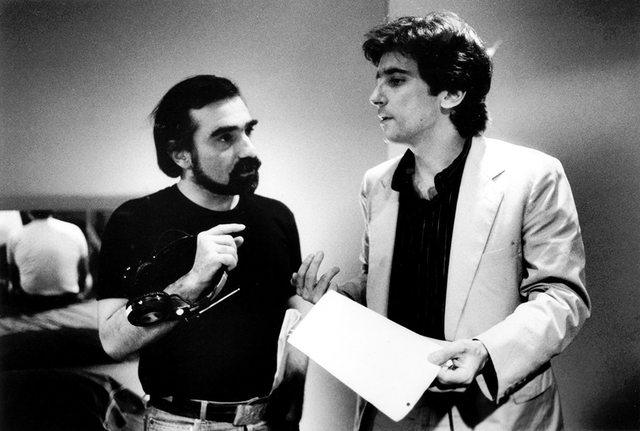
Burton bowed out of the project gracefully and David Geffen put up the money through his new film production company. But with only $3.5 million to work with Scorsese was forced to work quickly, with a small crew, like he was back at the start of his career.
"I found myself identifying with the lead character, Paul Hackett, who suddenly realizes that he's descended into the underworld and he's just lost there," Scorsese said. "I empathized with him, because his experiences were like anxiety dreams that most of us have. I was having quite a few of them at the time. You know, you suddenly realize that you have to get on a plane, it's urgent that you bring something essential to a friend or a family member, and you haven't packed. What happens if you miss the plane? It's sheer terror."
Imagined by the director as a trip to hell with shades of Kafka, the film was shot at night in the summer of 1984 with SoHo as Paul Hackett's particular Hades. The only problem was that by the mid-'80s parts of New York were already recovering from the city's famous decline in the '70s, as immortalized in films like Taxi Driver, The Warriors, Dog Day Afternoon, The Taking of Pelham One Two Three and The French Connection.
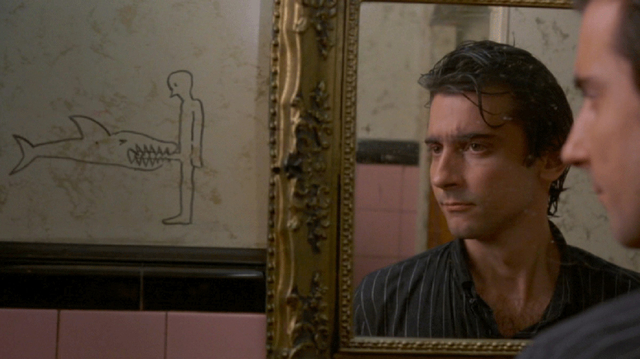
"SoHo was already super-gentrified when we were making the film," recalled production designer Jeffrey Townsend. "So we had to fabricate a fictional SoHo made of bits of Chinatown, Little Italy, Tribeca."
One of the biggest items in the film's budget was a water truck that followed the crew around, hosing down the streets to make them reflect light and cut down on extra lighting. Scorsese relied heavily on his new director of photography, Michael Ballhaus, who had made his name working with German director Rainer Werner Fassbinder. He had worked with Dunne, Robinson and director John Sayles on Baby, It's You in 1983 and helped Scorsese adapt himself to quick, low-budget filmmaking again.
"Michael was not only used to working that way, he relished it," Scorsese remembered. "It energized him. And in turn, Michael energized me. With Michael, I was really learning how to make pictures again, learning to shoot fast and with a sense of freedom."
"He worked it out very carefully, how much time we could give ourselves to get every shot – 30 minutes for this one, 25 minutes for this one. So we had a plan, and we knew that we could get 25 setups per day. As opposed to four."
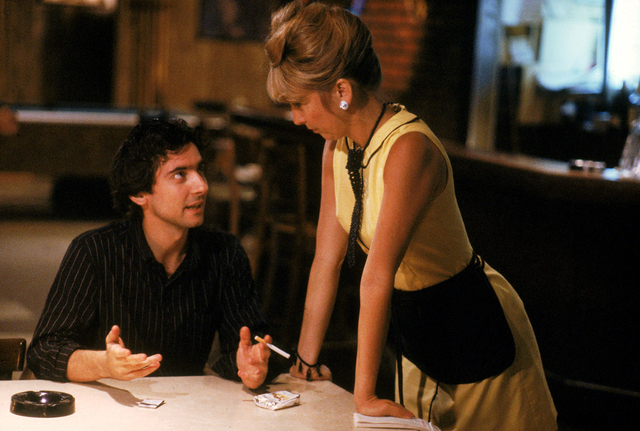
Paul's evening with Marcy starts going wrong from the start. She seems to have second thoughts about inviting him and tells him that she still has a husband – he owns the loft that Kiki is living in – and talks about a boyfriend. She mentions that she was raped in the room where they're talking, by a man who came in through the fire escape, and that he had tied her up and took six hours. Then she adds that he was another boyfriend, and that she had slept through most of it.
On top of that Kiki has planted the idea in Paul's head that Marcy is disfigured by deep burns, triggering his childhood phobia. And there's Marcy's story about her husband who was obsessed with The Wizard of Oz and would scream "Surrender Dorothy!" when they had sex. But when she's suddenly overcome with giddy enthusiasm for their evening and hints that good things are about to happen, he's willing to ignore all the red flags.
"What bonded Marty and me was that we were both raised Catholic," Dunne said. "And one of the things he loved about Paul was this kind of Catholic guilt. We both knew what it was like to go into a confession booth and admit to things you merely thought about doing. We found it very funny and kind of ridiculous. Our shared guilt was the initial bond."
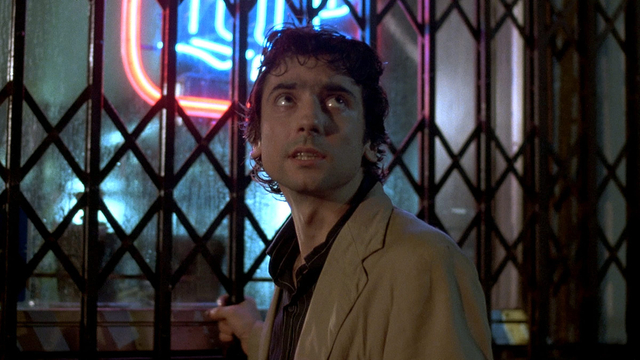
Marcy is the Generation X predecessor to the "Manic Pixie Dream Girl" so beloved by Millennials, her quirkiness replaced by more than a hint of damage that bohemianism and longing for a creative role has transformed into a crucial personality trait. Paul is finally overcome by the mixed messages and flees the loft only to discover later in the film that Marcy has overdosed herself on Seconal.
The rest of the film is basically Paul's encounters with a series of women who both shelter and threaten him. In the loft he was torn between the unbelievably cute Marcy and the unbearably sexy Kiki. At a bar where he goes to escape the torrential rain he meets the cloyingly quirky Julie (Teri Garr, a friend of Dunne's who was the first "name" attached to the film), a waitress obsessed with the '60s who plasters his face all over the neighbourhood after he rudely flees her apartment, falsely accusing him of being the burglar ripping off residents. (The actual burglars are played by Cheech Marin and Tommy Chong as their trademark stoner comic duo, employed as a major plot device in the film.)
He meets Gail (SCTV alumnus Catherine O'Hara) when he tries and fails to escape SoHo in a taxi – unfortunately driven by the same driver he had stiffed on his way downtown. She cuts his arm with the door of the cab and offers to bandage the wound, but upstairs in her apartment unleashes a streak of hostility and sadism that turns vengeful when she spots one of Julie's posters and appoints herself head of the lynch mob hunting Paul, leading them through the streets in her ice cream truck.
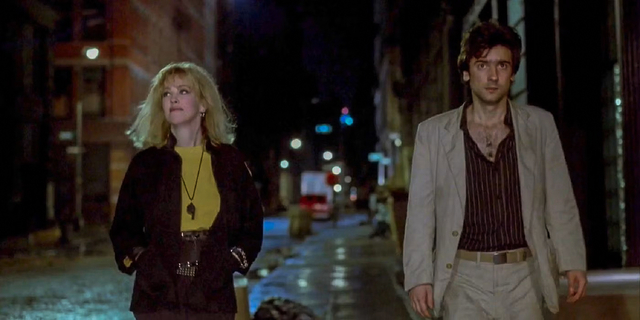
After Hours was the film that revived Scorsese's career and love of filmmaking, not just because it made him enjoy the challenge of directing again but because it reconnected the director with the youthful energy that he had when he began that career, making films like Who's That Knocking at My Door and Mean Streets. And it is very much a young man's film, animated by the fearful energy Dunne brings to Paul.
I saw it at a pivotal moment in my own life, a 21-year-old college dropout desperate to find a direction in life. It came out just before I took my first trip on a plane, across the border to visit a girl I had met the previous Christmas when we were working in the toy department at Simpsons, a now-vanished department store. She had moved to New York City to study acting with Uta Hagen and invited me to stay with her in distant Throgs Neck, in the Bronx across the East River, where the skyscrapers of Manhattan could be glimpsed far in the distance past planes landing at LaGuardia.
She had a job as a receptionist on 23rd Street near Madison Square and I took the graffiti-covered subway into Manhattan with her every morning. Things turned out as badly as you might imagine, and I was reminded of Paul's night in SoHo nearly every moment I spent with her. "You might want to consider that a warning," my best friend said to me when we left the theatre after watching Scorsese's film, just after I'd booked my flight, and in hindsight it might have been a self-fulfilling prophecy.

The ninth circle of hell in Paul's night is the Berlin Club, a typically assaultive Manhattan nightclub where Paul is arbitrarily barred from entry by the bouncer (Clarence Felder) while trying to meet up with Kiki and her menacing boyfriend Horst (Will Patton). It's "Mohawk Night" and the only way Paul can gain entrance is by submitting to having his head shaved, though he doesn't know this when the bouncer manhandles him through the crowd to the shaving station.
He returns there later that night as a last place of refuge, fleeing from Gail and the mob. It's deserted except for June, played by Verna Bloom, the Broadway actress who had memorable roles in Haskell Wexler's Medium Cool and Clint Eastwood's High Plains Drifter. She lives in the club's basement where, like Kiki, she makes sculptures from papier mache. After dancing with Paul to Peggy Lee's "Is That All There Is?" she takes him downstairs to hide from Gail and her mob when they corner him.
June is, it will come as no surprise, the mother figure that has been absent from Paul's journey through the underworld and, by implication, his life. At one point, lacking an ending for his picture, Scorsese imagined Paul crawling back into her womb before being "reborn", covered in placenta, as the sun rises over the West Side Highway.
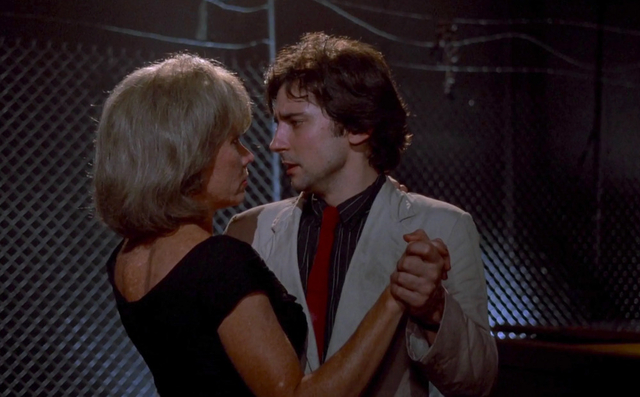
Thankfully Scorsese had one of his idols, legendary British director Michael Powell (who would marry his longtime editor, Thelma Schoonmaker) on hand to give him some advice: simply let Paul end the film where he had started, safely back in his office where order is restored while classical music plays.
"It was a kind of miracle," Scorsese said, remembering the shooting of the film. "A rejuvenation. On After Hours every time I put my eye to the viewfinder, I was happy. I could even sit down and look at the set with detachment. Whatever tension there was – and believe me, no film set is ever free of tension – was focused on making our day. That was a great feeling. I had regained the freedom I felt when I was starting out. It was a real gift."
The film only made around $10 million at the box office but it did well with the critics and became a cult favorite, and though it was ignored at the Oscars it was a sensation at the Cannes Film Festival where most Americans had stayed home after Muammar Qaddafi threatened to shoot down planes full of directors and stars arriving from Hollywood.
Griffin Dunne and Michael Ballhaus arrived to represent the picture, and Dunne was painted by the press as "the bravest American", who showed up when Sylvester Stallone stayed home. He would accept Scorsese's best director award "in the worst French ever spoken."
Club members can let Rick know what they think by logging in and sharing in the comments below, as access to the comments section is one of many benefits that comes along with membership in the Mark Steyn Club.