Ethnic humour has become one of those things we don't do well anymore, or simply won't do because nobody wants to lose their job. Back when it was still tolerated – about fifteen or twenty years ago – what was left of ethnic humour (as practiced by comics like Dave Chappelle or Chris Rock) was gatekept by a single, unbreakable rule: you can only make an ethnic joke if you're a member of the ethnicity that's the butt of the joke.
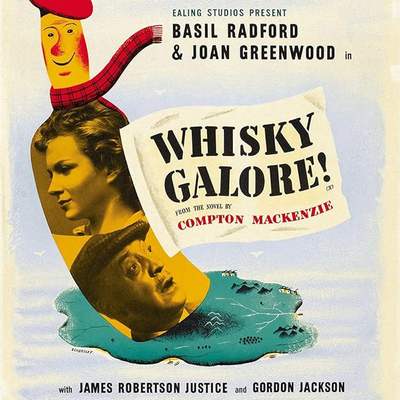
Now, of course, this is largely off the table because nobody thinks the risk is worth it anymore. I couldn't help but think of this while watching Whisky Galore!, the 1949 Ealing comedy whose every plot point, gag and character relies on an ecosystem of Scottish stereotypes. If you wanted to be offended by Whisky Galore! (and I don't know why you would, but this has become a popular leisure activity today now that nobody joins clubs or bowling leagues) you would have to run it through the latest oppression meter, which is to say you have to figure out if the film is punching down, up or sideways.
Whisky Galore! doesn't make it easy. It's a film by an American-born Scottish director, based on a book by a Scottish writer, produced by a Russian Jew for a British studio, and cast with Scots and Brits playing Scots. Even more baffling was that, while it did very well in the UK, it was a big hit in America (under the title Tight Little Island). I suppose the ultimate arbiter is whether a Scot would find it offensive. I'm one-third Scottish and none of me was offended by the picture, though I'm sure you could find someone somewhere north of Hadrian's Wall who was, though I would guess that they'd be a member of the Scottish National Party.
The film begins with the credits rolling over footage of ocean waves breaking on rocky shores, establishing that we're in the Hebrides Islands – more specifically the island of Todday (actually the Isle of Barra, near the southern tip of the Outer Hebrides). It is a rugged and isolated place, the narrator tells us: "To the west there is nothing... except America."
We're told that life remains unchanged on Todday, even during wartime, but that rationing and shortages finally strike home on a day in 1943 when the local publican announces that there is no more whisky to be had on the island. It's a tragedy that strikes at the essence of what makes life worth living for a Scotsman, spelled out when a man leaves the pub reeling from the shock, then retires to his bed and to the next life in quick succession. His friends suffer through what passes for a wake with nothing to drink but tea.
When the next mail ship from the mainland makes its way to Todday, it's carrying Sgt. Odd (Bruce Seton), an Englishman who has spent two years and three months fighting in North Africa and is returning to resume his courtship of Peggy Macroon (Joan Greenwood), one of the two daughters of Joseph Macroon (Wylie Watson), the town shopkeeper. But before he can get off the boat he sees nearly the whole of the town's men waiting on the dock, their faces long and their eyes pleading for the ship's captain to tell them that he's carrying whisky. He is not.
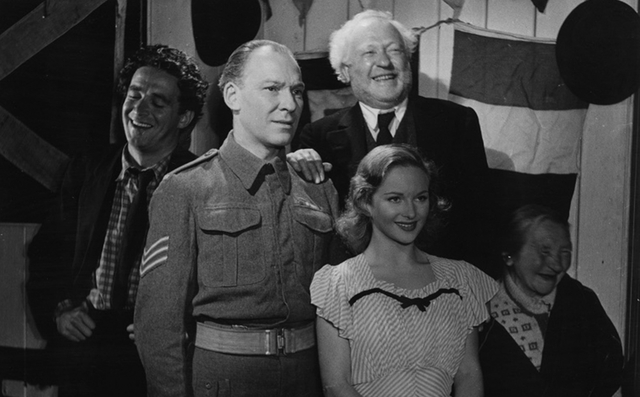
We meet the rest of the town: George Campbell (Gordon Jackson) is the timid local schoolteacher, who has asked Peggy's sister Catriona (Gabrielle Blunt) to marry him despite the disapproval of his strict and religious widowed mother (Jean Cadell). Captain Waggett (Basil Radford) is an Englishman and head of the Home Guard, which he set up with Sgt. Odd before he was deployed to Africa. Directly opposing him is Dr. Maclaren (James Robertson Justice), so Scottish that he brings an ailing patient tobacco for his pipe.
Waggett complains to Odd that his Home Guard volunteers have become listless and undisciplined since whisky disappeared from the island. Peggy gently resists Odd's advances by pointing out the nearly seventeen years' difference in their ages, which seems to matter about as much as his Englishness. It's inferred that the main obstacle to their betrothal is the entropy that has overcome Todday since the disappearance of whisky sapped nearly the whole populace of their vitality and joy in life.
This misery looks like it could last for the duration until a merchant ship, the SS Cabinet Minister, founders on the rocks by the island during a foggy night. The town's most able mariner, an idiot savant called the Biffer (Morland Graham) rows out with Sammy MacCodrun (John Gregson) to help rescue the captain (a cameo by Compton Mackenzie, author of the novel the film is based upon) and crew and learn that the ship's cargo was 50,000 cases of whisky.
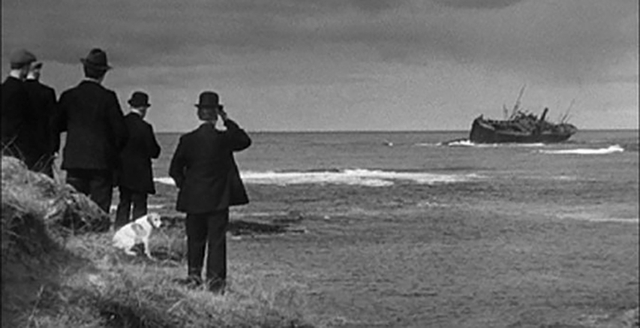
Compton Mackenzie based Whisky Galore! on the real story of the SS Politician, which ran aground off the island of Eriskay, just near Barra in February of 1941 with 22,000 cases of Scotch whisky and £3 million in Jamaican banknotes. Locals helped themselves to the cargo over the next few months, hiding and burying caches of whisky all over the island to keep it from Customs & Excise officials. At first a few men were fined as little as £3 but ultimately nineteen Barra and Eriskay locals were jailed at Inverness for anywhere between 20 days and two months and officials seized boats they determined were used in the looting.
Mackenzie was one of the most popular writers of the day, a founder of the National Party of Scotland, one of the predecessors of the SNP, though he was born in County Durham. He fell in love with the Hebrides and built a grand house, Suidhachean, just by Barra's airport, where he wrote Whisky Galore! after hearing about the wreck of the Politician.
Monja Danischewsky, a publicist for Ealing Studios, had grown bored of his job and convinced Ealing studio head Michael Balcon to let him produce a film. He chose Mackenzie's book, paid the author £500 and retained him to write a screenplay with Angus MacPhail, the man who coined the term "MacGuffin" for Alfred Hitchcock. He initially offered the film to Ronald Neame (The Man Who Never Was, The Prime of Miss Jean Brodie, The Poseidon Adventure) but when he turned it down Danischewsky hired Alexander Mackendrick, who had begun working at Ealing as a storyboard artist but had never directed a film.
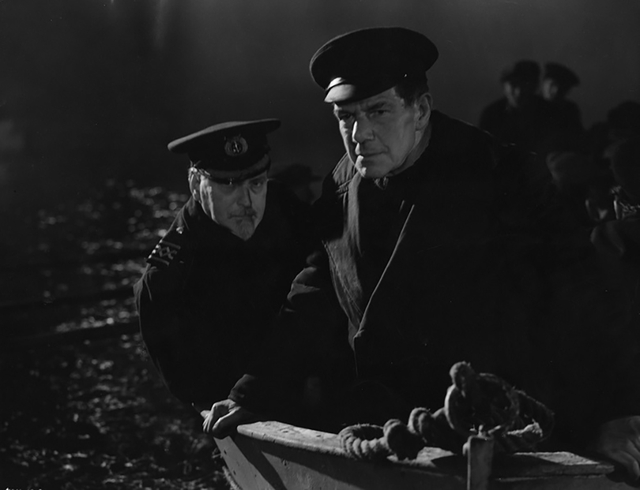
Whisky Galore! was the first Ealing film shot on location, which meant moving the crew and their equipment all the way to Barra, where Ealing's sound truck had to be winched off the boat onto the dock at Castlebay, and a church hall was pressed into service as a makeshift studio, with rolls of felt on the walls providing barely adequate soundproofing.
The new director, unhappy with the shooting script provided by MacPhail, had Danischewsky announce to the crew just after they arrived that they were taking two days off so he could rewrite it. The weather was typically Scottish, raining so hard and so often that they were forced to shoot interior scenes in the church hall first, where they ran out of scenes and found themselves killing time and behind schedule.
In Robert Sellers' The Secret Life of Ealing Studios: Britain's Favourite Film Studio, Mackendrick recalls that "It was absolutely terrifying and I remember getting up in the middle of the night and crawling on my hands and knees to the only public phone box on the island to call my fiancée to complain that I was thinking of committing suicide. Instead of sympathy I got a bawling out. 'It's only a stupid bit of film.' So I went back to sleep thinking, an ideal wife for a movie director."
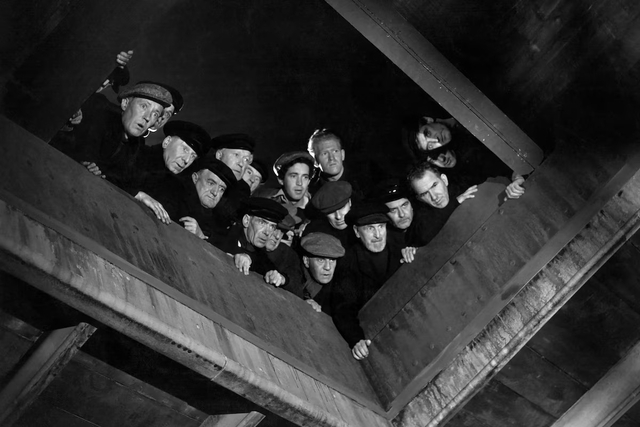
The locals are about to descend on the Cabinet Minister when they realize that it's almost midnight on Saturday night and that no labour can be done on the Sabbath, so they have to wait a whole day, staring longingly out to sea at the marooned ship in their Sunday suits. In Compton Mackenzie's original novel Todday is two islands – the Calvinist Presbyterian Great Todday and the Roman Catholic Little Todday, where the Catholics aren't as obliged to observe the Sabbath as their Protestant neighbours.
(Mackenzie, a Catholic convert, based the two Toddays on Barra and Eriskay, though in reality they're both largely Catholic and the whole reason the writer settled in this part of the Hebrides.)
Realizing what a tempting target the Cabinet Minister is for plunder, Waggett decides that the Home Guard needs to put a 24-hour watch on the ship and gives Odd the night shift. The soldier is gently blackmailed by Macroon, who tells him that no wedding can happen on Todday without a rèiteach – a betrothal ceremony where the groom must provide a seven-gallon barrel of whisky. Odd allows himself to be overpowered by MacCodrun and the Biffer, and the townspeople swarm the boat, breaking the seal on the hold and staring down in awe at the crates of whisky.
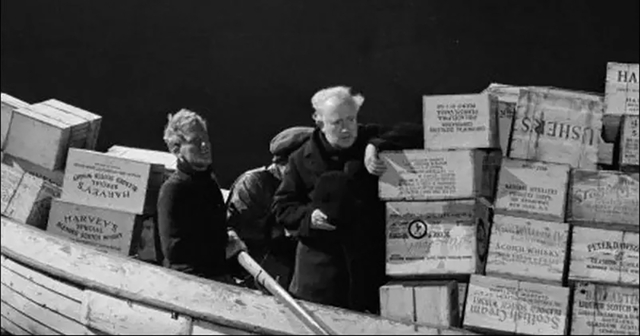
Their fishing boats piled high with crates, the locals sail back to the island, hide most of the whisky in a cave and head home to enjoy their booty. Mackendrick filmed a scene where they sing "Brochan Lom", a Gaelic nonsense song about porridge performed as "mouth music" with voices mimicking instruments. It's one of the film's most famous scenes, and a testament to the joy whisky brings back into the islander's lives. The timid Campbell, fortified by a half dozen drams and encouraged by Maclaren, heads home to defy his mother and demand she drop her opposition to his marriage, hammering his defiance home by pulling his late father's bagpipes from the wall and blaring the old woman into submission.
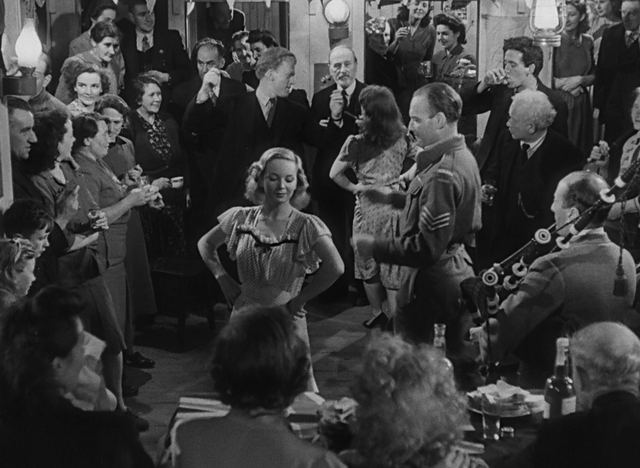
Infuriated by the looting of the wreck, Waggett takes a boat back to the mainland to alert the Customs & Excise officials. In the meantime the rèiteach begins, with pipes and traditional Scottish dancing in a scene that Mackendrick filled out by hiring Castlebay townspeople as extras for a £1 a day. Even Campbell's mother abandons her sour Presbyterian disapproval of the revels with the help of a dram, proving that even Calvin can be drowned in an inch or two of whisky.
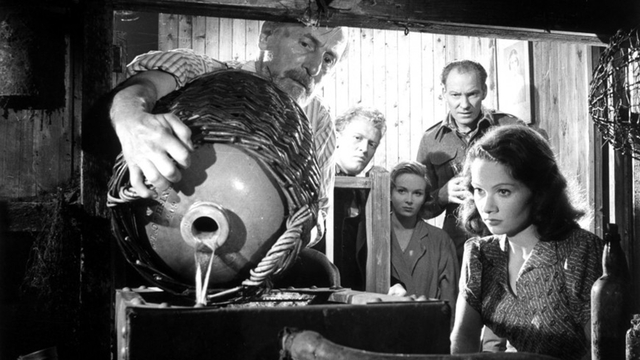
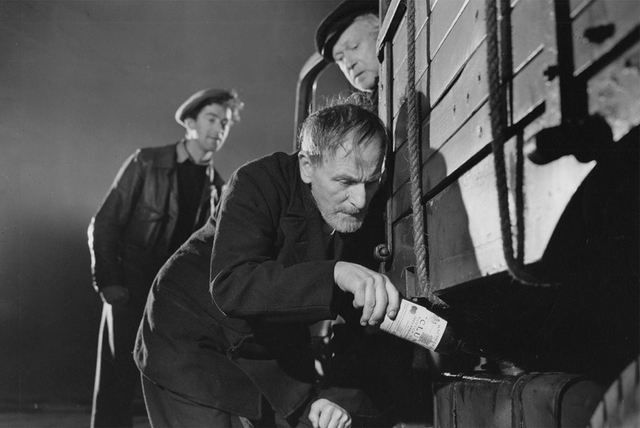
At the same time, Waggett is heading back to Todday with a boat full of Customs & Excise officers, headed up by the implacable Farquharson (Henry Mollison), who has a grudge against the islanders and Macroon in particular. There's a mad scramble as they arrive to hide the looted spirits wherever they can; Mackendrick cuts some jaunty music to a montage of bottles being hidden everywhere from fiddle cases to pies to gas tanks to the bottom of a cradle, under an infant who fixes his parents with a quizzical expression.
Waggett leads Farquharson and his men to the cave just behind the locals, who have emptied it and piled the cases high on a truck; they lead Waggett on a chase around Todday's only road with his own Home Guard tasked with creating obstacles. They finally defeat the Englishman when the ammunition cases he had sent to the mainland for replacement are found filled with whiskey bottles; even his wife (Catherine Lacey) mockingly laughs at him when he realizes how utterly he's been outsmarted.
Before the credits roll the narrator tells us that the people of Todday enjoyed their triumph until their cache of purloined whisky ran out, after which they had to pay ever steeper prices and that they lived "unhappily ever after." Everyone except Peggy and Sgt. Odd, who weren't whisky drinkers and lived their lives with only each other for intoxication – a half-hearted bit of moralizing that satisfied the Production Code when the film was released in the United States.
Mackendrick apparently lost his nerve during editing and turned in a cut of the film that Michael Balcon disliked so much he planned on cutting it down to an hour and releasing it as the "b" picture on the bottom of a double feature. A group of Ealing's directors and editors, including Charles Crichton and Sid Cole, reassembled the film according to Mackendrick's shooting script and presented the improved version to Balcon.
Still unimpressed, the Ealing boss was planning on releasing Whisky Galore! without advertising or publicity until John Jympson, another young editor at the studio, got in touch with his father, who was a film critic at the London Evening News. He got the press to go to Ealing for some screenings and started a round of rave reviews that made the film another hit, just two months after the success of Passport to Pimlico.
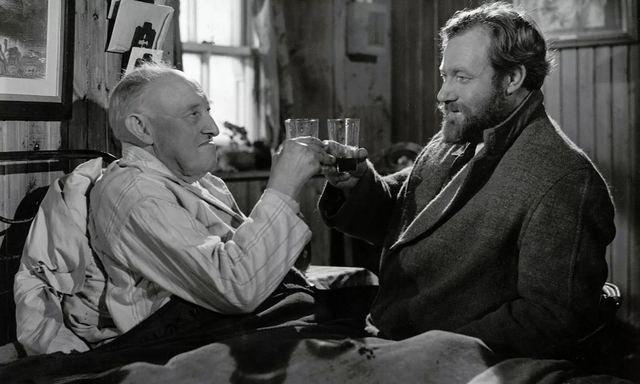
1949 would be a halcyon year for Ealing, who followed up Passport to Pimlico and Whisky Galore! with Kind Hearts and Coronets – a combination that boosted the struggling studio's profile immensely on both sides of the Atlantic, and paved the way for a string of trademark comedies by Ealing that would include The Lavender Hill Mob, The Man in the White Suit, The Titfield Thunderbolt, The Maggie and The Ladykillers.
Taken together with Hue and Cry, Passport to Pimlico, The Titfield Thunderbolt and The Maggie, Whisky Galore! helped create a critical picture of Ealing's comedies as heroic depictions of communities of idiosyncratic citizens banding together against overbearing authorities bent on repressing or penalizing them with bureaucratic regulation or top-down planning and technocracy. In Whisky Galore! it's hard to ignore how much the grim, implacable Farquharson and his trench-coated Customs & Excise men evoke sinister secret police like the Gestapo. It's a lighthearted take on the persistent tendency of English government to take advantage of traditional deference to authority in pursuit of agendas they rarely disclose during elections.
Ealing's distributor, The Rank Organization, would echo this theme in 1958 with Rockets Galore!, a sequel based on another Compton Mackenzie novel, a Cold War story about missile bases and environmentalism set on Todday that brought back characters like Gordon Jackson's Campbell and Capt. Waggett (played by Ronald Culver). It didn't make lightning strike twice, nor did a wholly unnecessary 2016 remake of Whisky Galore! starring Eddie Izzard as Waggett.
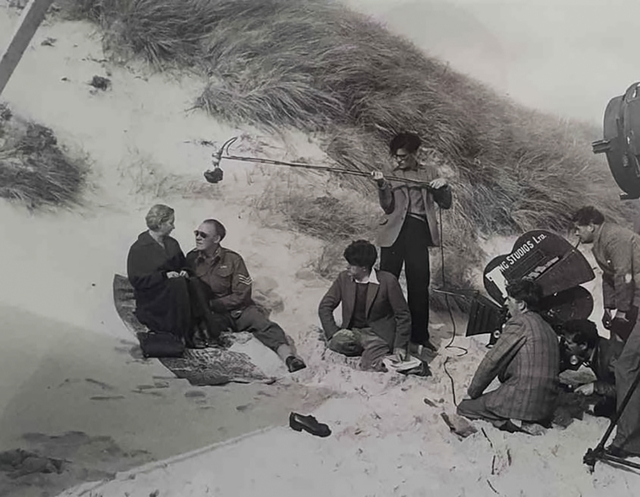
Even though it launched his career as a director, Alexander Mackendrick did not remember his debut feature fondly, saying that "it looks like a home movie. It doesn't look like it was made by a professional at all. And it wasn't." Even decades later, when interviewed for Distilling Whisky Galore!, a 1990 TV documentary about the making of the picture, Mackendrick insisted that he didn't have much to say about it before advising the filmmakers to talk to surviving cast and crew such as Gabrielle Blunt and Charles Crichton.
Despite Balcon's dislike of the picture and misgivings about Mackendrick, the director would go on to make The Man in the White Suit, The Maggie and The Ladykillers for Ealing before heading to Hollywood and Sweet Smell of Success, a bomb when it was released, a classic today, and the film that's still the great "what if?" in Mackendrick's career, which never really recovered.
Monja Danischewsky described Whisky Galore! as "the longest unsponsored advertisement ever" for the Scottish whisky industry, who thanked the cast and crew with a lavish dinner at the Savoy hotel, where a bottle of whisky was given to each guest that they were expected to drink before leaving. (Compton Mackenzie himself would earn a sideline of income by endorsing Grant's blended whisky.)
The film's title for its French release – Whisky à gogo – would lend itself to a Paris discotheque before crossing the Atlantic to become the name of one of the most famous nightclubs on Los Angeles' Sunset Strip.
In the long term, though, the film would have an abiding influence on films set in Scotland or made by Scots – everything from Brigadoon and The Wicker Man to Bill Forsyth's Local Hero, which is virtually a remake combining Mackendrick's film with Rockets Galore!. Scottish tourism has certainly been happy to rely on the promise of hundreds of Toddays strung along the country's coastline and up and down the Highlands, full of whisky and affable, faintly eccentric locals, sold to visitors who cherish this fantasy even if they've never heard of Whisky Galore! It's a testament to the abiding power of a stereotype that few if any Scots would wish away.
Club members can let Rick know what they think by logging in and sharing in the comments below, as access to the comments section is one of many benefits that comes along with membership in the Mark Steyn Club.