
Bob Fosse's career as a Hollywood director looked to be over after just one film when the failure of Sweet Charity at the box office nearly took down Universal Studios in 1969 and ended the era of the big-budget movie musical. He'd always have work on Broadway but his new status as toxic in Hollywood was a blow his ego couldn't accept and he was desperate for a comeback.
The abiding fame of numbers like "Hey Big Spender" and "Rich Man's Frug" on Fosse highlight reels and as YouTube clips have lent Sweet Charity posthumous influence that nobody would have believed at the time. Fosse's problem, as far as his critics (and even some of his friends) were concerned was that he put far more effort into his musical numbers than whatever strung them together.
His solution was to make his reputation away from musicals and to this end he spent three months working on locations and budget (against the advice of his friend, director Stanley Donen) for a horror picture that would end up getting made several years later as Burnt Offerings.
Somewhere else during this wilderness period he was drawn out of his endless funk again by a script called The Eagle of Naptown; that would also fall by the wayside though it did end up getting made in 1978 by Peter Yates as Breaking Away. Somewhere out there an alternate universe hosts a fascinating and horrifying Fosse filmography.
In the end the comeback he wanted came with a film that it's hard to imagine anyone else making. Cabaret was a hit of the 1966 Broadway season that was produced and directed by Fosse's friend and rival Harold Prince, and he helpfully told Fosse that the movie rights had been bought by Cy Feuer, a longtime supporter of his.
Feuer wanted Fosse because he thought the script he had at this point was weak. As recounted in Martin Gottfried's All His Jazz: The Life and Death of Bob Fosse, Feuer told ABC Pictures co-producer Marty Baum that "if the book is directed ten percent less and all the musical numbers work, then you have a shot. But if the book is directed a hundred percent and all the number are lousy, then you'll have a flop."
Based on Sweet Charity, there was no guarantee that Fosse had learned to tell a story, but nobody doubted his skill with dancers and singers. "If we protect the numbers," Feuer insisted to Baum," we'll get by on the book, and there is nobody better on musical numbers than Bob Fosse." Giving Cabaret to Fosse was a calculated risk in Feuer's eyes, and he would support the director against his enemies and in spite of his own paranoia at the cost of their friendship, ultimately.
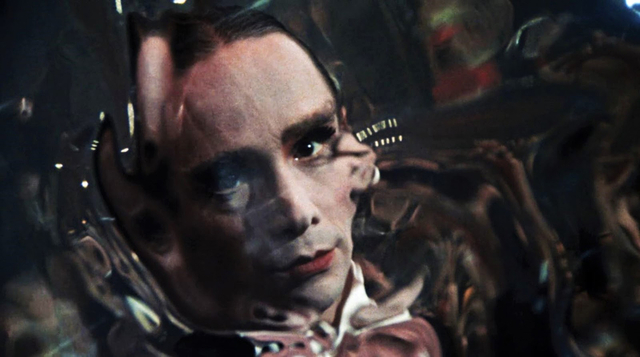
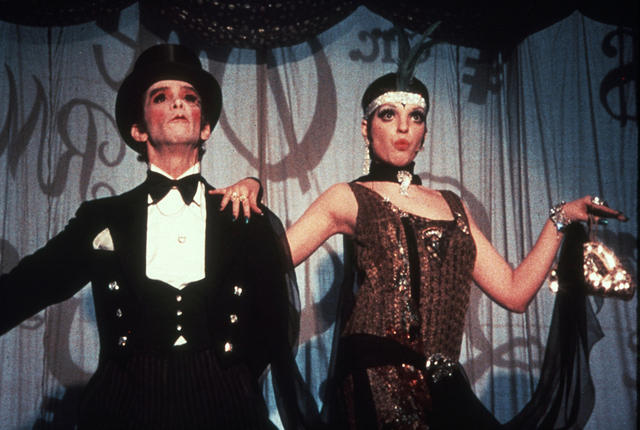
After titles informing us that we're in Berlin in 1931 the film opens – with strident symbolism – on a distorted mirror in the Kit Kat Klub, one of the city's decadent nightclubs during the pre-Nazi Weimar period. Suddenly the face of the heavily made-up Master of Ceremonies (Joel Grey) bursts into the mirror and glares at us for a second before breaking into a queasy smirk.
He begins the opening number of the night, featuring the chorus line of dancers and the all-female band, while the camera cuts to shots of the audience. Art history nerds will be rewarded by Fosse's impeccable recreation of post-expressionist painter Otto Dix's "Portrait of the journalist Sylvia Von Harden" among the briefly-glimpsed vignettes.
The featured acts are also introduced, among them the American chanteuse Sally Bowles (Liza Minnelli), and in spite of being the star of the picture Fosse doesn't feature her any more than the rest of the Kit Kat Klub talent or the well-worn girls of the chorus line. Our eyes remain stuck on Grey's macabre MC, the obvious star and dominant presence on the tiny stage.
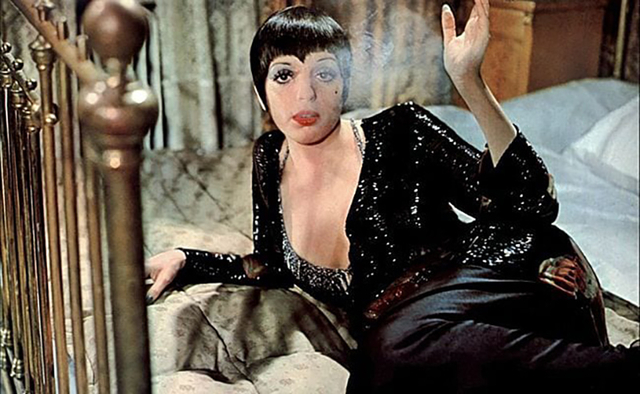
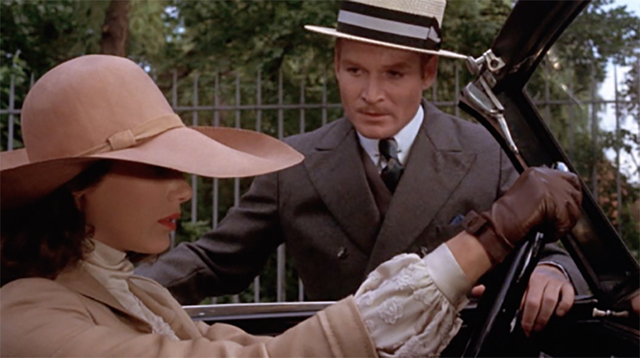
The scene cuts to the long-gone Berlin-Anhalter train station (filmed at the Hauptbanhof in Lübeck) where Brian Roberts (Michael York), a young Englishman, is arriving to finish his Cambridge degree. His search for lodgings brings him to the inauspicious boarding house flat of Fraulein Schneider where Sally answers the door and peppers him with a barrage of chatter before convincing him to take the tiny room across from her cluttered and slightly more spacious one.
She's been in Berlin for three months in pursuit of a career in the movies and while she batters at the gates of UFA and fantasizes about Max Reinhardt discovering her on the stage of the Kit Kat Klub she's living off the charity of various men and subsisting on "prairie oysters" – a raw egg in an old-fashioned glass doused with Worcestershire sauce. Sally is, as she describes herself, "a strange and interesting person" though most viewers will squint to see the real, obviously damaged human behind the forest of red flags.
The musical numbers in Cabaret are – and this is one reason why the film is remembered as revolutionary – entirely diegetic, which is to say that there are no improbable production numbers where characters burst into song while an invisible orchestra fills the soundtrack. All the numbers in the film – almost every one on the stage of the Kit Kat Klub – expands or explains what's happening in the story.
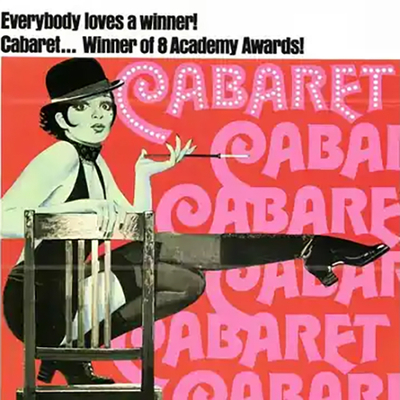
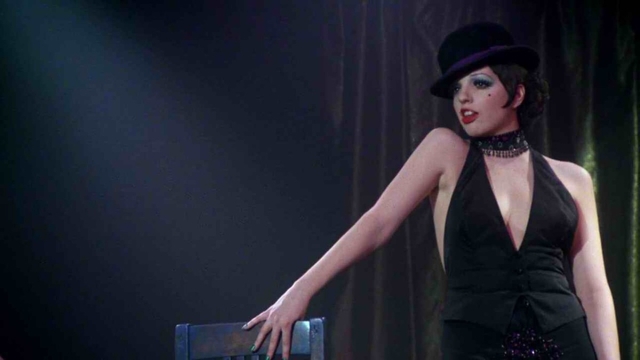
And Sally's first number both lays out her sexual adventurism and gives Minnelli a chance to claim the screen in a major way. "Mein Herr" is probably the most iconic musical scene in the film, the one that provided the poster image, launched Minnelli as a star in her own right (and no mere nepo baby) and showcased so many of Fosse's choreography trademarks.
The bowler hat, beaded choker, low-cut backless halter top, stockings and boots make Sally a strutting graphic as she takes centre stage while the rest of the chorus line drape themselves over the bentwood chairs like broken dolls. It flatters Minnelli's figure – she inherited her mother's legs but also her short neck – and she not only delivers amply with her rendition of John Kander and Fred Ebb's anthem for a sexual mercenary but fits her body gamely into Fosse's contorted, painful-looking choreography. It's a huge echo of "Hey Big Spender", for sure, but "Mein Herr" and the rest of Cabaret's Kit Kat Klub numbers made it plain that Fosse's style wasn't merely shocking, but that it had deep pockets from which he could let it bloom (with the right talent).
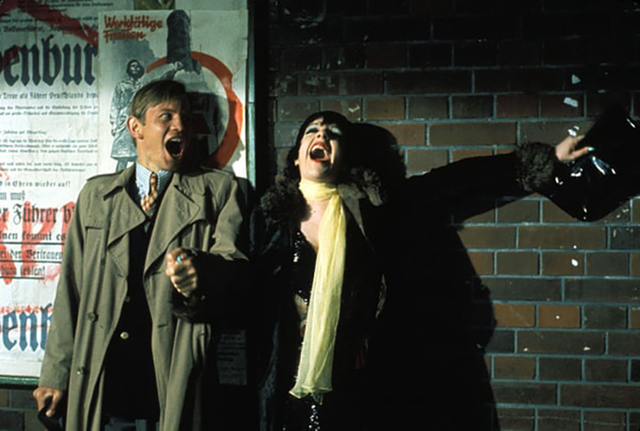
The Oscar nomination Minnelli won for her role in The Sterile Cuckoo proved that she could play instability and trauma and she needed to mine that vein again for Sally, the sort of damaged soul who needs to find the damage in other people. After an evening on the town she demonstrates one of her favorite pastimes to Brian – standing beneath a viaduct and screaming at the top of her lungs when a train roars overhead; she challenges him to join her, taunting him about his Englishness.
Cabaret was based on a play, I Am a Camera by John Van Druten, which was itself based on Christopher Isherwood's autobiographical novella Goodbye to Berlin. (The Van Druten play was adapted into a movie in 1955, starring Julie Harris and Laurence Harvey.) The original Isherwood story painted a brutal picture of Sally, that "her finger-nails were painted emerald green, a colour unfortunately chose, for it called attention to her hands, which were much stained by cigarette-smoking and as dirty as a little girl's."
He's even less flattering about her talent, writing about "a surprisingly deep, husky voice" and that "she sang badly, without any expression, her hands hanging down at her sides – yet her performance was, in its own way, effective because of her startling appearance and her air of not caring a curse what people thought of her."
Minnelli and Grey had been cast before Fosse signed on and Feuer told him that they were non-negotiable. When Michael York heard that Fosse was looking for a "Michael York type" while casting Brian he insisted that his agent get him an audition, if only as the most perfect example of the type. The rest of the casting was done in West Germany, where the producers hoped that they could keep the budget down to $3 million, but they had to wait until Willie Wonka and the Chocolate Factory finished at the Munich studio where they'd gone over schedule.
Fosse said that he wanted to make "the first adult musical" and insisted on striving for realism. Which meant strictly sticking to the cramped conditions of the tiny ten- by fourteen-foot cabaret stage in the Kit Kat Klub with no cheats to make production numbers grander. He also had to tone down his own tendency to perfectionism and flash.
"I tried to make the dances look not as if they were done by me, Bob Fosse," he said, "but by some guy who is down and out. You think, 'Oh, I can't really have them do that. That's so embarrassing, it's so bad, so cheap.' But you think, 'But if I were the kind of guy who works with cheap cabarets and clubs, what else would I do?'"
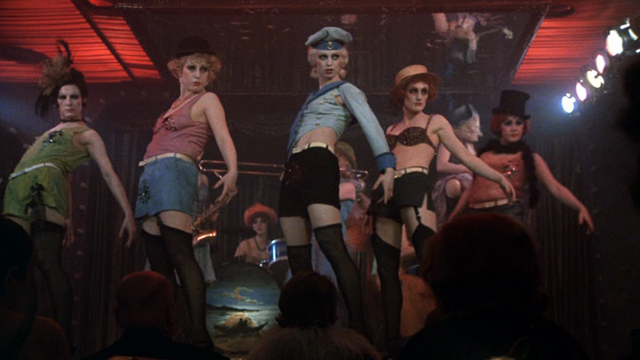
He even went so far as to request the third or lowest tier female musicians in the local union to play and perform as the cabaret band, but found that they were too awful, so he asked for a second-tier group, who were also terrible but at five dollars an hour more. He ended up hiring a group of first-class musicians and asked them to play badly. That was also awful, so he told them to "Play it good" and it finally sounded right.
True to form, Fosse's professional and private life was a minefield before, during and after filming. Paranoid about being replaced, he eavesdropped on Feuer one night as he talked to the studio backers long distance and spent the night fuming that he was being betrayed. He confronted Feuer the next morning in the hotel hallway; intemperate words were exchanged and while Fosse was finally persuaded that Feuer wanted him on the picture, their friendship didn't survive the production.
He had also begun an affair with Ilse Schwarzwald, an interpreter hired for the production, which made tensions rise when his partner Gwen Verdon and their daughter Nicole flew over to visit and help with production. Fosse was a habitual, lifelong philanderer but this betrayal was one too far for Verdon. They broke up, attempted a reconciliation, and then broke up again, with Verdon kicking him out of their New York apartment. Their creative and emotional partnership would survive the breakup, but by the time Cabaret was finished they were no longer a couple.
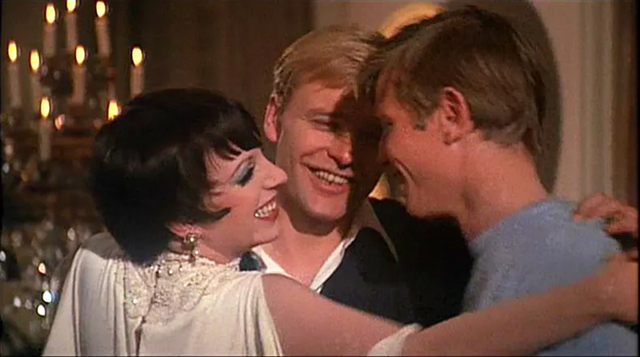
The picture is a remarkably non-musical musical, which would have been a disaster if Fosse hadn't finally risen to the challenge of directing dialogue and story. The principal conflict is the threesome that develops between Sally, Brian and Max (Helmut Griem), an aristocratic libertine who takes up with both of them.
The main subplot in the original musical – a romance between Fraulein Schneider and Herr Schultz, a Jewish fruit stand owner who lives in the rooming house – was dropped in favour of one between Fritz (Fritz Wepper), an ambitious friend of Sally and Brian and a Jew passing as a Christian, and Natalia (Marisa Berenson), the daughter of wealthy Jewish department store owners.
Surging away underneath it all is the steady rise of the Nazi party, who are initially treated with contempt but grow in power and influence. Max thinks they're thugs who can be used to suppress the communists but kept in the margins by the government. Brian isn't so certain and becomes a victim of their violence and intimidation like everyone else who speaks out in the film, while media propaganda rekindles age-old antisemitism.
The numbers on the Kit Kat Klub stage echo both the personal and political storylines; when Sally sets her hungry eye on Max we see her and the MC sing "Money, Money"; when the threesome begins the MC sings the lascivious "Two Ladies" with a pair of chorus girls; when SA thugs begin the campaign of intimidation that will lead to Kristallnacht a few years later, the MC dresses in drag and joins the girls in the chorus in "Tiller Girls", transforming their flowered felt hats into Stahlhelms as they start goose-stepping across the stage.
Most disturbing of all is the number the MC sings when Fritz summons the courage to tell Natalia that he's Jewish and ask for her hand in marriage. "If You Could See Her" is a plea for tolerance and the purity of love, sung to a gorilla in a pink tutu, with Grey's MC wringing every bit of bathos from lyrics like "When we're in public together / I hear society moan / But if they could see her through my eyes / Maybe they'd leave us alone."
The horrible twist comes at the end when, after begging for "a little understanding" the MC says that, seen through his eyes "she doesn't look Jewish at all." The last line is delivered with a hiss and a broad comic jape, and as long as its sour sentiment was still a surprise, would kill the applause that began to rise from audiences at the song's climax.
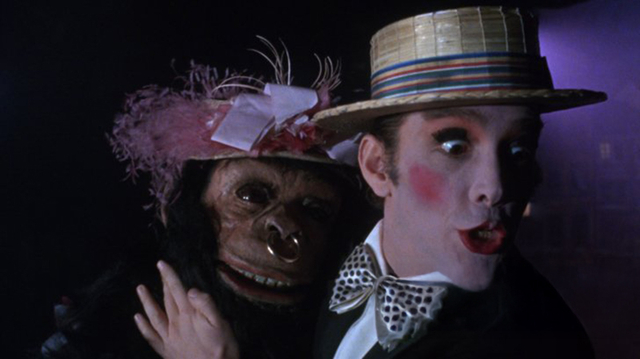
By the end of the picture the world outside the Kit Kat Klub has made satire nearly impossible and the role of the MC has become ever more sinister as the stage and the streets are descending into a nightmare. When Minnelli's Sally sings her show-stopping final number and the title song of the show, you wonder just what kind of place it's trying to celebrate.
Cabaret made Liza Minnelli a star, so much that the Sally Bowles persona she created for the show became the template for her public persona for decades to follow. Tapping into the same fierce energy that powered her mother's best performances, she sells the living hell out of every number she sings, none more than "Cabaret".
But I can't help but shudder when, after telling the story of her tragic girlfriend Elsie and commanding the audience to enjoy life, she implores us to "come to the cabaret" with grasping outstretched hands tipped with her sharp green nails. When the light dims as Sally sings about Elsie, her black helmet of hair and kohl-rimmed eyes look demonic in the shadows, like the briefly glimpsed Pazuzu in The Exorcist (released just a year later). It frankly feels like a threat, and if life is truly like the cabaret we've been watching for the last two hours, perhaps death is preferable.
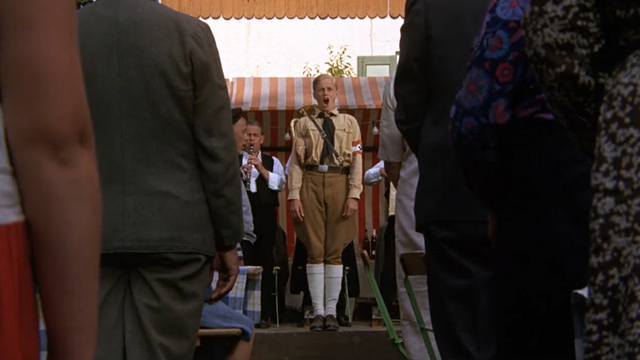
But before this final number we've already watched the only musical number that isn't performed on the Kit Kat Klub stage. Driving back to Berlin from his country house, Max and Brian stop for refreshments at an open air biergarten while Sally sleeps off her hangover in his limousine. A young man gets up to sing what sounds like classic German schlager – a sentimental song about nature and love.
But while "Tomorrow Belongs to Me" goes from chorus to chorus Fosse has the camera pan down to take in the boy's Hitler Youth uniform, and as the song becomes a belligerent marching song for the coming new order the crowd joins in with palpable passion, led by the young people who have been formed by rising tide of propaganda. "You still think you can control them?" Brian asks Max as they drive away.
Hindsight, of course, is perfect vision, and we've lived for decades now with the weak self-satisfaction that comes from watching movies set during the long prelude to World War Two and knowing what comes next while almost no one onscreen gets it. Perhaps there were people back in the early '70s who discerned a rising tide of fascism and watched Cabaret as a warning. Based on the film's final shot it certainly seems like it was meant to be one. But five decades passed before we arrived at the present moment, when open antisemitism is somehow acceptable again, while either ignored or even encouraged by no small minority of citizens who live for these smug "warnings from history".
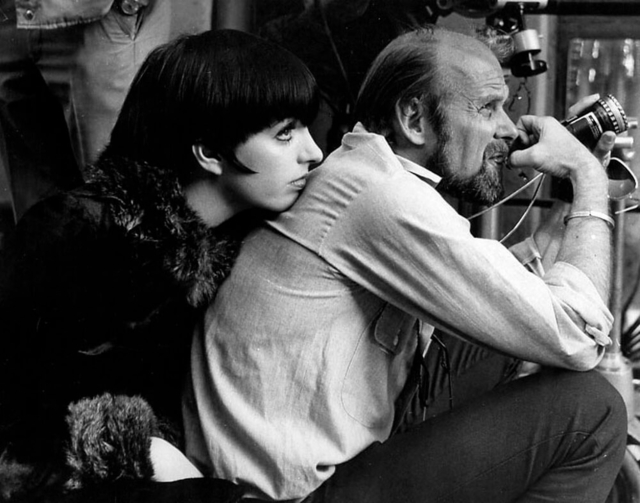
Cabaret certainly let Fosse return to Hollywood in triumph. The film was a smash hit, critically and at the box office, and the sound of Liza Minnelli belting out the theme song was everywhere for months if not years, echoed by every variety show performer who thought they could deliver that song's wow finish.
The film got ten Academy Award nominations and won eight of them, only losing out to The Godfather for best picture. But Christopher Isherwood didn't like it much, and neither did Jean Ross, his onetime roommate in Berlin and the model for Sally Bowles. Isherwood thought that the film made the bisexuality of Brian, his stand-in, look like "an indecent but comic weakness to be snickered at, like bed-wetting."
He and Ross, along with fellow Berlin compatriot, the poet Stephen Spender, thought the film glamourized the dire poverty they lived with in Berlin. Ross admitted that depicting their little circle as decadent libertines was fair, though everybody agreed that Liza Minnelli's Sally was not just far more talented and charismatic than Ross, but that there would be no chance of her being stuck in a dismal dive like the Kit Kat Klub.
Club members can let Rick know what they think by logging in and sharing in the comments below, as access to the comments section is one of many benefits that comes along with membership in the Mark Steyn Club.