
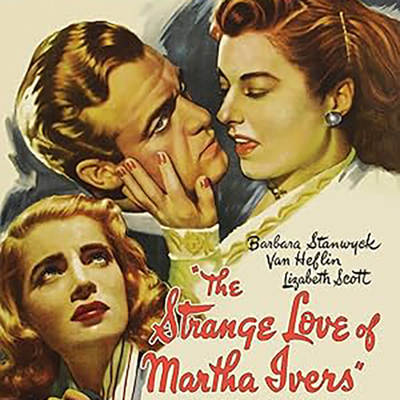
The filming of The Strange Love of Martha Ivers happened when the Paramount lot was ringed by a picket line, part of the 1945 strike by motion picture set decorators that led to the infamous Black Friday riot outside the main gate at Warner Bros. The strike is a movie history footnote today, and though it gets aired out whenever the industry endures another labour dispute, it's hard to imagine pickets full of writers or actors today in a melee with studio security and police with "tear gas bombs, fire hoses, brass knuckles, clubs, brickbats, and beer bottles" as Variety described the two-hour battle.
The strike wasn't just a fight between labour and management but between two unions over who would represent the studios' skilled workers, pitting the established (and mob-connected) IATSE and the upstart, radical (and reputedly communist-infiltrated) Conference of Studio Unions (CSU). (Spoiler alert: IATSE ultimately won.) Cast and crew of pictures in production during the strike would stay at the studio to avoid being roughed up crossing picket lines, according to Dan Callahan in Barbara Stanwyck: The Miracle Woman, his biography of the marquee star of The Strange Love of Martha Ivers.
The film's director, Lewis Milestone, sympathized with the strikers (and the CSU) so when he refused to cross the picket, Byron Haskin (Treasure Island, War of the Worlds) took over for a few days. Callahan thinks that gave the film "a patchwork quality at times; there are some careless, abrupt cuts here and there, and even some dissolves which seem uncommonly rushed."
These sound more like post-production issues than anything Haskin might have inflicted on Milestone and producer Hal B. Wallis during filming. Even more, they might be the legacy of the film's long tenure out of copyright, which began when the rights for the picture weren't renewed after twenty-eight years and it entered the public domain, where it has lived at the mercy of countless low-rent video distributors and YouTube channels.
The film begins, after Miklos Rosza's tempestuous score sets the mood, with a big plate of exposition. In a town called Iversville, built around the Ivers factory, a young girl (Janis Wilson) tries to run away with the help of her best friend Sam (Darryl Hickman) but doesn't get past the railyard. She's brought back to the mansion where her aunt (Judith Anderson) runs her life and the town, because Martha Ivers is the heir to this fortune after the death of her mother, who had the bad luck to marry a millworker at the factory named Smith.
Mrs. Ivers – whose character is best summed up as Montgomery Burns in black mourning weeds with a touch of Miss Havisham from GreatExpectations – has had the girl's name changed to Martha Ivers in preparation for her inheriting everything in sight, but she's defiant, telling the old woman that she'll keep trying to run away. Credit for her retrieval is claimed by young Walter O'Neil (Mickey Kuhn), the son of the local schoolteacher and Mrs. Ivers' most avid flunky, though the boy tells Martha that it was his father's idea all along.
She's getting ready to escape again with Sam when the lights go out; finding the old woman in the dark at the top of the staircase beating her beloved cat with her cane, Martha turns the cane on the old woman and sends her tumbling to the bottom of the stairs to her death. When Mr. O'Neil finds Martha and his son standing over the body, he lets them tell the police that it was an accident before taking them aside, reminding them he knows the truth, and making Martha promise that his son will be compensated for his perjury.
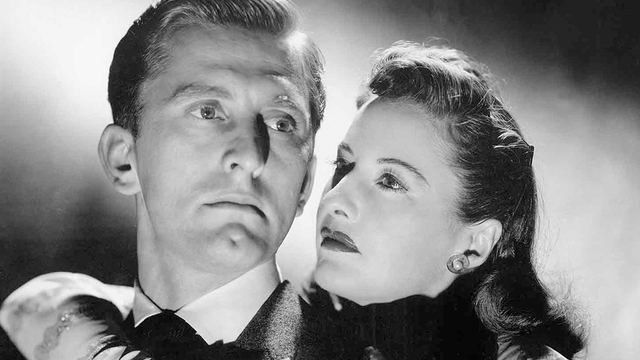
The Strange Love of Martha Ivers (released amidst a rash of films with titles like The Strange Affair of Uncle Harry, The Strange Mr. Gregory, Strange Conquest, Strange Impersonation, Strange Journey, Strange Voyage, Strange Triangle, The Strange Woman and The Stranger) was based on a short story, "Love Lies Bleeding" by John Patrick, a prolific playwright, author and screenwriter whose work included High Society, Teahouse of the August Moon, Some Came Running, The World of Suzie Wong and The Shoes of the Fisherman.
The rights to Patrick's story were bought by producer/writer/director Robert Rossen for $35,000, and he took it to Hal B. Wallis, the producer who had famously left Warner Bros. after Jack Warner sprinted to the stage at the Oscars to hog the credit for a Wallis production, Casablanca. Now an independent with a deal at Paramount, he brought on Lewis Milestone to direct.
Milestone will always be famous for All Quite on the Western Front back at the dawn of sound pictures, but his subsequent career included The Front Page, Rain and Of Mice and Men. He had a fine relationship with Rossen (which included shared political sympathies that would get them caught up in the Hollywood blacklist and HUAC) but a less amicable one with Wallis, and six months after the film came out Milestone stated in an interview that he would never work with Wallis again after the producer kept insisting on re-shoots to get more close-ups of co-star Lizabeth Scott.
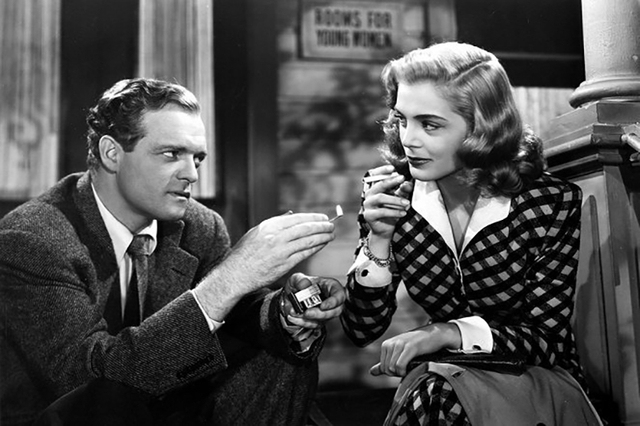
When the film resumes it's nearly twenty years later and we meet the adult Sam (Van Heflin), driving his DeSoto with a hungover sailor riding shotgun into a road sign announcing that he's about to enter Iversville. (The sailor, by the way, is played by an uncredited Blake Edwards.) He's a much-decorated war veteran and now professional gambler on his way to the coast, and he apparently had no idea that this road would take him past his old hometown.
Waylaid by the need to get his car fixed, Sam decides to take a sentimental journey and discovers that his childhood home is now a boarding house for ladies, with a forlorn-looking "Toni" Maracheck (Scott) sitting on the porch waiting for a cab. They bond over a shared love of banter and wisecracks and similar hard luck stories about their childhoods. They hit the bars for a nightcap before Sam gets her an adjoining room at his hotel – separated by a shared bath.
It's hard to watch Heflin's Sam and the husky-voiced Scott and not imagine that their interaction was meant to echo that of Humphrey Bogart and Lauren Bacall; it had been just two years since To Have and Have Not and The Big Sleep would be released the same year and their very palpable screen chemistry was still lightning in a bottle.
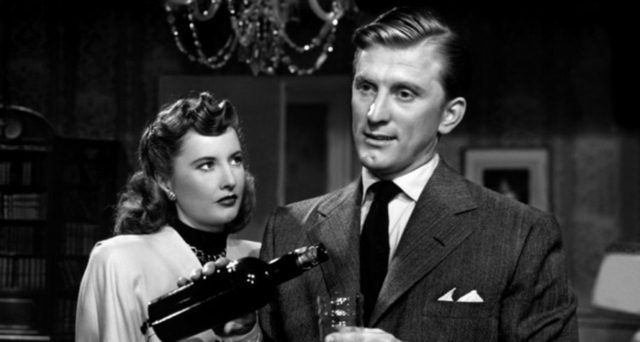
On the other side of town, we pick up on the story of Martha (Stanwyck) and Walter (Kirk Douglas, in his movie debut). Sam had noticed the posters all over Iversville running Walter for re-election as district attorney, unopposed. He had also heard the local radio program where Walter was supposed to deliver a speech but was a no-show, with his wife Martha taking his place.
Back at the same mansion from the prologue we see Martha return home to find Walter passed out drunk in his office. She's not impressed and reprimands him the way a boss would a disappointing protégé. Martha, who has run Iversville with considerably more success than her father or aunt, has invested a great deal in her husband, whose ambitions (according to the owner of the garage where Sam takes his car) likely go past governor to the White House. Sam, for his part, thinks Walter still looks like "that scared kid from Sycamore Street."
Walter, who has ended up exactly where he wanted to be, looks a lot less happy than Martha, who is on her way to becoming a copy of her aunt (which spurs her into a rage whenever it's implied by anyone). They are, nonetheless, the powers-that-be in Iversville and we can only sit back and wait while the film's two couples collide.
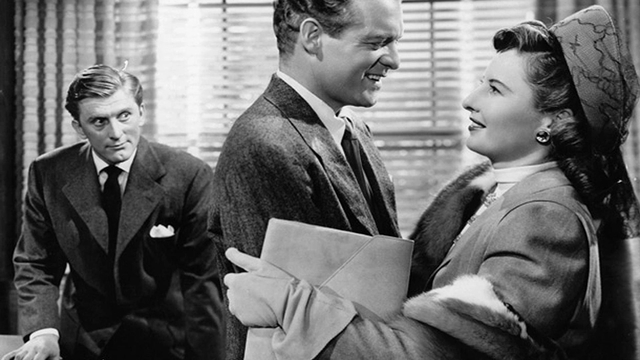
The next morning, after their coyly romantic but pointedly chaste evening together, Sam wakes up with two cops in his room, informing him that Toni, a jailbird, was picked up for violating her parole and staying in Iversville with him instead of going back to her hometown with the bus ticket she was provided. Sam decides this is as good a time as any to call in a favour from his old pal Walter and pays the district attorney a visit.
Walter is surprised but hardly overjoyed to see his old friend, who had disappeared from Iversville the night that changed his life. Martha, meanwhile, is far more excited, and has a hard time hiding her disappointment when she learns that it was another woman who brought him there. Walter doesn't believe it; he's sure that Sam has returned to blackmail his old and now incredibly wealthy friends, whose guilt is deeper since, years after the death of Martha's aunt, they had conspired to frame an innocent man for the murder, with Martha's testimony allowing Walter to get the death penalty.
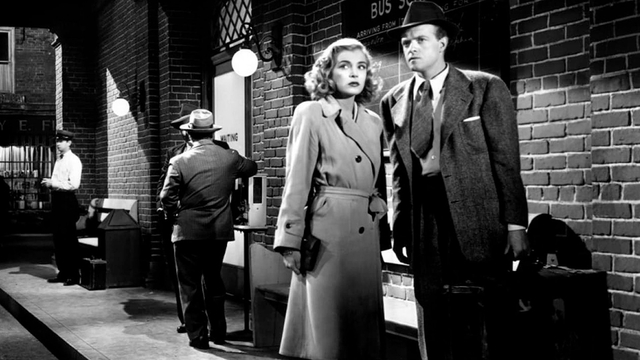
The film is candid from the start about which of the two couples we should be rooting for; Martha and Walter have everything but not only is it making them miserable, it was gained at a huge moral cost. Sam and Toni, on the other hand, hardly look like anyone's social ideal: he's a gambler – a professional in the world of vice, with implied underworld connections – and she's an ex-convict not yet on the far side of paying her debt to society. The film frames them in the more insalubrious districts of Iversville instead of mansions and corporate offices, but they are the obvious heroes.
And when Sam triggers Walter's jealousy and paranoia – he assumes that Sam saw everything that happened the night Martha's aunt died – he and his wife brace themselves for the inevitable blackmail. And while Walter might act weak he can marshal the considerable resources of the law against his old friend. Toni is pressured to betray Sam under threat of revoking her parole; she helps set him up with a group of thugs with badges who take him out of town and lay a savage beating on him.
You need to stop for a minute and reflect on what the film is telling its audience without expecting much if any resistance. First, that it's easier to sympathize with marginal characters from humble backgrounds than their social betters. Second, that people like Walter and Martha can run a whole town and its political and legal process thanks to their wealth and influence. This was, after all, a film made after decades of machine politics in both major and minor cities all over the United States.
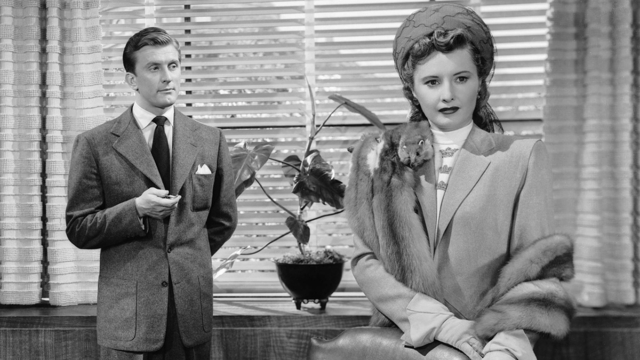
There was Tammany in New York City, the Pendergast machine in Kansas City, the Crump machine in Memphis, Harry Byrd's organization in Virginia, the long-lived Chicago machine and countless others in Augusta, Cleveland, St. Louis, Philadelphia and elsewhere – all of them Democratic and until recently sustained by patronage flowing from the New Deal and figures like US postmaster general James A. Farley.
The reach of political machines and their "bosses" was key to the plot of Mr. Smith Goes to Washington, and an open revolt by returning veterans against Tennessee's political machine erupted with the Battle of Athens the same summer that Milestone's film was released. Nobody watching the film would have doubted that someone like Walter could exact pointed retribution on anyone who threatened his status quo.
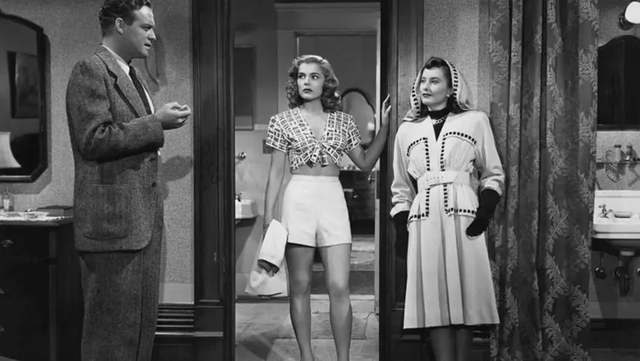
But Walter overplays his hand, as Sam has no intention of being intimidated and his beating angers Martha, who harbours lingering feelings for him in spite of the danger he represents. She shows up at his hotel and puts herself between Sam and Toni, as if wondering if she can change the terms of her life thanks to the enormous leeway her money can purchase.
This is where Stanwyck finally becomes the star of her picture. It had been five years since My Lady Eve and Ball of Fire and two since her career-defining role as femme fatale Phyllis Dietrichson in Billy Wilder's landmark noir Double Indemnity. In Film Noir: The Dark Side of the Screen, Foster Hirsch calls Stanwyck "the genre's undisputed first lady" and describes her face – "frozen in a perpetual mask of scorn. Stanwyck is noir's ultimate gorgon."
"Her posture is as rigid and defensive as her taut face and voice. She has no curves, no flowing lines; everything about her presence is sharp, angular, hard-bitten...With a smile like a surgeon's incision and a voice of steel, Stanwyck brutalizes men."
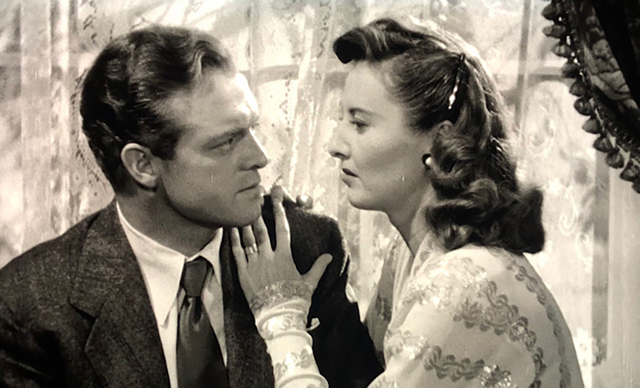
Stanwyck was as sharp-edged out of character as in, according to Dan Callahan in his bio of her. Heflin, looking for some business to help define his gambler character, taught himself to juggle a coin over the knuckles of his hand, but Stanwyck saw its potential to upstage her in key scenes and warned him that if he drew attention from her she had a trick of her own, and pulled up her skirt well above her knee to adjust her garter, adding that she was ready to use her trick at a moment's notice.
Callahan writes that, as Martha Ivers, "Stanwyck stays well within the parameters of her role throughout, using just enough of her talent to make us believe in Martha without overselling the part, which could have been disastrous. She's playing here for entertainment rather than acting out the reality of Capra or Ford or Vidor or Sturges."
Not surprising in a biography of Stanwyck, Callahan is less flattering about her female co-star in the picture. Lizabeth Scott had debuted just a year before in You Came Along, a romantic comedy produced by Wallis, but had a lot of press machinery behind her (something she would come to regret) before taking the first of many parts that would define her as a quintessential noir leading lady.
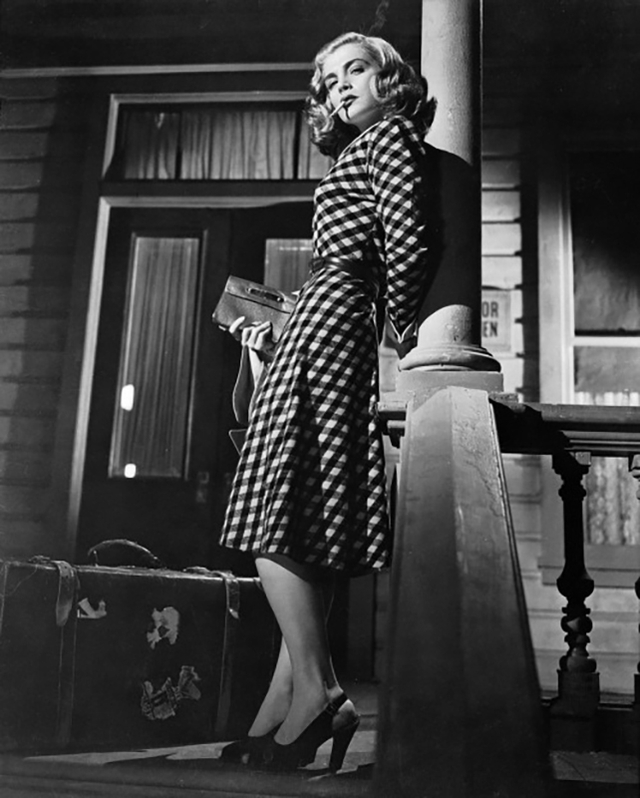
Callahan calls Scott "one of those curious ersatz figures of this period who talks like she's seen a lot of movies and is trying to fit herself in with her hissing, sibilant line readings and curdled, tough-girl smiles and tears, both of which makes her squinch up her face beseechingly. She's 100 percent artificial. Because of her lack of authenticity, she is the embodiment of some late 1940s films, a collection of movie signs that can only be read legibly if you're immersed in the style she's aping."
I'd say that's a bit harsh, but Callahan does understand how noir was already throwing up a lot of set dressing and style before it grew into any kind of definition. It's hard to pin down exactly just what makes The Strange Love of Martha Ivers a noir; it's not a murder mystery or a heist, a story about revenge or retribution, a crime picture or the story of a wrongly accused man or a doomed drifter, though it has elements of all of these.
More than anything the picture looks like a melodrama, though it doesn't dwell on the tragic nature of its main characters or let us luxuriate in their emotional torment for very long. Iversville is a crooked town where you need to watch your back, but someone like Sam can find everything he needs to have a good time and even make a quick buck.
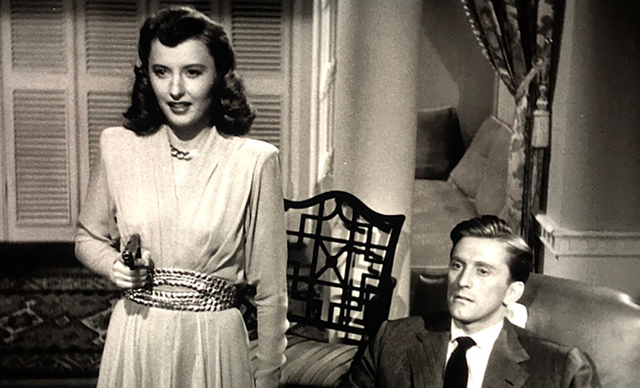
The film reveals its noir essence near the end, though, when Martha and Walter realize too late that Sam was gone before he had a chance to witness the murder of Martha's aunt, and that they've drawn him into their crime unnecessarily. There's a final confrontation in the old mansion where everyone realizes what they've lost on the way to becoming the people they are, and how much they have left to lose. Sam gets to walk away, leaving Martha and Walter to confront each other.
Douglas' Walter tries to console his wife – the same woman who had tried to convince Sam to kill him just moments earlier – by telling her that "it's not anyone's fault. It's the way things are. It's what people want and how much they want it. How hard it is for them to get it all."
Which, coming as it does before Martha and Walter administer long overdue justice on themselves, is as neat a statement of the dirty business of life, and as succinct a philosophy as any noir can present to its audiences.
Club members can let Rick know what they think by logging in and sharing in the comments below, as access to the comments section is one of many benefits that comes along with membership in the Mark Steyn Club.