
Okay, let's wrap this up. First, my two cents about Homeric literary journeys:
If we're going to read Homer, we ought to read him right. Get the full Homer experience. That first means reading an excellent translation. It also means learning the backstory before diving in. It might mean taking things a bit slower than usual, and consulting the odd commentary or podcast. That's a bit more intellectual effort, but then, the rewards will be far greater. What rewards, exactly? The rewards of broadening and deepening one's soul. Of living, feeling, seeing, time-traveling to, vicariously moving within, a much different culture, in a much different time, bound by much different senses of justice, honor, duty, right, than our own. Of - as Homer tells us was true of Odysseus - "learning the minds" of others; that is, of developing what we might call empathic resonance: the ability to understand, more than ever, what the world feels and looks like from within others, and why their decisions made sense to them, even if they didn't make sense to us or anyone else.
That's one way Homer changed me. I remember one intense moment in particular from 25 years ago. I was a young dad then, with four young sons. We were all spending the summer in a lakeside house on Salt Spring Island. The boys all slept in the house's south-facing sun room, each in his own little bed. And each night, after I got them all into bed, I'd light a candle, lie down next to one of them, and read The Odyssey starting from where we'd left off the night before.
Night after night, Homer's magic tale stirred up the most vivid visions in our minds... of Odysseus's son journeying to find news of his father... an incognito Odysseus, shipwrecked on the island of Scheria, weeping as he hears a local singer sing ballads about the Trojan War... Odysseus trying to escape from the Cyclops' cave, and a dozen other scenes. As each night passed, it felt more and more like we could actually go there.
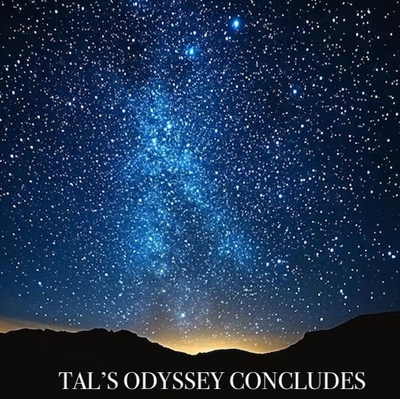
Well, one warm night, as the candle flickered, and the moon and a thousand stars shone through the glass ceiling and the big windows, the lake shimmering down below, a passage hit me with the most tremendous force and depth. It was a passage describing another warm, starry night, but one many centuries earlier. It was the night Odysseus sailed away from the Mediterranean island of Ogygia. The beautiful, possessive nymph Calypso had held him captive there for years. Now, under orders from Zeus, she has to let him go. Begging him to reconsider, she promises him immortality and endless nights of love. But Odysseus declines; he yearns to reunite with his wife, his son, his father, his people, again. And so, in this nighttime scene, Odysseus has finished building his raft, complete with rudder and sail, and is ready to leave. A disappointed, but accepting, Calypso stocks the raft with supplies, vows not to sabotage him, and gives him advice on navigating by the stars. Finally free, Odysseus pushes off into the night as Calypso summons "a wind to bear him onward, fair and warm". Homer continues:
The wind lifting his spirits high, royal Odysseus
spread sail—gripping the tiller, seated astern—
and now the master mariner steered his craft,
sleep never closing his eyes, forever scanning
the stars, the Pleiades and the Plowman late to set
and the Great Bear that mankind also calls the Wagon:
she wheels on her axis always fixed, watching the Hunter...
That the ancients saw the same stars we did wasn't news to me: I'd known that since I was a kid. Yet that scene rocked me for some reason. Through the sun-room's glass ceiling and windows, I suddenly saw all those stars not through my eyes, but through someone else's eyes - Odysseus's eyes - 3000 years earlier, from some far distant Mediterranean vantage point. They looked the same, but seeing them now didn't feel the same. It now felt eternal and deep, moving and connective, and mysteriously personal and intimate. Like I could start to feel what that moment felt like for Odysseus himself - a husband and father, a man who fought for his family, a man trying to make it through a sometimes-confusing life, as I was.
That's just one resonant moment among many for me from Homer, and it remains vivid after all these years. And moments like this are why, I suppose, I so dislike cavalier treatments of classics from moviemakers, and indeed, translators: some original genius creates a world-changing piece of art... and then, decades later, some shallow, tone-deaf opportunist, or some crazed ideologue, pollutes it, dilutes it, ruins it, trying to reinvent or even "correct" it for a modern audience.
And that brings us back to the fawning praise of Emily Wilson's translation of The Odyssey - the translation director Christopher Nolan relied on most heavily while creating his forthcoming film version. My first draft of this piece went to great lengths to show how bad the Wilson translation actually is. I stopped typing at around 4500 words, nowhere near done, and thought, "this will be the most boring piece I've ever written for SteynOnline" (which is really saying something).
So, I abandoned that approach. But the short version is: If you want to read Homer, avoid the Emily Wilson translation. The slightly longer version is: Wilson's big claim is that her predecessor translators - all of whom were male - intentionally or unintentionally allowed their own misogyny to infiltrate their translations, and misrepresent Homer, but that she has now corrected this.
But Wilson's claim is not just false, but the opposite of the truth: she commits the very sin she (baselessly) accuses her predecessors of, consistently (mis)translating words and passages, subtly and not-so-subtly, in service to her own ideological precommitments. For example, thanks to an egalitarian impulse she herself admits to in her foreword, she consistently skews her translation so as to make Odysseus look worse than the text indicates, but his enemies better. One of the only reviewers to point this out was the University of Capetown classicist Richard Whitaker, whose critique can be read here.
Whitaker exposes the Wilson translation for the ideology-fueled distortion it is, but he could have been much harsher. Just as one example, Whitaker doesn't even dive into the most notorious Wilson error of all: her deliberate mistranslation of Homer's vital first-line description of Odysseus as a polýtropon man. What is a polýtropon man? Well, poly means "many", and tropon (from the original word tropos) refers to a cluster of things: a way; a turn or change; a resource or device; a strategy or approach, and more. Odysseus is, in other words, a "man of many wiles" (Mandelbaum); "the man of twists and turns" (Fagles); "the resourceful man" (Powell); "a man of many ways" (Lattimore); "the cunning hero" (Lombardo); "that resourceful man" (Green); "the man of many turns" (Verity), to name just a few defensible translation choices.
By including this in the first line, Homer sets the stage and draws us into the sprawling adventure story to come. We know instantly: this is the story of one man - one wily, strategic man - against the gods. All the man has is his polýtropos skill and an unyielding will. Will that be enough for him to overcome the gods, reunite with his family, and become a true hero?
Clearly, this character-framing is vital to the forthcoming story. So how does Wilson translate polýtropon? How does she convey the one skill which gives Odysseus a fighting chance against supernatural beings bent on thwarting him? The word she chooses is "complicated".
This is a word choice so spectacularly wrong, so hostile to Homer's text and dramatic artistry itself, that (as I suggested about Christopher Nolan and Universal Pictures at the beginning of this series), you have to assume cynical motives. And as it happens, Wilson confirmed as much in an interview with the New York Times Magazine, wherein she admits she chose "complicated" because "it says, 'guess what? This (translation) is different'". In other words, she wanted attention. And attention, at the cost of an intelligible, impactful story, and a faithful translation. The other reason, as I mentioned earlier, is her commitment to distorting the text whenever it casts Odysseus as a potential hero, so as to downgrade him.
But enough about Wilson's anti-Homeric, ideology-fueled distortions. The good news is, the reader wishing to dive into Homer's epics has a number of much better translations to choose from. Yes, friendless loner and Homer fan that I am, I've done the exhaustive comparisons of them all (looking for the greatest textual fidelity without sacrificing readability). Rather than bore you with extensive rundowns of each, I'll just say this:
You could do a lot worse than the popular Robert Fagles translations of The Iliad and The Odyssey. They're not the most textually faithful - for example, Fagles plays fast and loose with the epithets (the adjectival phrases) which Homer consistently attaches to the main characters - but Fagles does have an ear for the poetry and rhythm of language. The printed pages are easy to read, the introduction's informative, and for readers looking for a pleasurable but still pretty accurate translation, it's a legitimate choice.
However, if you're looking for the most faithful, yet readable, translations out there, Anthony Verity's versions of The Iliad and The Odyssey are the best. In fact, I'm so impressed by them, I could write another couple of articles on the topic. But I'm already far over limit now, and so must leave it at that. I finish this little series by wishing you all well on your own Homeric journeys, wherever they may take you.
If you missed any of Tal's Odyssey, you can read parts I-V here, here, here, here and here.