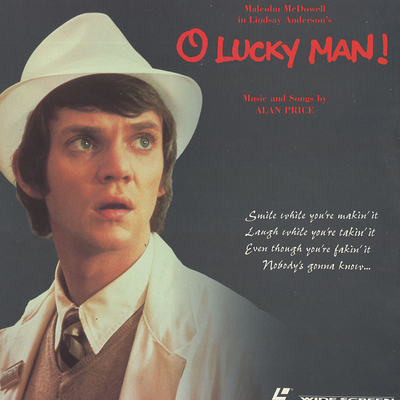
In Mainly About Lindsay Anderson, his biography of the director, Gavin Lambert describes the screening of O Lucky Man! at the 1973 Cannes film festival where it was the official British entry as an instance of Anderson slowly but undeniably retreating from his former radicalism. He was in a bad mood after an ineptly staged publicity event on the beach by Warner Bros. earlier that day when he arrived at the theatre and found "his entrance to the Palais blocked by a starlet posturing for the paparazzi."
"He accused her of 'degrading' the festival, gave her a slap on the buttocks, and loudly ordered her to 'either get out of the way or go inside and see the film.'" Lambert adds that, before flying back to London, Anderson sent him a "peppery postcard that dismissed Pasolini's Canterbury Tales as 'amateurish balderdash.'" He added that he was "rather enjoying not seeing Last Tango in Paris."
It was not like Anderson was transforming into a pre-Thatcher Tory (though Lambert makes a point of noting that the director was a Daily Telegraph reader and a supporter of capital punishment) but that he was sliding out of step with the pieties and shared enthusiasms of his peers in the creative class. Which is probably why being politically a hard read made O Lucky Man! such a challenging mess when it came out – it's likely that the director himself wasn't sure what his positions were any more.
The film is the middle picture in a trilogy that began in 1968 with If.... and would conclude in 1982 with Britannia Hospital. All three films are centered around a character named Mick Travis, played by Malcolm McDowell, and share a cast of actors who, in O Lucky Man!, play multiple roles.
But the Mick in all three films is not the same person as much as a type – student rebel in one picture, ambitious young man in another, cynical media professional in the third. The character grew as McDowell's skill as an actor and onscreen persona developed over a decade and a half where he became a star and moved to America.
Basically If.... was essential to Malcolm McDowell – it was his breakout role and the one that got him the part of Alex in Stanley Kubrick's A Clockwork Orange, from which everything else he would subsequently do flowed. But O Lucky Man! was essential to Anderson, since it was made from an idea suggested by McDowell, who wanted to work with him again. It arrived onscreen as a sequel (of sorts) and provided the momentum that would demand a third film, the sum of which have come to encapsulate what most people knew about the director before his death in 1994 and still know about him today.
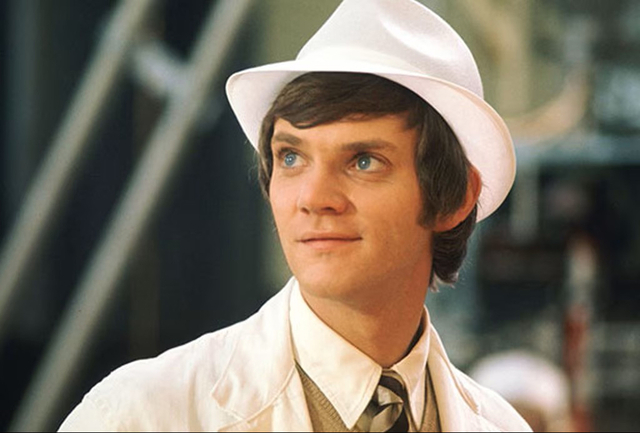
The film begins with a silent movie prologue where armed, uniformed thugs police peasants harvesting a coffee crop. One unlucky peasant, played by McDowell, tries to steal a few beans, gets caught and tried and summarily punished by having his hands chopped off. This cuts to the credits, which roll over musician Alan Price performing the title song, then take us to what title cards helpfully announce is "NOW" and the "WEST" of England, where Mick is a trainee salesman at the Imperial Coffee Company.
Mick is eager and motivated, but what makes him stand out is a smile that broadcasts the sort of sincerity his superiors consider essential to a great salesman, so when their top earner suddenly abandons his sales territory in the northeast Mick is given a map and a company car and sent out to take his place.
On his way north he witnesses a fatal car crash between a grocer's delivery van and a man in a sports car. Police arrive and are more interested in the spilled contents of the truck than taking a statement from Mick. They let him know that if he insists on getting involved the resources of their whole police department will set themselves to arresting him for causing the accident and send him on his way.
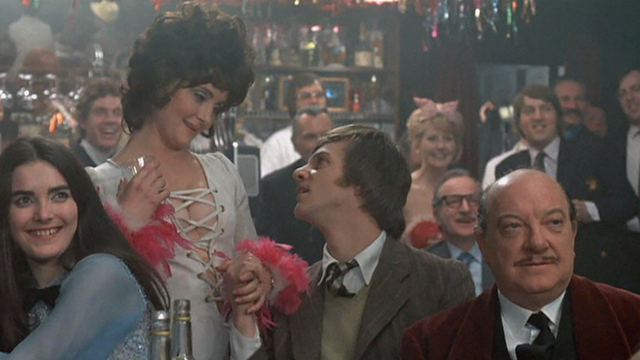
He arrives at a steel plant on his sale route to be told that the place is being shut down, putting 5,000 men out of work. But at a luxury hotel he discovers that his predecessor was involved in a scheme of kickbacks and shady side deals involving everyone from the local mayor to the tax office to the newspaper to the police.
This is all revealed at a staggeringly sleazy private party complete with stag films and strippers, and Mick seems more than willing to go along with it all if it will let him match or even beat his predecessor's annual sales commission of £7,800 (over £93,000 in current money). He staggers back to his modest hotel to find the lady proprietor (Mary MacLeod) waiting in his bed. This is the first of three roles that MacLeod – who played the wife of the school housemaster in If.... – performs in the film, all variations on some sort of maternal figure.
The only other tenant in the hotel is a cryptic old man played by Ralph Richardson, who gifts Mick with a gold suit before he gets a call from head office telling him he's to take over the territory to the north in Scotland immediately. As he carries his suitcase and sales samples out to his car the next morning the old man tells him to "Try not to die like a dog."
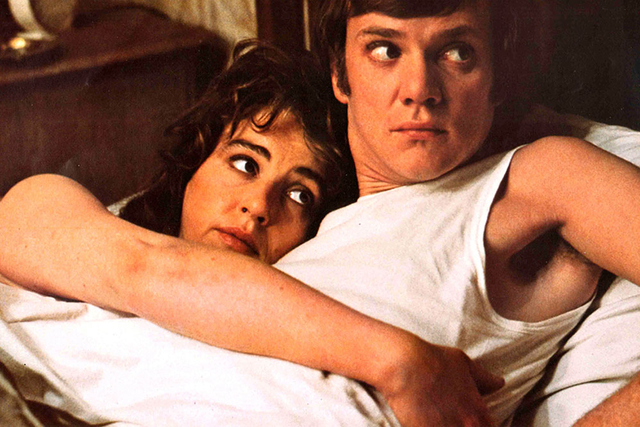
O Lucky Man! was inspired by McDowell's experience as an apprentice coffee salesman in the north of England after leaving school. "I suggested Coffee Man chiefly to get Lindsay to make another film with me," McDowell said later. "And I knew he needed to feel an idea growing up around him before he could feel really comfortable working on it."
McDowell, Anderson and David Sherwin, the director's usual screenwriting collaborator, began working on the script together in New York City but on returning to London, Anderson said that it was "not very good... Too cozy, like an Ealing comedy." He insisted that they keep working on it but to "make it more epic." Since McDowell had to start filming A Clockwork Orange Sherwin and Anderson ploughed on without him, a process made difficult by Sherwin's chaotic personal life, which involved a wife and a girlfriend and at least one suicide attempt before they could shoot anything.
Anderson reluctantly showed a draft to actor and producer Michael Medwin; he brought it to Warner Bros. who offered a $1.5 million budget and a 10 percent cut of the box office gross up till $350,000, followed by a cutoff of $15 million until the movie earned back its budget. They also refused Anderson's request that his name be taken off if any distributor made cuts that he did not approve. It was a harsh deal, especially for a film with a three-hour runtime when it was finished.
Mick heads north into the Scottish wilderness and gets lost, parking his car by the fence of a military installation where he's promptly arrested and taken in for interrogation and torture. He's forced to sign a confession to unspecified crimes but is left alone when a series of alarms go off and his inquisitors make a hasty exit. He's freed by the tea lady – one of the film's dourly absurdist comic touches – and escapes amidst the chaos while some massive malfunction sets the whole top secret complex ablaze.
His company car is destroyed but he rescues the gold suit and sets off through the blazing wasteland until he comes across an idyllic valley and a church decorated for a harvest celebration. He passes out in the pews but wakes up starving; he's about to eat one of the loaves adorning the altar when the vicar's wife (MacLeod again) tells him that's "God's food" before cradling the young man in her lap and breastfeeding him.
Restored, he's sent on his way by the vicar's wife, who tells him to head south: "There is nothing in the north for a boy like you." Two children lead him skipping through the green fields to a fence, beyond which is a motorway, and Mick thumbs a ride in a chauffeured car after making a deal with a medical orderly (Warren Clarke, the dimmest of the Droogs in A Clockwork Orange, and also the MC at the private party) to earn a bit of money in a medical experiment.
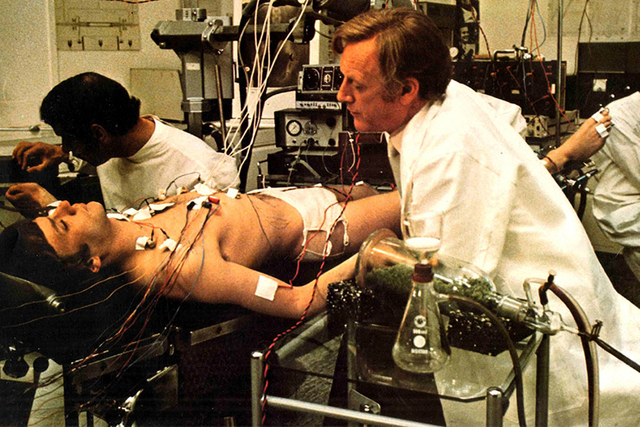
At a private clinic run by Dr. Millar (Graham Crowden), Mick is deemed a prime candidate for the radical treatments being developed – what the doctor describes as fundamental alterations to the human body to help us thrive in the sorts of adverse environments being brought on by future catastrophes like war, environmental collapse and overpopulation. ("The entire population of India could be re-housed on the Moon within ten years.")
David Sherwin said that both he and Anderson were "obsessed with so-called scientific advances and kept newspaper cuttings about them." The Dr. Millar they created crossed the doctor in Frankenstein with premonitions of DNA and cloning technology still in nascent stages at the time. It was a character that fascinated them enough to bring Crowden back as Millar in a much bigger part in Britannia Hospital a decade later.
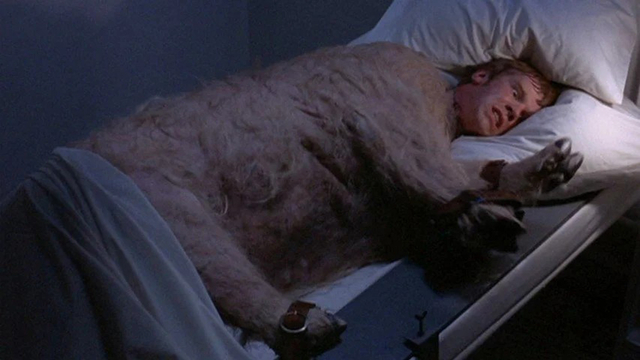
Pretending to be sedated, Mick tries to escape just before his procedure and evades the hospital orderlies in the room of another patient – another young man who sits, shivering and terrified, under his blankets until Mick pulls them back, revealing a truly monstrous grafted body that looks part sheep and part pig. Terrified, Mick screams and makes a running jump through a window before stealing a bicycle and pedaling madly away from the clinic only to be sideswiped by a white van.
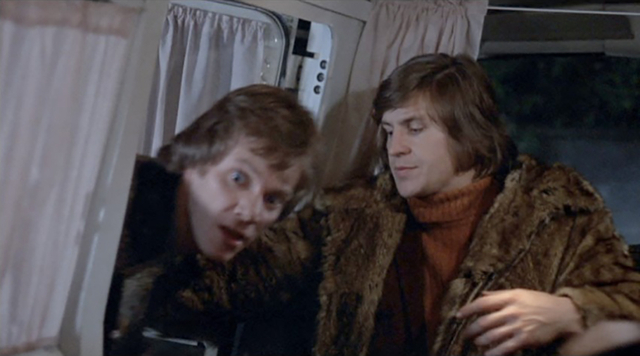
The van is full of musicians on their way south from touring the north, led by Alan Price, who jokes with an overly impressed Mick that while he isn't rich, his manager certainly is. Price, born in County Durham, was the founder of the band that would become The Animals, and played the famous organ part on the band's biggest hit, "The House of the Rising Sun".
He quit the band abruptly in 1965, leaving singer Eric Burdon to assume leadership while Price began a solo career that would include regular television appearances as well as playing the lead in Alfie Darling (1975), a sequel to the hit 1966 Michael Caine film. Outside of an appearance in D.A. Pennebaker's Bob Dylan documentary Don't Look Back it's a career that's been successful though largely British in scope.
He was asked to write songs that commented on the action of the film at crucial points in the script, and after driving in a van with Price and his band to a gig Anderson decided to make them onscreen characters as well. So besides being an episodic or picaresque story – inspired by Voltaire's Candide by Anderson's own admission – it's also a musical if you loosen the definition only the tiniest bit, punctuated by diegetic music cues.
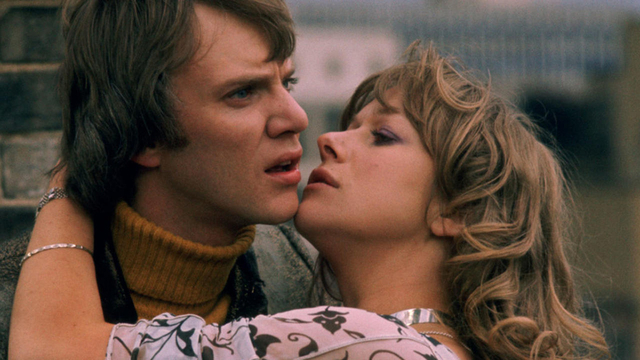
Also in the van is Patricia (Helen Mirren); she has a posh accent and, after Price tells Mick that she's "studying" them, she seduces Mick (like nearly ever other female in the film). Mirren was not Anderson's first choice for the role; he judged that she wasn't convincingly posh and cast Fiona Lewis, who had been in Roman Polanski's The Fearless Vampire Killers. (Mirren said later that the director "also thought I was too fat.")
But Lewis was fired after working with Anderson for just a few days; he offered the part to Vanessa Redgrave who (thankfully) turned it down, and finally cast Mirren, who McDowell had wanted for Patricia from the start. The part was underwritten (like most female parts in Anderson's pictures) and the challenge for Mirren was to fill in the copious blanks left in the script.
Thankfully Anderson the director was very different from Anderson the writer, and his considerable experience on the stage allowed him to work constructively with Mirren during her big scene with McDowell, on the roof of Patricia's sprawling London flat. "He made a few simple suggestions while feeding me champagne," she recalled, "and got me quite drunk. I thought I was terrible. But it worked."
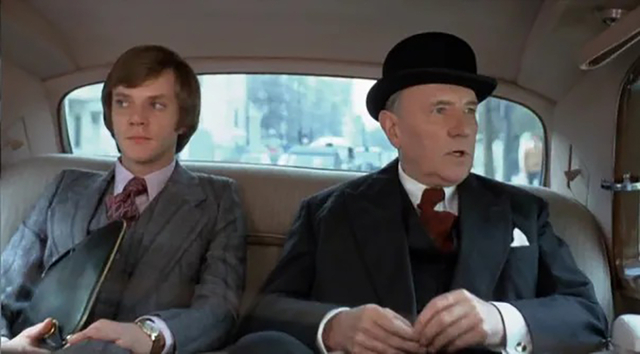
Patricia, it turns out, is the daughter of the fantastically rich and incredibly ruthless Sir James Burgess (Ralph Richardson again), and when she heads off again with Price and his band he engineers a meeting with Burgess, ostensibly to warn him of his daughter's dangerous lifestyle. His meeting is interrupted by a distraught and suicidal Scottish scientist (Crowden again) who Burgess has just ruined; struggling to throw himself out of an office window he takes Burgess' aide with him. After a brief eulogy for the scientist, Sir James wordlessly hires Mick as his new assistant.
Mick is quickly brought into Burgess' inner circle, which includes Keyes (Geoffrey Palmer), a corrupt MP and Dr. Munda (Arthur Lowe in unfortunate blackface), the dictator of Zingara, an African republic seeking investors to fund tourism and industry in his country, which he is running like a police state. He presents a business plan to Sir James in which the only difficulty is some rebel faction in the north of Zingara; his military consultant – an obvious ex-Nazi named Steiger (Wallas Eaton) – wants Burgess and Keyes to acquire enough of a napalm-like chemical weapon nicknamed "Honey" from the British army to destroy the rebels.
Mick happily becomes the courier in this deal, driving around in his new bowler hat in Sir James' Rolls-Royce to RCAF airstrips, happily signing whatever is put in front of him. It turns out he's being set up as the fall guy for Scotland Yard when they show up looking to arrest someone in an embezzlement case, and Mick is marched off while Burgess makes a joke to his dinner guests about "the thin line between the House of Lords and Pentonville."
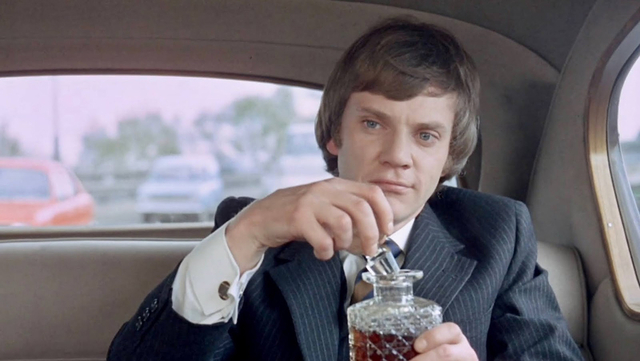
By this point the film has lost its steam, and lapses into a rather rote jeremiad about establishment power and moral corruption. Mick is stitched up for his trial, by a judge (Anthony Nicholls) who pompously declaims bromides like "Society is based on good faith, on a commonly accepted good." While the jury deliberates on a verdict the judge retires with the bailiff (Mona Washbourne) to his chambers, disrobes to a red satin bikini and stretches himself out to be flogged.
Even by 1973, and after scandals like Robert Boothby, Jeremy Thorpe, Profumo and many others, this sort of prurient sneer at the establishment was hardly shocking, and it plays like a substandard Monty Python interstitial skit. Mick is duly sentenced to five years hard labour despite pleading that "I only tried to do my best."
He does his time and, after an awkward farewell to the warden, who tells him that "you have eyes like Steve McQueen", he emerges a free man and a committed humanist. He ends up in East London where he's pickpocketed while arguing with a Salvation Army major (Philip Stone) about sin, then tries and fails to talk a poor mother (Rachel Roberts) out of killing herself, answering her brutal recitation of economic facts with fatuous pieties.
Mick ends up sleeping rough before meeting a woman (Vivian Pickles) feeding the homeless from a van and, inspired by how charity seems to fulfill her, agrees to bring soup to a huddled circle of vagrants – her "regulars." He discovers Patricia among them (along with many other cast members playing third and even fourth parts), but his pious attitude is taken for condescension and they turn on him, chasing and beating him with fists and rocks.
These are the hard nut of the hardcore homeless against which so much urban poverty policy shatters, and the "undeserving poor" who test the morale of generations of charity volunteers. These scenes would prompt complaints from critics that Anderson was forced to answer, telling the film critic for The Times that "the poor were not beastly to their fellow-men only because they're poor. They're beastly to them because they're human beings" – an essentialist argument predicated on the fallen nature of mankind that will resonate more with religious conservatives than secular liberals.
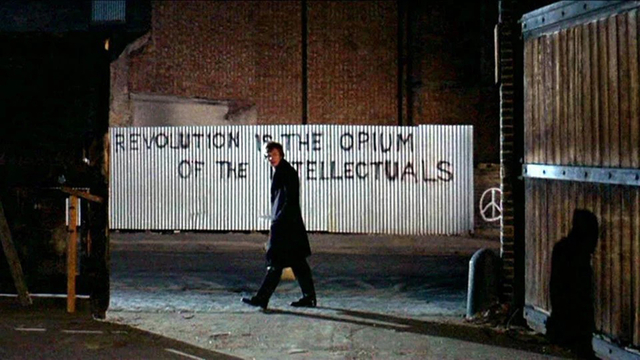
He added that the whole idea "is something that socialists consider reactionary, and I expect my progressive friends to attack me." A graffiti prominently displayed on a wall behind Mick – "REVOLUTION IS THE OPIATE OF THE INTELLECTUALS" – would provoke the same accusation.
The depletion of energy in the final half hour of the film had a lot of causes, though it was mainly because Anderson and Sherwin had only sketched out the last part of the story, and while they were shooting it the director was dictating pages to a secretary, often with assistance from McDowell (as the actor later claimed) or from his friend, playwright David Storey. And the ending had always been a problem which Anderson had deferred until the last minute.
Since O Lucky Man! had begun as McDowell's story, Anderson asked the actor what ultimately happened to him. McDowell has never denied how crucial If.... was for him, and particularly the scene where Mick, playing hooky from school, is slapped hard by Christine Noonan when he tries to kiss her in the cafeteria where she's working. McDowell essentially told Anderson that he was slapped, and then he became a star.
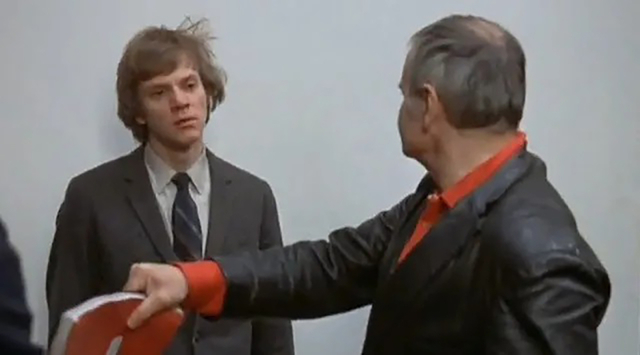
And so Mick, at rock bottom and wandering London at night, follows a man carrying a placard to a crowded hall hosting an open call audition for a film called O Lucky Man! He catches the eye of the director – played by Anderson – who has him pose with props (books and a gun, invoking his role in If....) before asking him to smile, reprising a scene at the start of the film. Mick insists over and over that he can't smile if he has no reason, but the director persists and, finally, takes his script and slaps Mick hard across the face. Cut to Mick, back in his gold suit, dancing with the whole cast and crew at what looks like a wrap party, jumping up and down with Mirren to hit the balloons falling from the ceiling while Alan Price sings the title tune one more time.
Ian Rakoff, the assistant editor on If...., said later that while that film "came out of schoolboy dreams of anarchy and revolution," O Lucky Man! "came out of Malcolm having spent time as a coffee salesman, wanting to construct something out of it and do a Candide-like odyssey. But it didn't have the same motivation behind it, a flaw from the beginning."
It also might have had to do with the director losing enthusiasm for his own youthful politics without being able to acknowledge where that was taking him. By Britannia Hospital, Anderson was making what nobody denies was a scathing critique of socialized medicine and the NHS, a film that was pilloried in Britain and, even more than O Lucky Man!, suffers from the inability of the director to commit to a message that would alienate fans and estrange friends, falling finally into the gap between belief and motivation.
Club members can let Rick know what they think by logging in and sharing in the comments below, as access to the comments section is one of many benefits that comes along with membership in the Mark Steyn Club.