It's fun and easy to criticize Hollywood and blame its creative and box office decline on an aggressive and intentional lack of originality. While a whole once-thriving middle ground of modestly-budgeted original films that once launched careers and won Oscars has been decimated or migrated to the realm of the streaming miniseries, sequels, remakes, prequels and reboots are consuming all the oxygen and money in Hollywood at the cost of everything else.
While box office numbers have modestly recovered after COVID lockdowns, they're nowhere near where they were in 2019 and show no signs of recovering. Speaking subjectively, it looks like the ideal audience for major studio product these days is somewhere between a nerdy child and an annoying millennial and even they're getting sick of it all.
Big budget comic book, sci fi and fantasy pictures still sprawl all over the release schedule, with a carve-out for horror films made for reliable niche markets with suitably modest budgets while nearly every other genre (romantic comedies, thrillers, crime dramas) is being pushed off the table into the discard pile where westerns and live-action musicals have been left to die.
But playing devil's advocate, I can't help but wonder if we're setting the bar too high for Hollywood, which is to say we're acting as if this kind of behaviour is new. As Charlton Heston is supposed to have said, "the trouble with movies as a business is that it's an art, and the trouble with movies as art is that it's a business." As such it would be unrealistic to ask studio executives – essentially gamblers playing for big stakes with other people's money – to avoid doubling down after they've had a big payout.
In 1934, MGM had an unexpected hit with a loose adaptation of Dashiel Hammett's detective novel The Thin Man. They'd end up making five gradually less watchable sequels over the next thirteen years, but that doesn't include copycat films produced to cash in on the premise of W.S. Van Dyke's original "screwball mystery", two of which were built around the Thin Man himself – actor William Powell.
Barely a year after The Thin Man hit the theatres, Powell was borrowed by RKO and teamed up with their own Ginger Rogers for Star of Midnight, playing a lawyer and playboy being pursued by Rogers while solving a missing persons case. The film's climax, like The Thin Man, involves getting all the suspects together in a room to flush out the guilty party, but you can't really blame director Stephen Roberts for this bit of mimicry as it was already a fixture in, say, Agatha Christie novels.
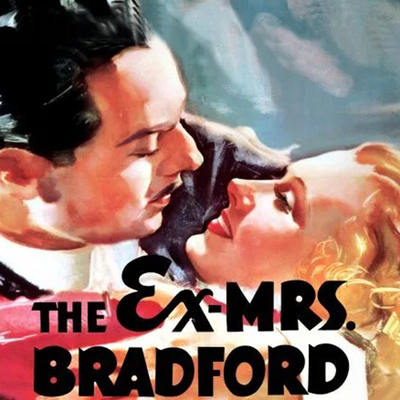
What RKO were really desperate to copy was the chemistry between Powell and Myrna Loy, and they probably got their best chance with Rogers. They'd try again a year later, again with Roberts directing, but this time with Jean Arthur playing the title role in The Ex-Mrs. Bradford opposite Powell, as a divorced doctor with an office in his swanky art deco apartment.
The film begins with that once-venerable movie trope – newsboys hawking papers with massive headlines trumpeting the sort of story that might make it beneath the fold in a real newspaper, if it made it there at all. In this case it's the sudden death of a jockey near the finish line of a race he was going to win. The camera cuts to a montage of citizens up and down the social spectrum taking in the news with varying reactions, hinting that we'll be seeing more of them.
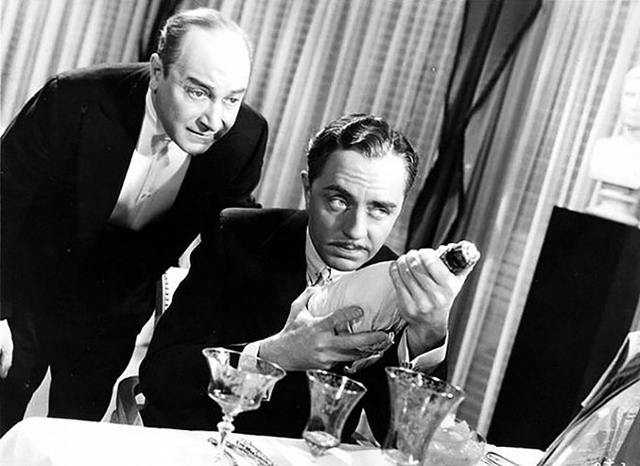
The montage ends with Dr. Lawrence "Brad" Bradford (Powell) reading the Night Edition of the paper over dinner in his apartment. He's handed a champagne bottle by his butler Stokes (the reliable Eric Blore) and they make a silent bet before Brad carefully aims the cork across the room at a gong, hitting it squarely and winning the wager.
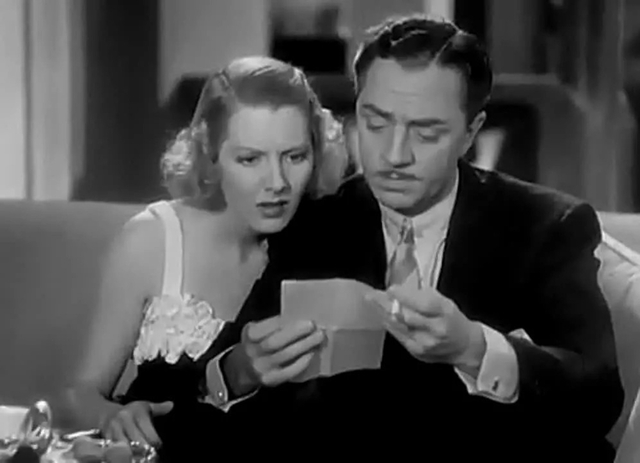
He's interrupted by a visitor – Paula (Arthur), his ex-wife – accompanied by a man who turns out to be a process server. She's suing him for non-payment of alimony, money she doesn't need as a successful mystery novelist though she's willing to take him to court as a ruse to get back in his life. She's decided, with the blithe logic of the screwball heroine, that he's lonely and miserable and that they should get married again.
Brad insists that he's perfectly happy with his present life with Stokes, treating patients and getting a full night's sleep and avoiding the scrapes his ex-wife relentlessly got him into with her overactive imagination and morbid fascination with crime and criminals. It's a reversal of the dynamic of Nick and Nora Charles' relationship, with Arthur as the madcap drawn to shady situations and Powell as the conventional society figure. It hews closer to the usual screwball formula in any case and only underlines how unique The Thin Man was and how hard it would be to duplicate.
No sooner has Paula declared her intentions than Brad gets a visit from Mike North (Frank M. Thomas), a friend of Brad's and the trainer of Luxury – the horse that was winning when its jockey suddenly died of a heart attack. He doesn't believe the official story and leaves Brad with a threatening note he found on the jockey's body before heading out to look into the business.
Mike sends an envelope full of cash to Brad's apartment before going missing and then showing up dead at Brad's door, making Brad a suspect in his murder. On the way, the pool of suspects widens to include Nick Martel (Robert Armstrong), a bookie, Luxury's owner Hutchins (Ralph Morgan), Summers (Grant Mitchell), the owner of Warcloud, the horse that beat Luxury, and his wife (Erin O'Brien-Moore), who's sneaking around with Martel. And there's Pender (Paul Fix), a thug with a scar who tries to burgle Brad's office and even Brad's secretary Mis Prentiss (Lila Lee).
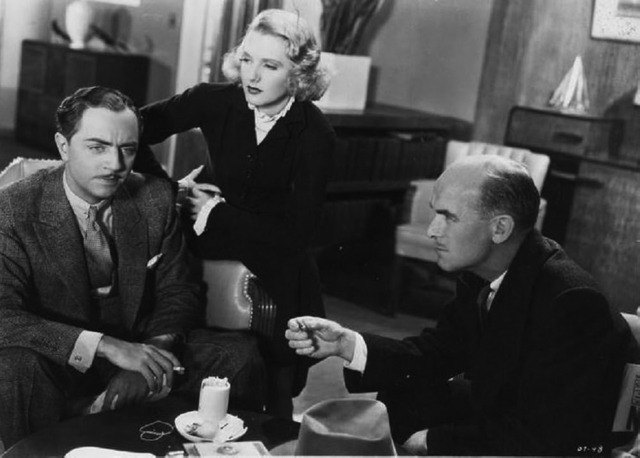
Brad has to figure out whodunnit before Inspector Corrigan (James Gleason) pins it all on him, and along the way the plot collects details like gelatin capsules and black widow spiders and photo finishes. It's not the sort of mystery that rewards deep thinking, to be honest, but it's one where Arthur is able to successfully impersonate tough guys to other tough guys on the phone, and not once but twice. She also has a knack for braining her ex-husband with vases and even skulls while trying to save him during a tussle. The identity of the real killer did come as a surprise, not because of a clever twist but because I'd given up caring halfway through the picture.
But let's be honest – did you actually care who the killer was in The Thin Man? Was that even the point of the film?
If you're watching The Ex-Mrs. Bradford today it's probably because you're curious to see if Roberts, the director, screenwriter Anthony Veiller and the leading man and lady were able to catch the same lightning in a bottle that Van Dyke and MGM did from the moment we watched Powell shoot out the ornaments on a Christmas tree with his pellet gun in his pyjamas while Myrna Loy looked on with the sort of bemused fondness that any man hopes and wishes he'll inspire just once in his life.
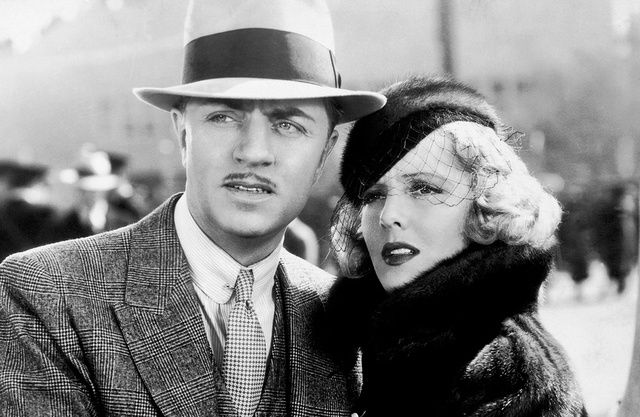
Like Myrna Loy, Jean Arthur had spent a decade in Hollywood languishing – in bit parts in Arthur's case, in a series of roles as vamps, exotics and oriental temptresses for Loy. Arthur had only just broken through to star status opposite Gary Cooper in Frank Capra's Mr. Deeds Goes to Town when she took the part of Paula, though Columbia (her studio) in particular and Hollywood in general still didn't really know what to do with her.
While trying to place Arthur in the context of screwball comedy's leading ladies in The Runaway Bride: Hollywood Romantic Comedy of the 1930s – names like Loy, Claudette Colbert, Carole Lombard, Rogers, Barbara Stanwyck and Katharine Hepburn – Elizabeth Kendall describes Arthur as "probably the frailest of this group of women – the one who benefited the most from romantic comedy's careful attention to leading ladies."
A few years earlier she appeared surplus to requirements while under contract with Paramount, where she appeared with Powell in the pre-Code romantic drama Street of Chance (1930). As Kendall writes: "The studio was already top-heavy with female stars and starlets; there was not much room for new varieties of women. The languorous Marlene Dietrich stood for sin; the suave Kay Francis embodied style; Ruth Chatterton of the monied voice did class... Among these, Jean Arthur didn't particularly stand out. She wasn't elegant enough for weepers, and she wasn't cute enough for comedies. Paramount couldn't tell whether to make her a straight actress or a comedienne."
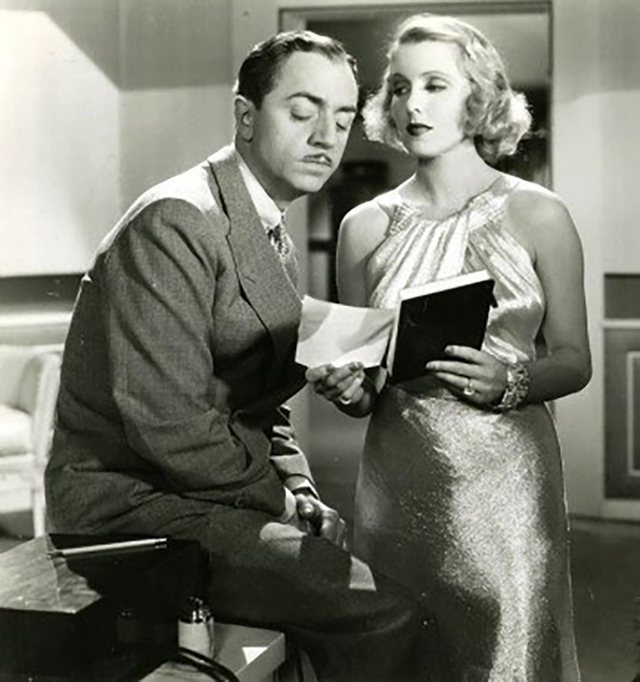
And so they let her go, along with Fay Wray and Louise Brooks. Arthur headed back east, to Broadway, where she became a hit with critics and returned to Hollywood and a contract with Harry Cohn and Columbia (one that she'd come to hate). She struggled for a while with small successes in pictures like John Ford's The Whole Town's Talking (1935) and Diamond Jim (with a script by Preston Sturges). And then came Mr. Deeds and the sympathetic eye of Capra.
Capra saw a quality in Arthur that he needed for his heroines – a combination of toughness and vulnerability; what heroic male leads would embody as disappointed idealism transformed into a tough, defensive shell. (Strange to ponder how Arthur's onscreen persona is ultimately comparable to Humphrey Bogart's, but there it is.) It suited his films perfectly but it's an awkward fit in a screwball story because, as James Harvey writes in Romantic Comedy in Hollywood from Lubitsch to Sturges:
"Capra is not just departing from screwball comedy – he is making war on it, though the lines in that war were drawn independently of his efforts and long before Mr. Deeds. Almost from their beginnings, the movies had been polarized between naïve and sophisticated modes, between skepticism and innocence. The screwball comedy was a modern culmination of the skeptical mode. And it was the Capra version of the folksy comedy that now entered into a debate with that skepticism, speaking up for simplicity and ingenuousness and a pastoral-idyllic vision of America, and against smart alecks."
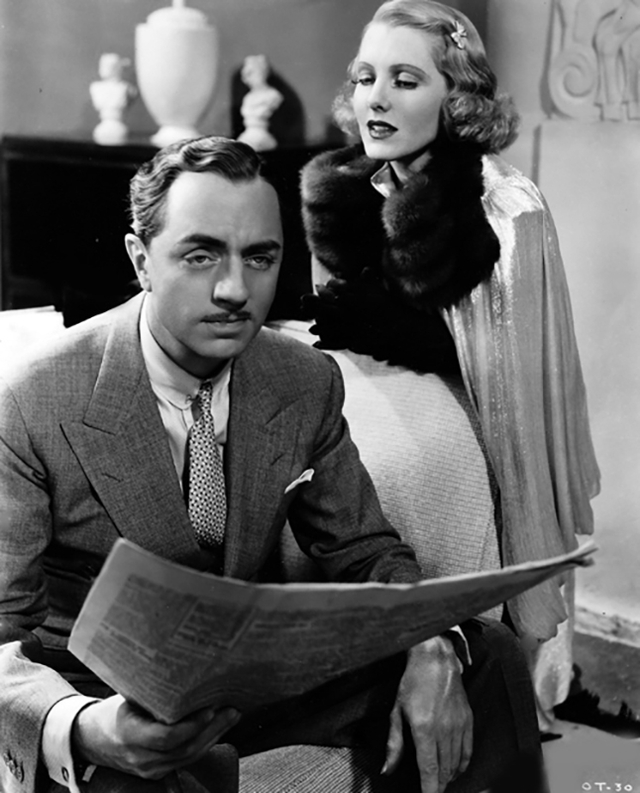
This is probably why it looks like Arthur doesn't manage to fill Loy's shoes in The Ex-Mrs. Bradford. Powell's Brad is a smart aleck like Nick Charles, but even while playing the madcap heroine Arthur as Paula never rises to his effortless level of wry amusement in even the stickiest of situations. (It's hard not to imagine how much more Carole Lombard would have risen to the challenge of Paula Bradford.)
Arthur was, as Harvey writes, the least typical of all the screwball heroines even though "the screwball style itself seems almost unimaginable without her." And yet, he says "she neither goes 'crazy' in her films nor 'wild'. If she is involved in a disruption, she is as confused and surprised by it as anyone."
"In some ways," he writes, "she is the most original of all the screwball women if only because she did away with so much of the equipment, the ingenuity and the subversion and the gags. She offered what she was, so to speak: smart and resilient and generous, with a killing smile, at once reluctant and adventurous, candid and quizzical at the same time. In a way she completes the cycle of screwball heroines, confirming the tendency to move their glamour closer to ordinary life. Possibly the most distinctive thing about Arthur is that she's always so nice: that's the only word for it."
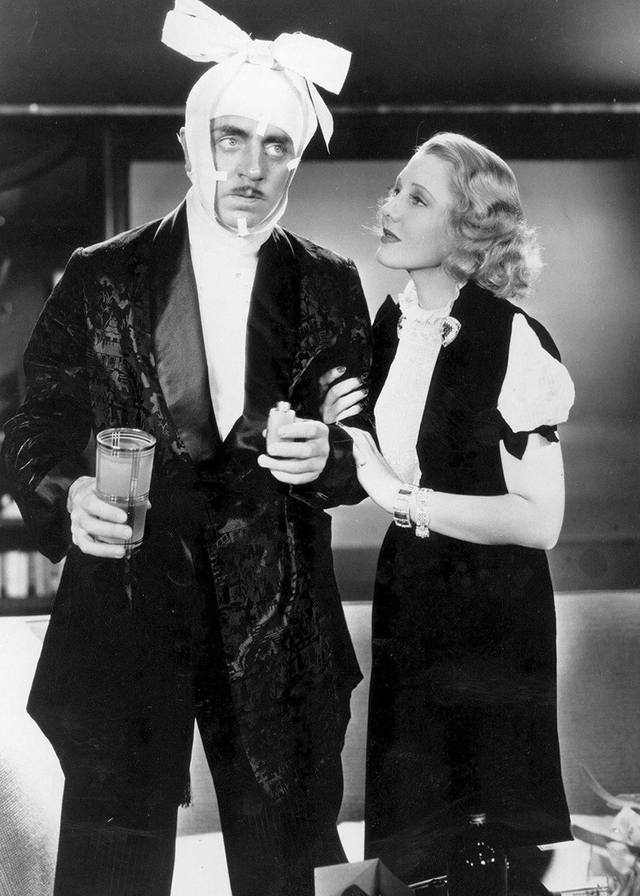
Loy, like Lombard and Colbert and Rogers, looked up to the rough and tumble of screwball slapstick but Arthur, as Harvey insists, was simply too nice for a sock on the jaw, though she does dish it out (accidentally) on Powell's Brad. Which is why he ends the film shot and concussed, looking punchy with a bandaged head, wobbling on his feet while Paula makes him stand to repeat their vows to a minister projected on the movie screen in his living room.
At the end of The Thin Man the rough business of solving crime has made Powell's Nick and Loy's Nora equals and left the audience eager for more of this charming couple and their impeccable chemistry. Brad, on the other hand, has clearly gotten the worst of it, though the ending of The Ex-Mrs. Bradford left itself just as open to any sequel its audience demanded. (They didn't.)
Audiences would get what they wanted with Powell and Loy, not just with the Thin Man sequels but other team-ups like Libeled Lady (1936), Double Wedding (1937), I Love You Again (1940), Love Crazy (1941) and The Senator Was Indiscreet (1947), their final pairing. Director Stephen Roberts, sadly, wouldn't get to see any of this, dying of a heart attack two months after the release of The Ex-Mrs. Bradford. (On a personal note, the funny thing about having a heart attack is that, all of a sudden, you find yourself seeing heart attacks wherever you look.)
Jean Arthur would spend the rest of her career battling her crippling nerves in front of a camera, though thankfully she'd find more sympathetic directors who found roles that suited her unique persona – men like Frank Borzage (History is Made at Night) Mitchell Leisen (Easy Living, with another Preston Sturges script), Howard Hawks (Only Angels Have Wings), Sam Wood (The Devil and Miss Jones) and George Stevens (The Talk of the Town and The More the Merrier). Along with her Capra films, they'd be enough to make her indelible even when she only wanted to disappear.
Club members can let Rick know what they think by logging in and sharing in the comments below, as access to the comments section is one of many benefits that comes along with membership in the Mark Steyn Club.
For the holiday season, we're offering a special one-year membership in The Mark Steyn Club that makes a perfect gift for family or friends this Yuletide, Hannukah, or any other festive celebration. Club membership lasts year round, but your loved one will also receive a bonus sign-up gift. Click here for more details.